AC Condenser vs. Evaporator: Key Differences and Failure Risks
Your car’s AC condenser releases heat outside the vehicle, while the evaporator absorbs heat from the air inside the cabin. Both carry refrigerant, but they work at different points in the cooling cycle and face different problems.
The condenser is more exposed to road debris and impact damage. The evaporator is protected inside the heating and air conditioning housing, usually behind the dashboard, but replacing it often requires more disassembly. Neither part can be diagnosed from warm air alone.
Condenser vs. Evaporator: What Each Part Does
In a conventional automotive AC system, refrigerant moves heat from the cabin to the outside air. The condenser and evaporator are heat exchangers, meaning they transfer heat between refrigerant and the air passing across them.
| Feature | AC condenser | AC evaporator |
|---|---|---|
| Typical location | At the front of the vehicle, usually ahead of the radiator | Inside the heating and AC housing, usually behind the dashboard |
| Main job | Release heat into outside air | Absorb heat from cabin air |
| Refrigerant change | Hot, high-pressure vapor cools and condenses into liquid | Low-pressure refrigerant absorbs heat as it evaporates |
| Air movement | Vehicle movement and cooling fans move air across it | The cabin blower moves air across it and through the vents |
| Repair access | May require removal of front-end components | Often requires dashboard and HVAC housing disassembly |
Between these components, a metering device controls refrigerant flow into the evaporator and creates a pressure drop. The compressor keeps refrigerant circulating. A problem with either of those parts can also reduce cooling.
Which Is More Vulnerable to Damage?
The condenser faces road exposure
The condenser’s location helps it shed heat, but also exposes it to stones, road debris, and front-end impacts. Damage to its refrigerant passages can cause a leak. Bent fins or debris covering its face can restrict airflow without causing refrigerant loss.
A cooling fan problem can also prevent the condenser from releasing enough heat, particularly while stopped. That is an airflow problem, not automatically a reason to replace the condenser.
The evaporator is protected, but not immune to failure
The evaporator avoids direct road impacts. It can still develop leaks from corrosion or deterioration at its passages and connections. Dirt buildup and icing can interfere with airflow across it.
The practical comparison: the condenser is more vulnerable to external damage, while evaporator replacement often involves more labor. Overall failure frequency depends on the vehicle’s design, age, condition, and damage history, rather than one component universally failing more often.
How the Symptoms Compare
Signs that point toward condenser-related trouble
- Cooling improves while driving: This can point toward insufficient airflow at a stop, including a cooling fan fault or an obstructed condenser.
- Visible front-end damage: Damaged refrigerant passages deserve inspection, especially if cooling changed after an impact.
- Oily residue around a suspected leak: Refrigerant oil may leave residue, but a stain alone does not confirm the source.
Signs that point toward evaporator-related trouble
- Refrigerant loss traced to the HVAC housing: Leak testing can help locate an evaporator leak that is hidden from view.
- Airflow fades during operation: Ice on the evaporator can restrict airflow. The cause may involve airflow, refrigerant control, or temperature sensing rather than a damaged evaporator.
- Musty vent odor: Moisture and buildup in the HVAC housing can contribute to odors. Odor alone does not justify evaporator replacement.
These symptoms overlap with other faults. Weak airflow, for example, can also come from a restricted cabin air filter or a blower problem.
What Testing Separates the Two?
A useful AC diagnosis checks cooling performance, airflow, refrigerant charge, and leak location rather than starting with a replacement part. A technician may:
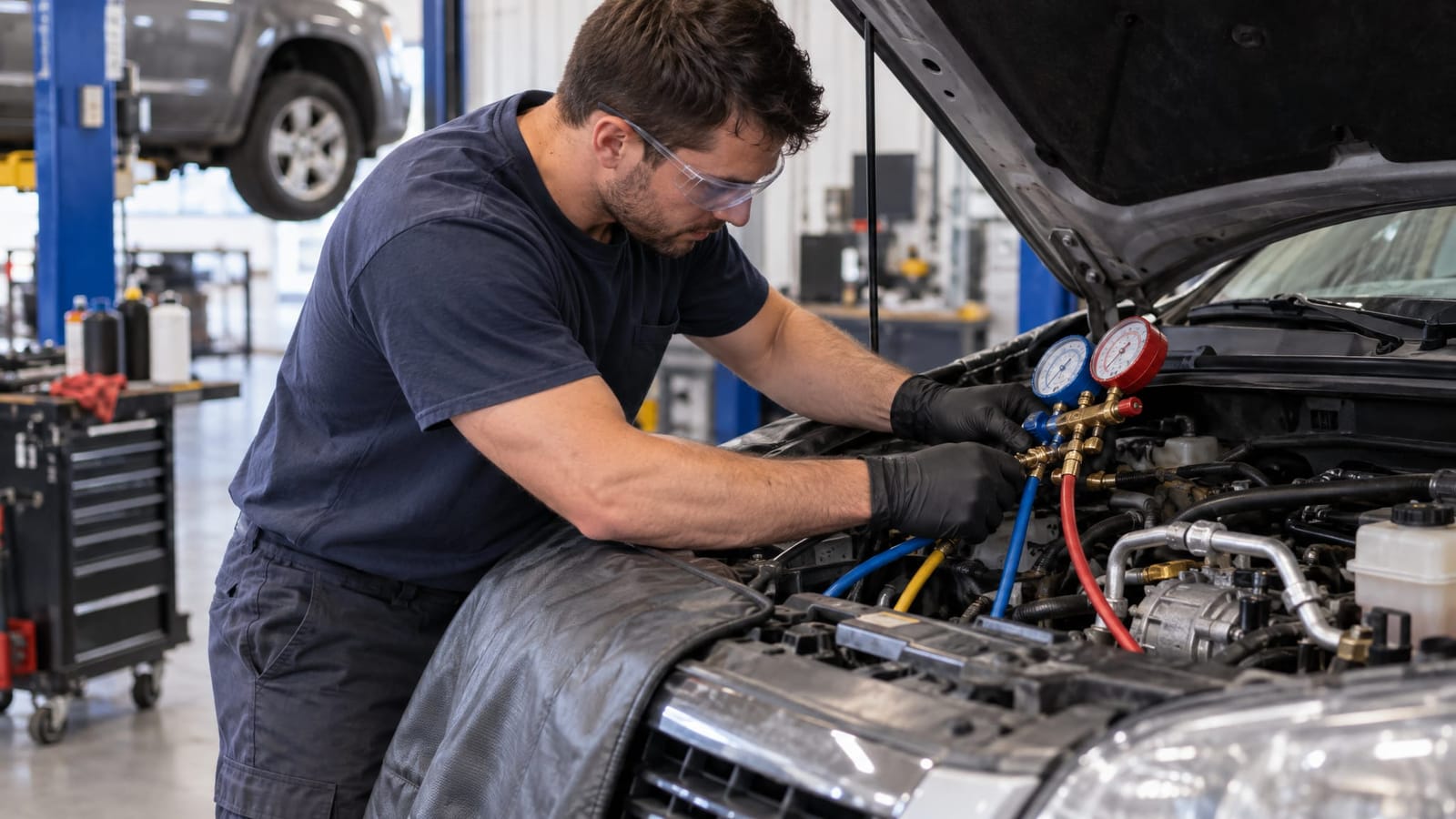
- Compare vent temperature and system pressures under appropriate operating conditions.
- Inspect the condenser, cooling fans, refrigerant lines, and connections.
- Use an electronic leak detector or manufacturer-approved dye procedures to locate refrigerant loss.
- Check cabin airflow and the doors that control air temperature inside the HVAC housing.
If cooling returned briefly after adding refrigerant, that does not identify which component is leaking. Our explanation of why car AC blows warm air after a recharge covers why adding refrigerant may leave the underlying problem unresolved.
What Replacement Involves
Both repairs involve refrigerant recovery, component replacement, leak checking, evacuation to remove air and moisture, and recharging with the vehicle-specified refrigerant and amount. Refrigerant is pressurized, so work that opens the system calls for professional AC service. We offer automotive AC and heating repair at Gregg Automotive in Forney.
Condenser replacement
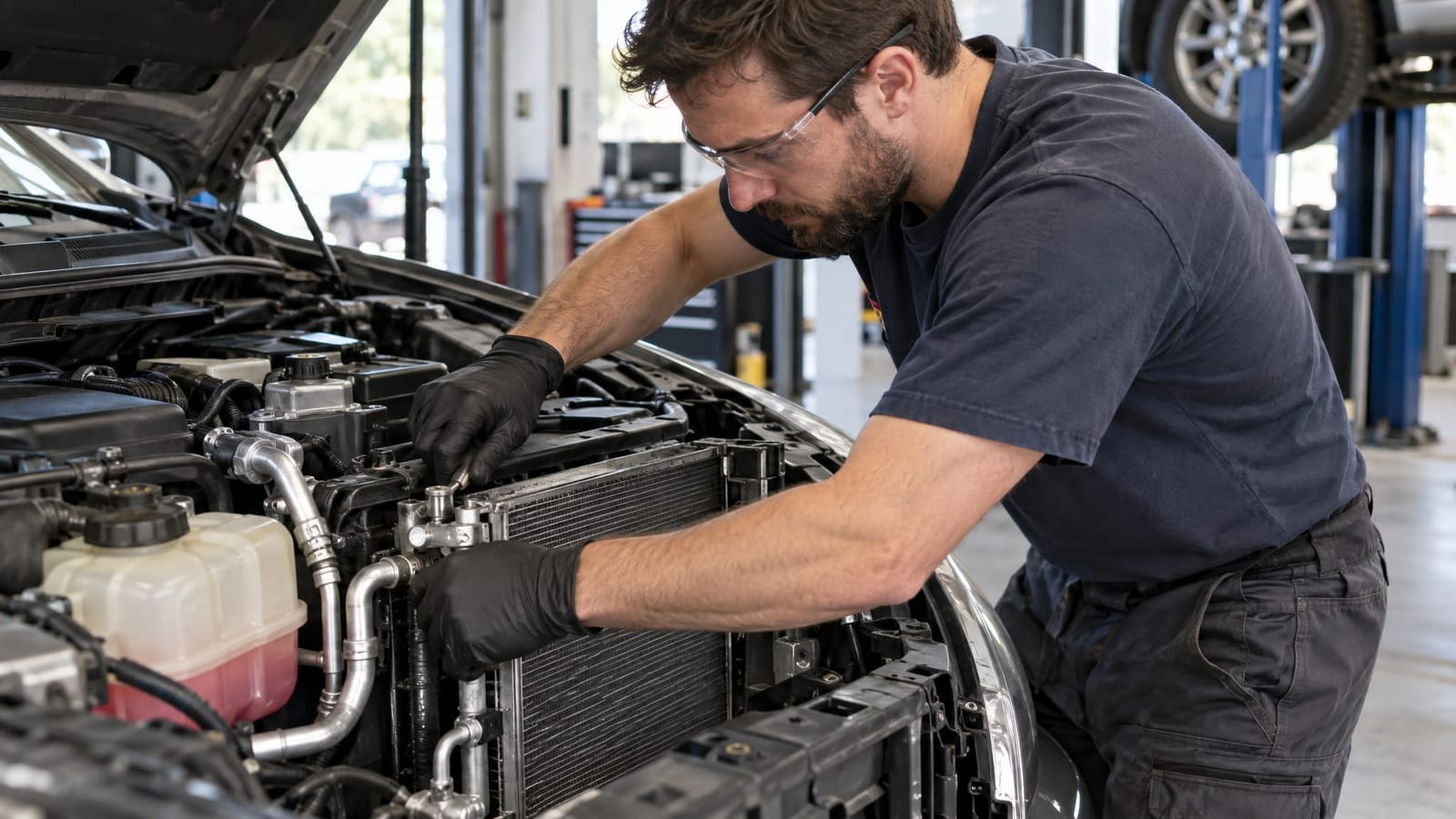
Access may involve removing the grille, bumper cover, or other front-end components. The repair also needs to account for damaged connections, seals, and any associated receiver-drier requirements. A receiver-drier helps remove moisture from the refrigerant and may be integrated into the condenser.
Evaporator replacement
Depending on the vehicle, reaching the evaporator may require substantial dashboard removal and opening or removing the HVAC housing. This access work explains why an evaporator estimate can include significant labor even when the replacement component looks relatively small.
For either repair, useful estimate questions include:
- What test confirmed the failed component?
- Which parts need removal to reach it?
- Does the estimate include seals, refrigerant service, and final performance testing?
- Is any additional work required by the vehicle’s repair procedure?
Frequently Asked Questions
Do the condenser and evaporator need replacement together?
No. A confirmed leak in one does not automatically require replacing the other. Additional replacement depends on separate damage, contamination, or vehicle-specific repair requirements.
Does clear water under the car mean the evaporator is leaking?
Clear water dripping from the AC drain after operation is normally condensation. The evaporator removes moisture from cabin air, and that water drains outside. Water entering the cabin can indicate a drainage problem rather than a refrigerant leak.
Is the evaporator the same as the heater core?
No. The evaporator uses refrigerant to absorb cabin heat. In a conventional heating system, the heater core uses hot engine coolant to warm the air. They may share the HVAC housing but perform different jobs.
The Repair Decision Comes Down to Evidence
The condenser releases heat; the evaporator absorbs it. Road exposure makes condenser damage easier to understand, while hidden access often makes evaporator replacement more involved. The deciding factor is a test that identifies the fault, not simply which component seems more likely to fail.