Bad Strut Symptoms Every Driver Should Know Before It Gets Worse
When it comes to keeping your vehicle safe and comfortable on the road, your struts play a bigger role than most drivers realize. As part of the broader conversation around suspension symptoms diagnosis in Forney TX, understanding bad strut symptoms specifically is one of the most practical things you can do for your vehicle's long-term health. Struts don't fail overnight: they wear down gradually, and the warning signs often show up weeks or even months before a real problem develops. The challenge is knowing what to look for. This guide walks through the most important bad strut symptoms every driver should recognize, explains why struts wear faster on Texas roads, and helps you understand what's at stake if those symptoms are ignored.
1. Your Ride Feels Bouncy or Unusually Rough
One of the earliest and most noticeable bad strut symptoms is a change in how your vehicle rides. Struts are designed to absorb the energy from road bumps and uneven surfaces, keeping your tires in stable contact with the pavement. When they start to wear out, that energy has nowhere to go, and you feel every bump, dip, and crack in the road much more intensely than you should.
What "Bouncy" Actually Means
A healthy strut will let your vehicle compress slightly over a bump and then settle back to a stable position quickly. A worn strut allows the vehicle to keep bouncing for one or two additional cycles after the initial impact. Try this simple test: push down firmly on the front corner of your hood and release it. The vehicle should settle within one bounce. If it continues to rock up and down two or three times, that's a sign your struts may no longer be doing their job properly.
Studies from automotive safety organizations suggest that struts worn to even 50% of their original effectiveness can increase stopping distances by up to 10 feet at highway speeds: a meaningful difference in an emergency situation. On Texas roads, where highway driving is a daily reality for most Kaufman County commuters, that margin matters.
Why Texas Roads Accelerate Strut Wear
Extreme heat causes the hydraulic fluid inside struts to thin out and degrade faster than it would in cooler climates. Summer temperatures in Forney regularly exceed 100°F, and the asphalt surfaces absorb and radiate even more heat than the air temperature suggests. This thermal stress, combined with the road surface expansion and contraction that comes with dramatic temperature swings between seasons, puts additional strain on strut components year-round.
2. Your Vehicle Nose-Dives When You Brake
Another clear bad strut symptom is what mechanics call "nose-dive": the front of your vehicle dipping forward noticeably when you apply the brakes. All vehicles shift some weight forward during braking, but healthy struts manage that weight transfer smoothly. When front struts are worn, that forward pitch becomes much more pronounced and can feel almost like the front of the car is sinking.
The Safety Concern Behind Nose-Diving
Nose-diving isn't just uncomfortable: it affects how effectively your brakes work. When the front of the vehicle drops sharply, it shifts weight distribution unevenly and can reduce your ability to bring the car to a controlled stop. Research from automotive safety groups has found that vehicles with significantly degraded suspension components can require 20% more stopping distance compared to vehicles with properly functioning struts. In everyday Forney traffic, whether you're on FM 548, US-80, or navigating a school zone, that kind of difference is worth paying attention to.
You may also notice the vehicle pulling to one side during braking, which can indicate that one front strut is more worn than the other. Struts typically wear at similar rates, but road conditions, driving habits, and minor alignment issues can cause uneven deterioration over time.
3. Excessive Body Roll Through Turns
If your vehicle leans heavily to the outside when you take a curve, even at moderate speeds, that's one of the more recognizable bad strut symptoms to watch for. A moderate amount of body lean during cornering is normal, but struts work together with other suspension components to limit that lean and keep all four tires in solid contact with the road through a turn.
What Body Roll Tells You About Strut Condition
Excessive body roll during turns means the struts are no longer providing enough resistance to lateral weight transfer. This reduces your vehicle's handling stability, particularly during sudden lane changes or when navigating curved on-ramps. Drivers often describe the feeling as "floaty" or like the vehicle is slow to respond to steering input. It can be subtle at first, developing gradually as struts wear, which is why many drivers don't notice it until the problem has progressed significantly.
If you've started gripping the steering wheel a little tighter on highway curves or felt less confident making quick lane adjustments, it's worth having your struts inspected, especially if your vehicle has more than 50,000 miles on it.
4. Uneven Tire Wear Patterns
Uneven tire wear is one of the most overlooked bad strut symptoms because drivers often attribute it to alignment or inflation issues without considering the suspension. While those factors certainly contribute to uneven wear, worn struts create a specific type of wear pattern called "cupping" or "scalloping": a series of dips or high spots worn into the tire tread that appear roughly every few inches around the circumference of the tire.
Recognizing Cupping vs. Other Wear Patterns
Cupping happens because a worn strut allows the tire to bounce slightly off the road surface instead of maintaining consistent contact. Every time the tire bounces and re-contacts the pavement, it scrubs a small amount of tread unevenly. Over thousands of miles, this creates that distinctive scalloped pattern. Run your hand along the tread of your front tires, if it feels wavy or uneven rather than smooth and flat across the surface, that's worth discussing with a technician.
This matters beyond just tire life. Tires with cupped wear patterns also generate more road noise and can cause vibration that drivers sometimes misdiagnose as a wheel balance issue. If you've had your tires balanced more than once recently without resolving the vibration, the underlying cause may be your struts rather than the tires themselves.
For drivers wondering about the long-term cost of ignoring this, driving on bad struts consequences goes deeper into what happens when worn struts are left unaddressed, including what it does to your tires, brakes, and alignment over time.
5. Fluid Leaks or Visible Damage on the Strut Housing
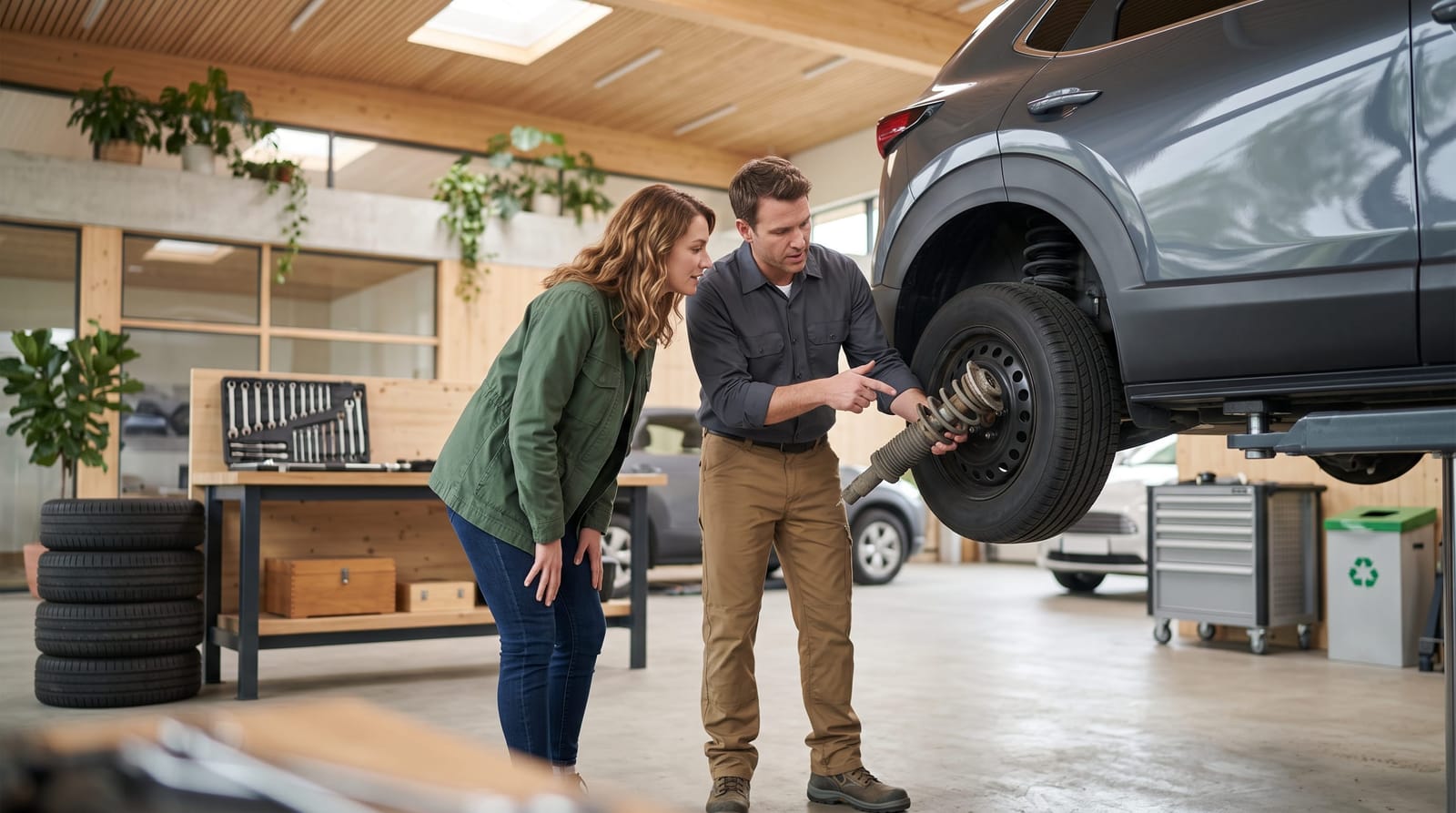
A physical inspection of your struts can reveal bad strut symptoms that you might not feel while driving yet. Struts contain hydraulic fluid that provides their damping action. When the seals inside the strut wear out or the housing develops a crack, that fluid can leak out, and once it does, the strut loses its ability to control suspension movement effectively.
What to Look For During a Visual Check
Look for oily residue or wet streaking along the strut body, which is typically visible as a dark, slightly shiny film running down the shaft. Even a small amount of leakage is worth having inspected, because once a strut begins leaking, it won't reseal on its own and will continue to deteriorate. You can also look for:
- Cracked or brittle rubber boots at the top and bottom of the strut assembly
- Rust or corrosion on the strut body, especially around mounting points
- Visible bending or physical damage to the strut shaft
- Loose or deteriorated mounting hardware
Keep in mind that not all strut wear shows up visually. Internal wear to the piston and valving inside the strut won't be visible from the outside, which is why a physical road test and professional inspection are important parts of a complete strut evaluation.
6. Rattling, Clunking, or Knocking Noises Over Bumps
Unusual noises are among the most common bad strut symptoms that bring drivers into a shop. A healthy strut operates quietly, absorbing road impacts without producing sound. When strut components, including the upper mount, bearing plate, or the strut body itself, become worn or loose, they can produce rattling, clunking, or knocking sounds that are most noticeable when driving over speed bumps, railroad crossings, or rough pavement.
Diagnosing Noise Location
Strut noise typically comes from the front of the vehicle and changes in character depending on speed and road surface. A clunk when going over a single sharp bump often points to a loose or worn upper strut mount. A consistent rattling over rough roads may suggest the strut itself has worn internally or that a component in the strut assembly has come loose. Because other suspension and steering components, such as sway bar end links and ball joints, can produce similar noises, a proper inspection is the only way to confirm the source.
For drivers in Forney and across Kaufman County, these noises tend to show up sooner due to the combination of rural road surfaces, construction zones along US-80, and the thermal expansion that affects road quality throughout the year.
Related Details Worth Knowing
Once you've identified potential bad strut symptoms in your vehicle, two questions tend to follow naturally. The first is how urgent the situation really is, which is something that driving on bad struts consequences addresses directly, walking through what continues to happen to your vehicle the longer worn struts go unrepaired. The second question most drivers have is how long struts are supposed to last in the first place. That answer varies more than most people expect, especially for Texas drivers, and how long do struts last on Texas roads breaks down the specific factors that affect strut lifespan here in Kaufman County compared to national averages.
What to Do If You're Noticing These Symptoms
Recognizing bad strut symptoms is the first step, but getting them properly diagnosed is what actually protects your vehicle. Strut wear is gradual, and because it happens over thousands of miles, it can be easy to adapt to the changes without realizing how much your vehicle's handling has declined from where it should be. A professional inspection gives you a clear picture of where your struts actually stand and what, if anything, needs attention.
Struts are typically inspected in pairs: replacing just one front strut while leaving the other worn creates an imbalance that affects handling and braking consistency. Most manufacturers and automotive technicians recommend replacing struts in axle pairs (both fronts or both rears together) to maintain even performance across the vehicle.
At Gregg Automotive in Forney, our team works with drivers from across Kaufman County, including Rockwall, Terrell, Heath, and the surrounding communities, to diagnose suspension concerns accurately and explain what's needed in straightforward, honest terms. If you've been noticing any of the bad strut symptoms described here, we'd be glad to take a look and give you a clear assessment of your vehicle's suspension health.
Schedule your suspension inspection with Gregg Automotive today and get the straight answers you need to drive with confidence.