Car Battery Testing Near Forney TX: When Should You Test and Replace?
Your car battery doesn't always warn you before it fails. One morning it starts fine, and the next morning it doesn't start at all. For drivers in and around Forney, TX, that situation is made worse by the Texas heat, which quietly shortens battery life faster than most people realize. This post walks through the best practices for car battery testing in Forney TX: what to test for, what the numbers mean, and when replacing a battery that still tests "good" is actually the smarter move.
Best Practice #1: Understand What Battery Testing Actually Measures
Battery testing isn't just about checking whether a battery is "dead or alive." A proper test gives you two key pieces of information: Cold Cranking Amps (CCA) and reserve capacity.
Cold Cranking Amps (CCA) measures how much power your battery can deliver for 30 seconds at 0°F to start your engine. Even though Forney doesn't see many days near freezing, CCA is still the standard rating used across the industry. A battery with a higher CCA rating starts stronger and handles heat stress better overall.
Reserve Capacity (RC) measures how long your battery can power essential systems, lights, fuel pump, ignition, if your alternator stops working. It's typically rated in minutes, and a higher number means more of a safety buffer.
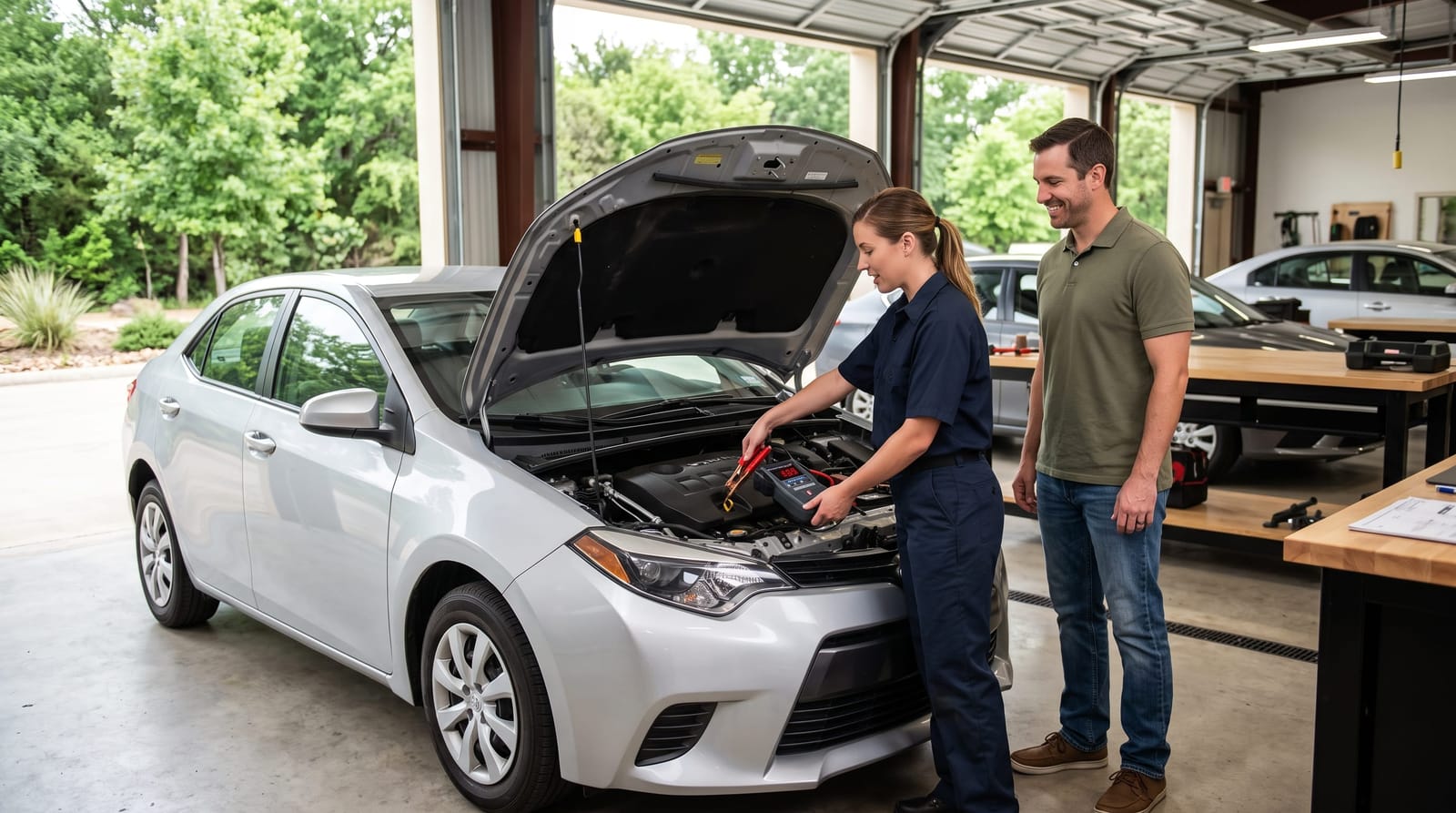
A professional battery test uses a load tester or conductance tester to compare your battery's actual output against its rated CCA. If your battery is producing less than 80% of its rated CCA, it's losing the ability to reliably start your vehicle, even if it hasn't failed yet. That 80% threshold is a useful benchmark to keep in mind when evaluating test results.
Best Practice #2: Know How Texas Heat Accelerates Battery Aging
Most battery guides focus on cold weather because freezing temperatures are well known for draining batteries. But heat is actually harder on battery chemistry over time. High temperatures cause the fluid inside the battery to evaporate and speed up internal corrosion on the battery's plates.
Here's a useful comparison: in cooler northern climates, car batteries commonly last 5 to 7 years. In hot southern climates like Texas, battery life often drops to 3 to 4 years: sometimes less if the vehicle sits in direct sun regularly or makes a lot of short trips that don't give the alternator time to fully recharge the battery.
Forney sits in East Texas, where summer temperatures routinely push above 95°F and road surface temperatures can run 30 to 40 degrees higher than that. Under those conditions, a battery that started the summer at full health can degrade significantly by September. The damage is cumulative: each summer season adds to the wear already building up inside the battery.
This is exactly why Texas drivers shouldn't rely on age alone to decide when to replace a battery. A 2-year-old battery in Forney may have experienced the equivalent of 4 to 5 years of wear by northern climate standards.
Best Practice #3: Test Your Battery at Least Once a Year: and Know When to Test Extra
An annual battery test is a good baseline habit. The best times to test are in early spring before summer heat builds, and again in early fall after the battery has been through another Texas summer.
Beyond the annual checkup, schedule a battery test any time you notice these warning signs:
- Slow or sluggish engine cranking when you turn the key
- Dashboard battery warning light coming on
- Headlights that dim when the engine is idling
- A battery that's 3 or more years old
- Needing a jump start even once
- The vehicle sitting unused for more than 2 to 3 weeks
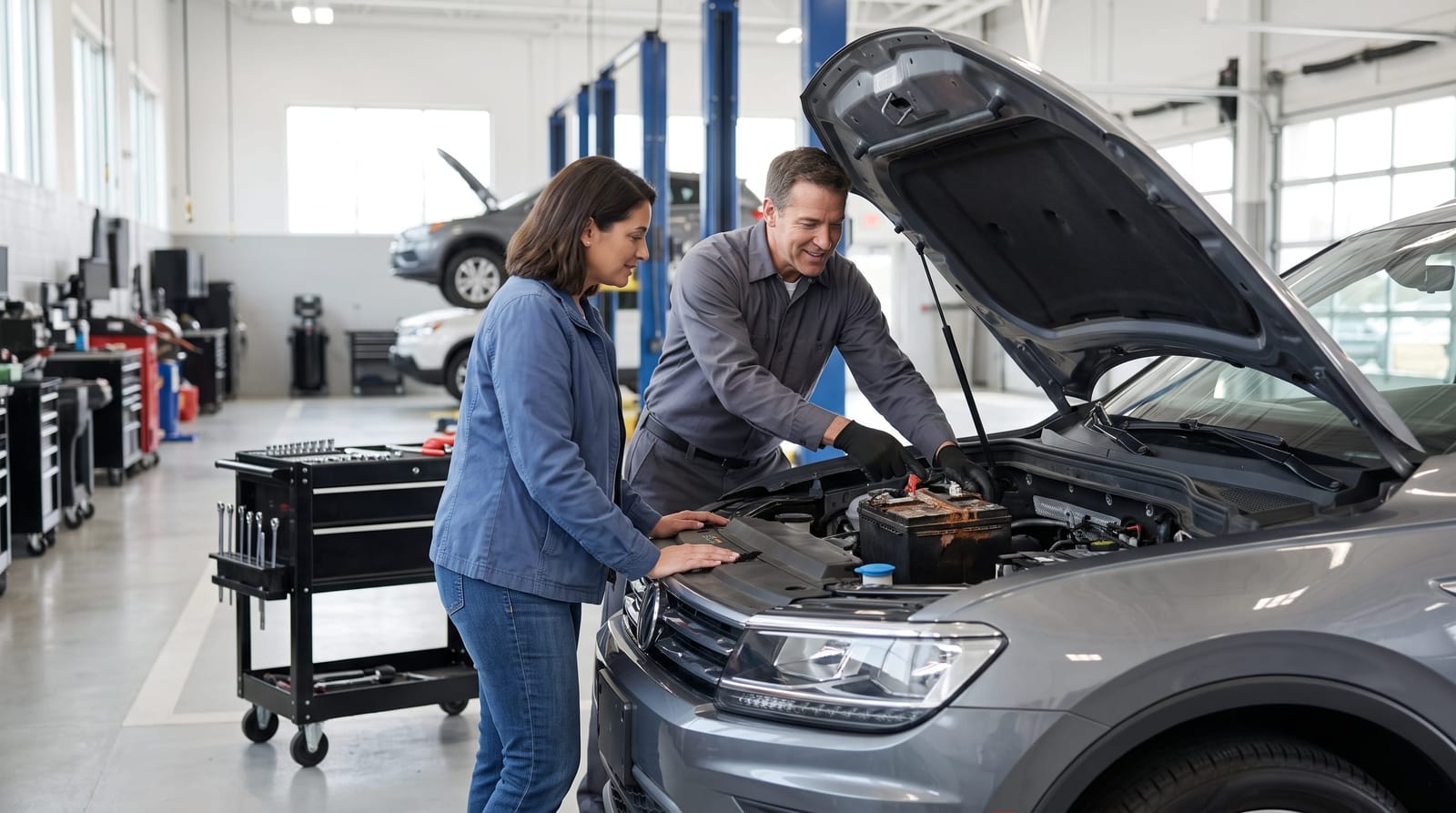
Car battery testing in Forney TX is available at local shops including Gregg Automotive, and free testing is also offered at O'Reilly Auto Parts in Forney (Store #2463). The test takes only a few minutes and gives you a printout showing exactly where your battery stands, not just a pass/fail guess.
Best Practice #4: Don't Wait for Failure: Know When "Good" Isn't Good Enough
This is where a lot of drivers get caught off guard. You get your battery tested, the result comes back as "good," and you assume you're set for another year. But a test result tells you where the battery stands today: it doesn't predict how much life is left.
Consider proactive replacement even on a battery that still tests within range if any of these situations apply:
- The battery is 4 or more years old. The general recommendation is replacement every 3 to 5 years, and in Texas heat, leaning toward the 3-to-4 year end of that range is reasonable.
- The battery is testing between 80% and 85% of rated CCA. It passes, but it's clearly declining. Summer heat could push it over the edge before your next scheduled test.
- You're heading into summer with a battery that barely passed last fall. A battery running close to its limits in moderate weather may not hold up through peak Texas heat in July and August.
- You drive a vehicle where a surprise breakdown would be high-risk: long commutes, regular highway driving, or a vehicle that carries your family regularly.
Replacing a battery before it fails is almost always less disruptive and less expensive than dealing with a dead battery at an inconvenient time. A replacement battery typically runs between $150 and $300 depending on your vehicle's requirements, which is far more manageable than emergency roadside service or a tow.
Best Practice #5: Pair Battery Testing With a Charging System Check
A battery doesn't work alone. Your alternator charges the battery while the engine runs, and your starter motor draws from the battery to get the engine going. If any part of that system is underperforming, even a healthy new battery won't save you from problems.
When you get your battery tested, ask for a charging system check as well. This checks whether the alternator is producing the right voltage: typically between 13.5 and 14.7 volts at idle. An alternator producing too little voltage means your battery is slowly draining every time you drive. An alternator producing too much voltage can actually overcharge and damage the battery.
Catching a weak alternator early protects your battery investment and keeps the whole starting and charging system working together the way it should. As part of a full year-round vehicle maintenance routine for Texas drivers, a charging system check every year or two is a straightforward way to avoid overlapping problems.
Frequently Asked Questions
How often should I get my car battery tested in Forney, TX?
Once a year is a reasonable minimum for most drivers. Because Texas heat puts extra stress on batteries, testing in the spring before summer and again in the fall after summer is even better. If your battery is already 3 or more years old, testing twice a year gives you a clearer picture of how quickly it's declining.
What does it mean if my battery passes the test but my car still cranks slowly?
A battery can pass a conductance test while still struggling under real-world load, especially in heat. Slow cranking is a reliable symptom that the battery is working harder than it should. If you're noticing sluggish starts even on a battery that recently tested "good," it's worth having both the battery and the charging system looked at by a shop that can do a deeper diagnostic evaluation.
Is free battery testing at an auto parts store as accurate as a shop test?
Free testing at stores like O'Reilly in Forney uses the same basic conductance testers that shops use and can give you a reliable snapshot of your battery's condition. The difference is that a shop can also check your alternator and starter at the same time and give you context for what the results mean for your specific vehicle, which is especially useful if you're seeing warning signs alongside the test results.
How long does a car battery typically last in Texas?
The general guideline is 3 to 5 years, but Texas heat routinely pushes battery life toward the shorter end of that range. Many East Texas drivers find their batteries need replacement closer to the 3-to-4 year mark. Vehicles that sit outside in direct sun, make mostly short trips, or have high electrical demands from accessories may see even shorter battery life.
The Bottom Line on Battery Testing Near Forney TX
Car battery testing in Forney TX is one of the simplest, most affordable things you can do to avoid an unexpected breakdown. Understanding what your test results mean, especially CCA output and how it compares to the battery's rating, helps you make a smarter decision than just waiting for the battery to quit. In a climate as demanding as East Texas, staying a step ahead of battery failure isn't overcautious: it's just practical. If it's been more than a year since your last battery check, or your battery is approaching 3 years old, now is a good time to schedule a test.