How Long Do Brake Pads Last on Texas Highways?
If you're a Kaufman County driver making regular trips into Dallas or spending time on US-175 and I-20, you've probably wondered at some point how long your brake pads are actually supposed to last. It's a fair question, and one that doesn't have a single simple answer. Brake pad lifespan depends on several factors, including how you drive, where you drive, and what type of pads are on your vehicle. This guide breaks it all down in plain terms so you know what to expect.
The Honest Mileage Range for Brake Pads
Brake pads are generally rated to last anywhere from 20,000 to 70,000 miles. That's a wide window, and it reflects how differently brake pads wear depending on real-world conditions. Most drivers fall somewhere in the middle, around 40,000 to 50,000 miles, but the type of pad on your vehicle plays a significant role in where you land on that spectrum.
There are three common types of brake pads you'll find on passenger vehicles:
- Organic pads: These are softer and quieter, but they wear faster. Expect them to last on the lower end of the range, often 20,000 to 30,000 miles, especially in demanding driving conditions.
- Semi-metallic pads: A popular choice for everyday vehicles, these typically last around 50,000 miles and handle heat well. They're a solid middle-ground option for most drivers.
- Ceramic pads: These are the longest-lasting option, often reaching up to 70,000 miles. They produce less dust and run quieter than semi-metallic pads. If you're curious whether ceramic brake pads are worth the upgrade for your vehicle, that's worth exploring when it's time for your next brake service.
Understanding what type of pads your vehicle currently has is the first step toward setting realistic expectations for brake life.
Highway Driving vs. Stop-and-Go: What Wears Brakes Faster?
Here's something that surprises a lot of drivers: highway miles are actually easier on your brake pads than city miles. When you're cruising on a highway at a consistent speed, you're applying your brakes far less frequently. Long, gradual slowdowns, like when you're exiting the freeway, create less heat and less friction wear than constantly stopping and starting in traffic.
Stop-and-go driving is what really accelerates brake wear. Every time you press the brake pedal, the pads clamp against the rotor to slow the vehicle. In heavy traffic, that cycle repeats dozens or even hundreds of times during a single commute. The heat generated in that process gradually wears down the pad material over time.
This is why the same vehicle driven primarily on open highways might get 60,000 miles out of a set of pads, while an identical vehicle used mainly in Dallas rush-hour traffic might need new pads at 30,000 miles or sooner. The distance traveled matters less than how often and how hard you're braking.
What Kaufman County Commuters Should Know
If you're commuting from Kaufman, Forney, Terrell, or anywhere else in Kaufman County into the Dallas metro, your brake pads are experiencing a mixed driving environment. The stretch on US-175 between Kaufman and Dallas is relatively open, which is easier on your brakes. But once you hit the Dallas city limits, especially anywhere near I-30, I-635, or downtown, you're in stop-and-go territory that adds real wear to your brake system.
A typical Kaufman County commuter driving 30 to 40 miles each way, five days a week, might log 15,000 to 20,000 commuter miles per year. Add in weekend errands, school runs, and local driving, and many households put 20,000 or more miles on a vehicle annually. At that pace, you could reasonably expect to evaluate your brake pads every 18 to 24 months, even if the pads themselves have the capacity to last longer.
Driving behavior matters here too. Drivers who leave more following distance, coast to decelerate before braking, and avoid hard stops tend to get noticeably more life out of their brake pads than those who brake late and firmly. Small habit adjustments can add thousands of miles to your brake pad lifespan.
Signs Your Brake Pads Are Getting Low: Regardless of Mileage
Mileage is a useful reference point, but it shouldn't be the only thing you rely on. Your vehicle will often give you physical signals when the brake pads are wearing thin. Pay attention to these common indicators:
- Squealing or squeaking: Most brake pads include a small metal wear indicator that begins to squeal when the pad material gets low. This is by design: it's your vehicle alerting you.
- Grinding noise, If squealing has progressed to grinding, the pad material may be fully worn and metal is contacting metal. This needs attention promptly.
- Longer stopping distances, If your vehicle feels like it takes more effort or distance to stop, reduced pad thickness could be a contributing factor.
- Brake pedal pulsing or vibration: This can sometimes point to uneven pad wear or rotor issues that developed alongside worn pads.
- Brake warning light: Some newer vehicles have electronic wear sensors that trigger a dashboard alert when pads reach a certain thickness.
If you notice any of these signs, it's a good idea to have your brakes inspected. It's also worth knowing that issues beyond the pads, like a sticking caliper, can cause pads to wear unevenly or faster than expected. Understanding how to tell if a brake caliper is failing can help you catch those problems before they turn into more involved repairs.
How to Get the Most Out of Your Brake Pads
A few practical habits can meaningfully extend your brake pad life without any extra expense:
- Increase following distance: More space between you and the car ahead means more time to slow down gradually instead of braking hard.
- Avoid "two-foot driving": Resting your left foot on the brake pedal while driving creates constant light friction that wears pads faster than you'd expect.
- Slow down before braking: Coasting to reduce speed before you actually apply the brakes reduces the energy your pads have to absorb.
- Don't ignore early warning signs: Addressing worn pads before they're completely gone protects your rotors from unnecessary damage, which keeps overall repair costs lower.
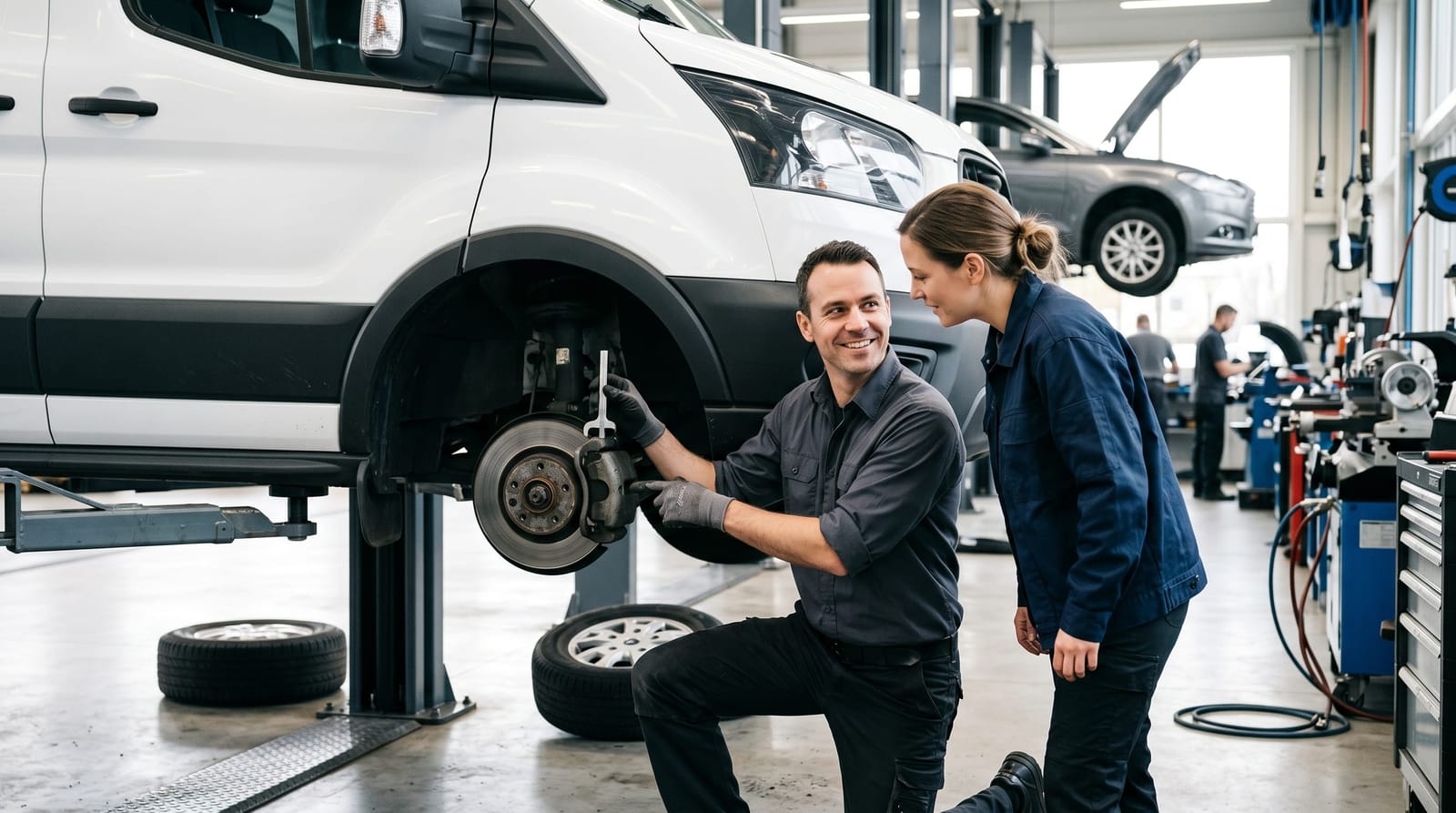
- Keep up with routine inspections: Having a trusted shop check your brakes during routine oil changes gives you a consistent read on where your pad thickness stands.
Frequently Asked Questions
How often should I have my brake pads inspected?
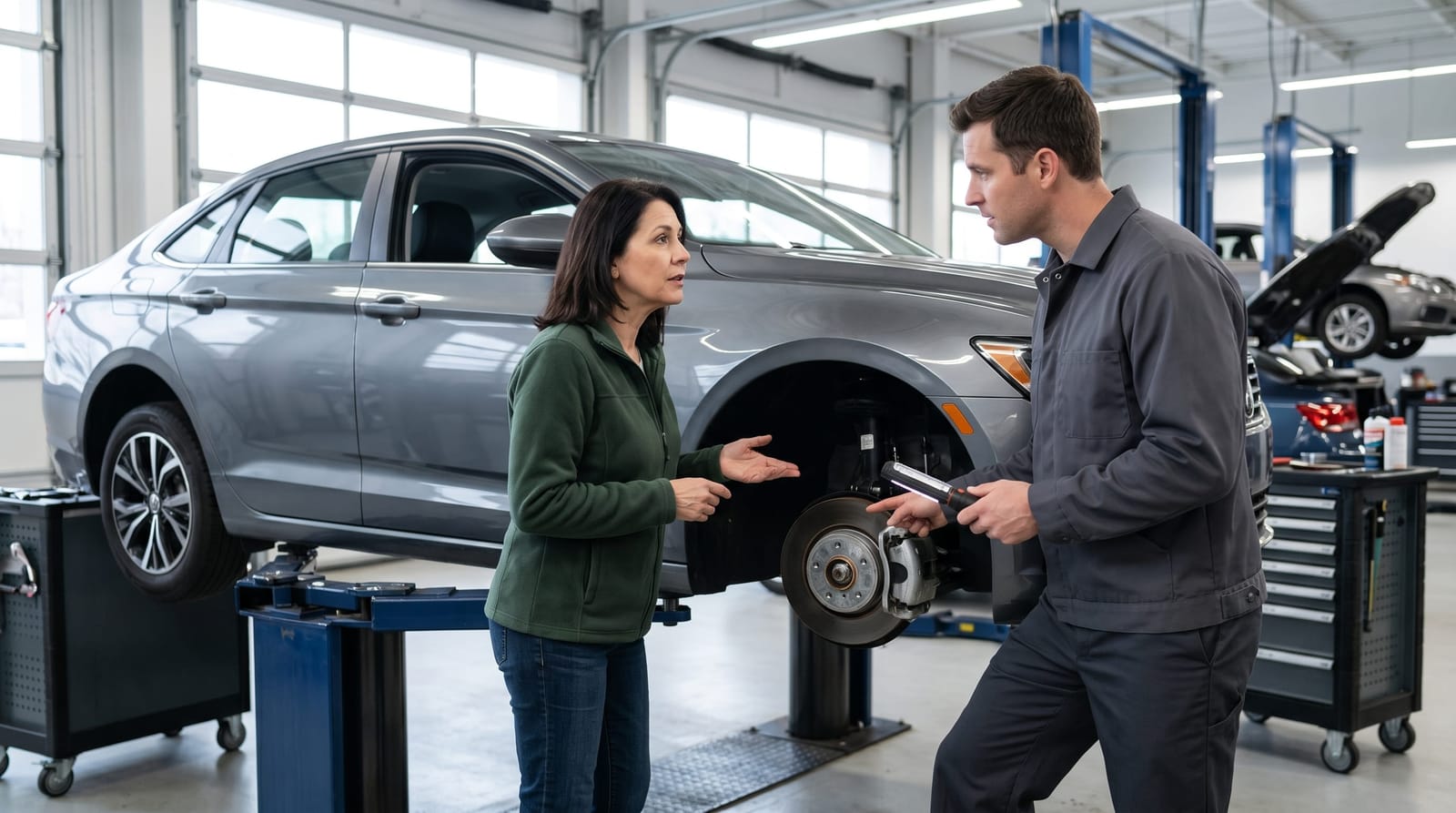
A general recommendation is to have your brakes visually inspected at least once a year, or every 10,000 to 15,000 miles. Many shops will check brake pad thickness during an oil change at no extra charge. If you drive heavily in stop-and-go conditions, more frequent checks make sense.
Do front and rear brake pads wear out at the same rate?
No: front brake pads typically wear faster than rear pads. During braking, more of the vehicle's weight shifts forward, which means the front brakes handle more of the stopping work. It's common for front pads to need replacement before the rear pads do.
Can I drive on worn brake pads for a while before replacing them?
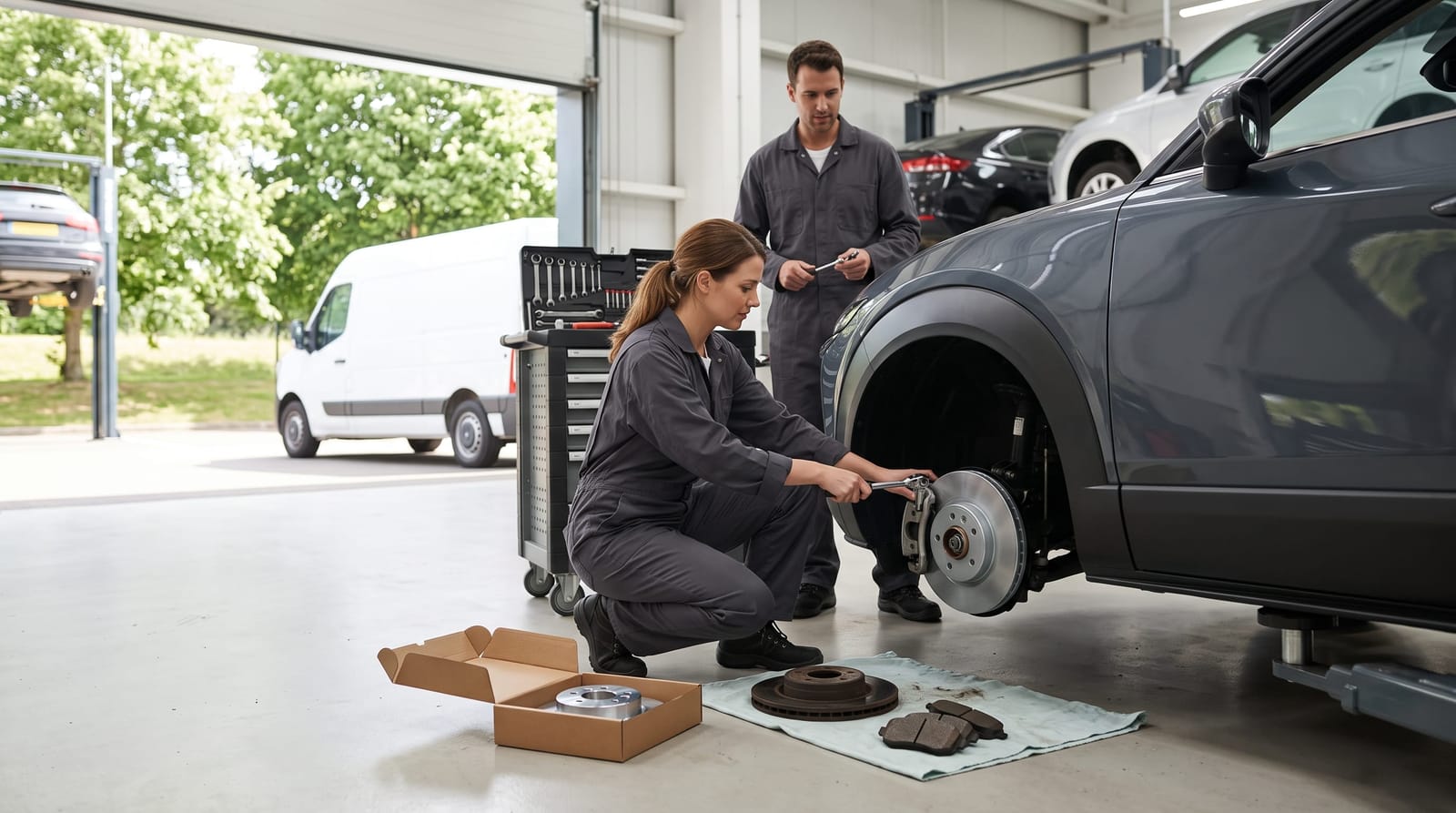
It's not recommended. Once pads are worn down to their wear indicators, continuing to drive on them risks damage to your brake rotors. Rotor damage significantly increases the cost of brake service compared to a straightforward pad replacement. Addressing worn pads promptly is almost always the more affordable path.
Does towing or carrying heavy loads affect brake pad life?
Yes, meaningfully. More weight means your brakes have to work harder to slow the vehicle. Kaufman County drivers who regularly haul trailers, carry truck beds loaded with materials, or tow equipment should expect shorter brake pad intervals and should check their brakes more frequently.
Putting It All Together
Brake pads on most vehicles last somewhere between 20,000 and 70,000 miles, but where your vehicle lands in that range depends on your specific driving habits, your commute, and the type of pads installed. For Kaufman County drivers making regular Dallas commutes, planning for brake inspections every one to two years is a reasonable approach. Staying ahead of brake wear is one of the simplest ways to avoid larger repair bills and keep your vehicle safe on the road. If it's been a while since your brakes were looked at, a quick inspection is always a good starting point.