How Much Does a Brake Job Cost at a Dealership vs a Local Shop in Forney TX?
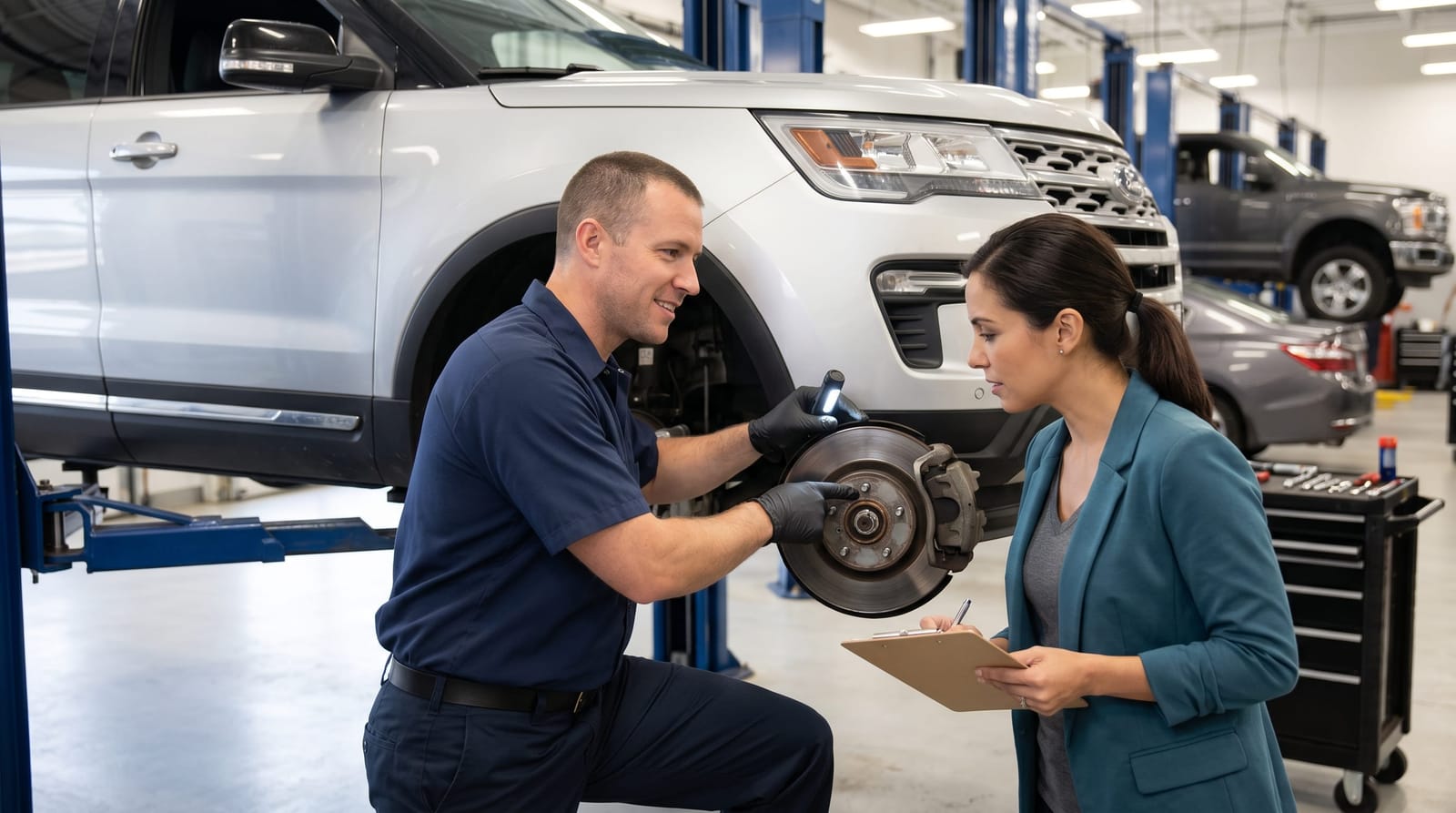
If you've recently been quoted a price for a brake job and it made you do a double-take, you're not alone. Brake service is one of the most common repairs where dealership and independent shop pricing can differ significantly: sometimes by hundreds of dollars for the exact same work. Whether you drive a Ford, Toyota, Chevy, or anything in between, understanding what a fair brake job costs in the Forney area can help you make a confident, informed decision without second-guessing yourself at the service counter.
What Does a Typical Brake Job Include?
Before comparing prices, it helps to understand what you're actually paying for. A standard brake job most commonly refers to brake pad replacement, but a more complete service often includes resurfacing or replacing the rotors as well. Here's what a full brake service typically covers:
- Brake pad replacement: The pads are the friction material that press against the rotors to slow your vehicle. They wear down over time and need periodic replacement.
- Rotor resurfacing or replacement: Rotors are the large metal discs your brake pads clamp onto. Depending on their condition, they may be resurfaced (machined smooth) or replaced entirely.
- Brake hardware and hardware lubrication: Clips, pins, and contact points that keep the brake assembly functioning quietly and correctly.
- Brake fluid inspection: Checking fluid condition and level to ensure the hydraulic system is working properly.
Some shops also inspect calipers, brake hoses, and wheel cylinders as part of the overall evaluation. A shop that takes time to look at the full system, not just the worn pads, is giving you a more complete picture of your vehicle's safety and condition.
Brake Job Price Ranges: Dealership vs. Independent Shop
Pricing for brake service varies depending on your vehicle make, the parts used, and who's doing the work. That said, here are realistic price ranges you can expect in the Forney, TX area:
Dealership Pricing
At a franchised dealership, a front brake pad and rotor replacement typically runs anywhere from $350 to $600 per axle, with some luxury or import dealerships charging even more. Rear brakes are sometimes slightly less expensive depending on the vehicle, but the total for all four corners can easily exceed $1,000 to $1,400 at a dealer. These prices reflect the dealership's higher overhead costs, mandatory use of OEM (original equipment manufacturer) parts, and elevated labor rates built into their service department pricing structure.
Independent Shop Pricing
A quality independent shop in the Forney area will typically charge $200 to $400 per axle for brake pad and rotor replacement using quality aftermarket or OEM-equivalent parts. For most standard passenger vehicles, sedans, SUVs, pickup trucks, a complete four-wheel brake job at an independent shop often runs between $500 and $900 total, depending on what the vehicle actually needs. That's a meaningful difference in real money, and the quality of the work and parts doesn't have to be any less.
The parts themselves are a major factor here. Independent shops have the flexibility to source high-quality parts from reputable suppliers at better prices than dealerships pay for branded OEM components. For most everyday driving needs, quality aftermarket brake parts perform just as reliably, and in some cases, independent shops can also source OEM parts if that's what you prefer.
What Drives the Price Difference?
It's worth understanding why dealerships charge more, because it's not always about better quality. Several structural factors drive up dealership service costs:
- Higher overhead: Dealerships maintain large, polished facilities with significant operating costs, and those costs get factored into what you pay for service.
- Mandatory OEM parts: Dealerships are generally required to use manufacturer-branded parts, which carry a premium markup regardless of whether a quality alternative is available at a lower price.
- Flat-rate labor structures: Dealership technicians are often paid using a flat-rate system tied to manufacturer guidelines, which doesn't always reflect the actual time a job takes.
- Franchise fees and corporate requirements: Dealerships operate under franchise agreements that include service pricing expectations and audit requirements that independent shops simply don't carry.
Independent shops, by contrast, set their own pricing based on actual costs, local market rates, and what's fair for the customer. A shop that values long-term relationships with its customers has every reason to price honestly: repeat business and referrals matter far more than squeezing every dollar out of a single visit.
This same pricing dynamic plays out across many other services too. If you've ever wondered about the gap on routine maintenance, the situation with oil changes follows a very similar pattern: something worth keeping in mind the next time you're comparing maintenance costs across service providers in the area.
Does Cheaper Mean Lower Quality? Not Necessarily.
This is the concern most vehicle owners have, and it's a fair one. Nobody wants to save $200 on brake work only to have a problem three months later. Here's the honest answer: quality at an independent shop comes down to the shop's reputation, the parts they use, and the skill of their technicians, not whether they have a brand name on the building.
Look for shops that use name-brand brake parts from established suppliers, offer a warranty on parts and labor, and take time to explain what they found and why the repair is needed. A trustworthy shop will show you worn parts if you ask, walk you through the inspection, and give you a clear written estimate before any work begins. These are the markers of quality service, and they have nothing to do with dealership pricing.
In Forney and the surrounding Kaufman County area, where road conditions, Texas heat, and stop-and-go traffic on US-80 can accelerate brake wear, having a shop that evaluates your full brake system, not just the obvious wear item, means you're getting real value for your money.
How to Know When You Actually Need a Brake Job
Understanding cost is useful, but knowing when brake service is genuinely needed helps you avoid both unnecessary repairs and delaying something important. Here are the most common signs your brakes deserve attention:
- Squealing or squeaking when you apply the brakes (often the wear indicator doing its job)
- A grinding or metal-on-metal sound when stopping
- The vehicle pulling to one side when braking
- A soft or spongy feeling in the brake pedal
- Vibration or pulsing through the pedal when slowing down
- The brake warning light illuminating on your dashboard
Any of these signs warrants a brake inspection. Most quality shops will inspect your brakes at no charge and give you a straightforward assessment of what they found and what the actual condition is, so you can make your own decision from there.
Frequently Asked Questions
Is it safe to get brakes done at an independent shop instead of the dealership?
Yes. Brake service doesn't require dealer-specific tools or proprietary parts for most vehicles. A skilled independent technician using quality brake components can perform brake work that meets or exceeds manufacturer specifications. What matters is the technician's experience, the quality of parts used, and whether the shop stands behind their work with a warranty.
Will getting my brakes done somewhere other than the dealership void my warranty?
No. Under the Magnuson-Moss Warranty Act, having routine service and repairs performed at an independent shop does not void your vehicle's manufacturer warranty, as long as quality parts and proper procedures are used. Dealerships cannot legally require you to use their service department to maintain your warranty coverage.
How long do brake pads typically last?
Brake pad life varies quite a bit depending on driving habits, vehicle type, and road conditions. In general, most brake pads last between 30,000 and 70,000 miles. Stop-and-go driving in traffic tends to wear pads faster than highway driving. Having your brakes visually inspected during routine maintenance visits is the best way to catch wear before it becomes an urgent issue.
Do I need to replace all four brakes at once?
Not always, but front and rear brakes should generally be replaced as a set (both left and right on the same axle) to maintain even braking performance. Whether you do the front and rear at the same time depends on the actual wear. A good shop will measure pad thickness and rotor condition on all four corners and give you an honest recommendation based on what they actually find.
The Bottom Line on Brake Job Costs in Forney TX
For most vehicle owners in the Forney area, a quality brake job at a reputable independent shop will cost significantly less than the same service at a dealership, often $150 to $400 less depending on your vehicle and what needs to be done. That savings comes without sacrificing quality, safety, or workmanship when you're working with a shop that takes its reputation seriously. Brakes are too important to either overpay for or cut corners on, and the good news is you don't have to choose between the two. Honest, transparent pricing and reliable brake service genuinely can go hand in hand.