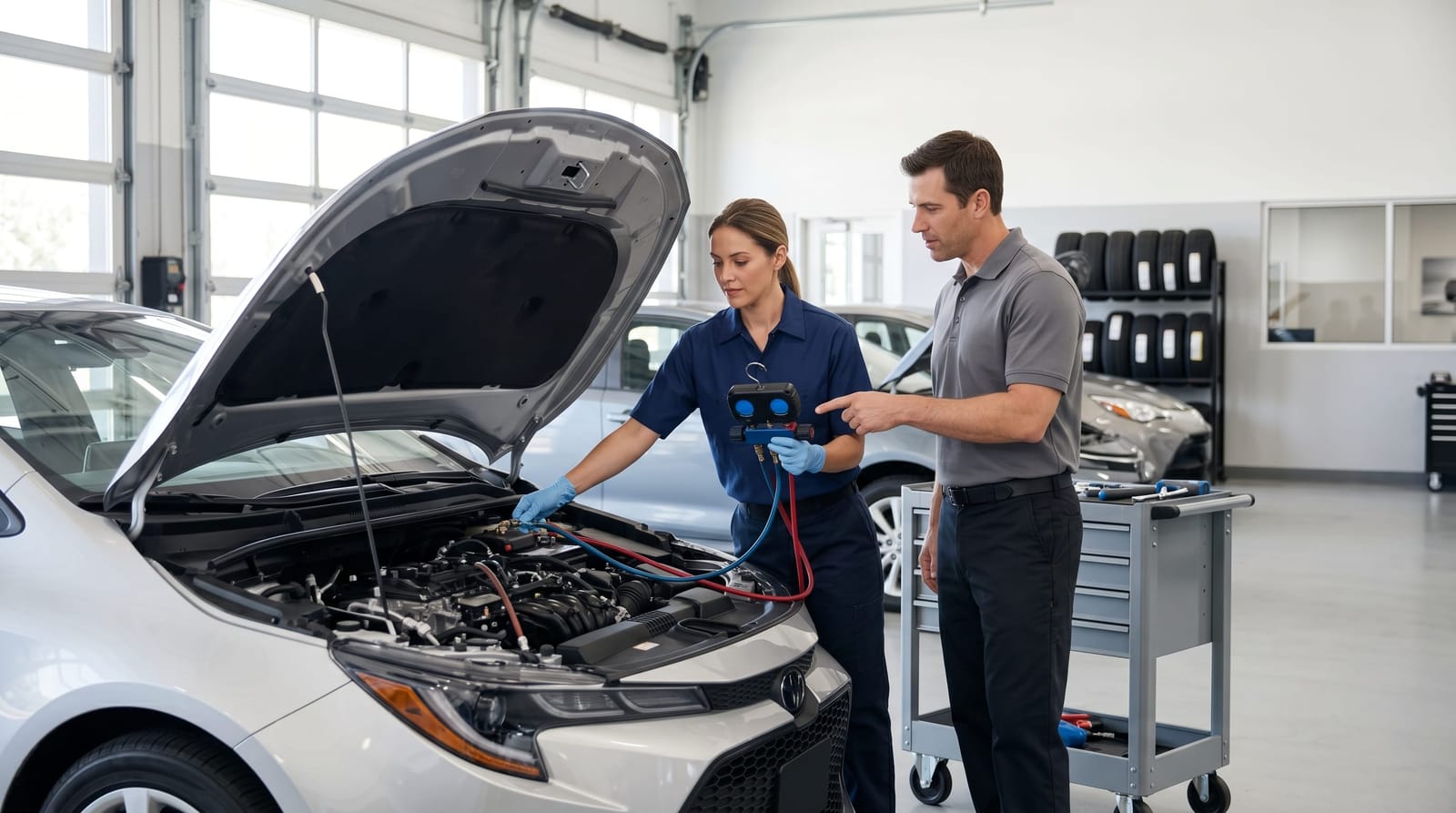
How Much Does Auto AC Repair Cost?

One of the first questions drivers ask when their air conditioning stops working is a simple one: how much is this going to cost me? It's a fair question, and the honest answer is that auto AC repair cost estimates can vary quite a bit depending on what's actually wrong with your system. This guide breaks down the most common AC repairs, what you can realistically expect to pay, and how to make sure you're getting a fair price, not a padded one.
Why AC Repair Costs Vary So Much
Your car's air conditioning system is made up of several different components: the compressor, condenser, evaporator, expansion valve, and the refrigerant lines that connect them. When something goes wrong, the cost of the repair depends on which part failed, how long it takes to diagnose and fix, and what parts are needed.
A few factors that influence your final cost:
- Type of repair needed: A refrigerant recharge is a quick service. Replacing a compressor is a full repair job.
- Your vehicle make and model: Parts for some vehicles are simply more expensive or harder to source than others.
- Labor time: Some AC components are easy to access; others require more disassembly to reach.
- Whether additional damage exists: A refrigerant leak that's been ignored for a while can sometimes cause secondary wear on other components.
- Shop rates in your area: Independent shops typically charge less per hour than dealership service centers while providing the same quality of work.
Understanding these factors helps set realistic expectations before you even walk into a shop, and makes it easier to evaluate whether the estimate you're given makes sense.
Common AC Repairs and What They Typically Cost
Here's a straightforward look at the most common auto AC repairs and the price ranges you're likely to encounter. Keep in mind these are general estimates: your specific repair may fall slightly above or below depending on your vehicle and location.
Refrigerant Recharge
If your AC is blowing warm or mildly cool air, low refrigerant is often the culprit. A recharge (sometimes called a "regas") adds refrigerant back into the system. This service typically runs $150 to $300, depending on the type of refrigerant your vehicle uses and how much is needed. It's worth noting that if your system keeps losing refrigerant, there may be an underlying leak worth investigating.
Refrigerant Leak Repair
Leaks can occur in hoses, fittings, or the evaporator. Minor leak repairs might run $200 to $400, while more involved leaks, such as those in the evaporator core, can reach $600 to $1,200 due to the labor involved in accessing it. If you're curious about the warning signs that point to a leak, our upcoming guide on AC refrigerant leak symptoms covers what to look for before the problem gets worse.
AC Compressor Replacement
The compressor is the heart of your AC system, and it's also the most expensive component to replace. Compressor replacement typically ranges from $800 to $2,000, depending on the vehicle. This is a significant repair, but a working compressor is essential, without it, the rest of the system can't function.
Condenser Replacement
The condenser sits at the front of the vehicle and can be damaged by road debris. Replacement usually costs between $400 and $900, including parts and labor.
Blower Motor or Fan Issues
Sometimes the AC system is functioning correctly, but air isn't moving through the vents properly. Blower motor repairs or replacements typically run $200 to $500. If you're experiencing weak airflow even when the system is cooling, this could be the issue: check out car AC not cooling causes for a fuller picture of what might be going on.
What a Fair Estimate Should Look Like
A trustworthy shop will always perform a proper AC system inspection before quoting you a repair price. Be cautious of any shop that quotes a major repair without first diagnosing the system. Here's what a solid estimate should include:
- A clear description of the problem that was found
- Itemized parts and labor costs listed separately
- An explanation of why the repair is needed in plain language
- No pressure to approve additional services you didn't ask about
If something on the estimate doesn't make sense, ask questions. A shop that's confident in their diagnosis will be happy to explain it. You should leave that conversation feeling informed, not confused or pressured.
Independent Shop vs. Dealership: What's the Real Difference in Cost?
Many drivers assume they have to go to the dealership for AC work, especially on newer vehicles. In reality, independent repair shops can handle the same repairs using quality parts, and the auto AC repair cost estimate you receive at an independent shop is often meaningfully lower than what a dealership would charge.
Dealerships carry higher overhead costs, which are reflected in their labor rates. A local shop that specializes in automotive repair can offer the same level of diagnostic accuracy and repair quality at a more competitive price. For Texas drivers dealing with a climate where AC is a necessity rather than a luxury, that difference in price matters.
The key is finding a shop that's upfront about costs, takes the time to explain the repair, and stands behind their work. That combination, honest pricing, quality parts, and skilled technicians, is what makes the biggest difference in the long run.
Tips for Keeping AC Repair Costs Down Over Time
Preventative care is your best tool for avoiding expensive AC repairs. A few habits that help:
- Run your AC regularly, even in cooler months: This keeps the system lubricated and seals from drying out.
- Replace the cabin air filter on schedule: A clogged filter forces your system to work harder and can reduce its lifespan.
- Address small problems early: A refrigerant recharge or minor leak repair now is far less expensive than a compressor replacement later.
- Have your AC system checked annually, Especially before summer in Texas, a quick inspection can catch small issues before they become larger ones.
Frequently Asked Questions
What is the average auto AC repair cost estimate for most vehicles?
For most common repairs, drivers can expect to pay somewhere between $200 and $1,000. Minor services like refrigerant recharges fall toward the lower end, while major repairs such as compressor replacement can reach $800 to $2,000. Getting a specific diagnosis first is always the best way to understand what your repair will actually cost.
Is it worth repairing AC on an older vehicle?
In most cases, yes, especially if the rest of the vehicle is in solid condition. A functional AC system also supports the resale value of your car. If the repair cost significantly exceeds the vehicle's value, that's when it's worth having a conversation with your mechanic about whether the repair makes financial sense.
Can I drive without AC while waiting for a repair?
You can, but in a Texas summer it's not comfortable, and prolonged heat exposure can be genuinely unsafe for drivers, passengers, and pets. It's worth getting the repair scheduled sooner rather than later rather than waiting through the hottest months of the year.
Why does AC repair cost more at a dealership?
Dealerships typically have higher labor rates due to their overhead costs, facility requirements, and franchise fees. Independent shops can provide the same quality of diagnosis and repair using equivalent parts at a lower hourly rate, which is why the final bill is often more affordable.
Getting a Repair Cost That's Fair and Honest
Understanding the range of auto AC repair costs helps you walk into a shop with realistic expectations and the confidence to ask the right questions. Most repairs fall somewhere between a modest service fee and a more involved component replacement, and the right shop will always be transparent about where your repair falls and why. If you're dealing with an AC system that isn't performing the way it should, the best next step is a proper diagnosis so you know exactly what you're working with before any decisions are made.