How Texas Ice Storms Affect Your Suspension and Steering in Mesquite TX
Most Mesquite drivers don't think much about suspension and steering until something feels noticeably wrong. But after a Texas ice storm rolls through, the roads tell a different story: potholes, buckled pavement, hidden curbs, and debris turn ordinary streets into obstacle courses. If you drove during or after the February 2021 winter storm that shut down the City of Mesquite and caused carport collapses at local apartment complexes, there's a real chance your vehicle absorbed more than you realized. This post walks through exactly what happens to your suspension and steering during ice storm conditions, what to watch for afterward, and when it's time to bring your vehicle in for a closer look.
What Texas Ice Storms Actually Do to Mesquite Roads
Texas freezes are different from northern winters. Our roads aren't engineered with the same freeze-thaw cycles in mind that states like Minnesota deal with every year. When temperatures drop suddenly, as they did during the February 2021 storm that prompted the City of Mesquite to suspend all non-essential services, water seeps into existing micro-cracks in the asphalt, freezes, and expands. That expansion forces cracks open wider, sometimes overnight, creating potholes that weren't there 48 hours earlier.
During that same storm event, ice-laden tree branches came down across North Texas, blocking lanes and damaging roads. Drivers trying to navigate around downed branches or black ice often clipped curbs or hit road damage they simply couldn't see. In Mesquite specifically, the storm caused carport structures at several apartment complexes to collapse, leaving vehicles exposed to fallen debris and ice accumulation on already-stressed parking surfaces.
The point isn't to revisit the storm: it's to understand that even a "short" Texas ice event creates road conditions capable of doing real mechanical damage to your vehicle's underside. Rough pavement, hidden drop-offs at curb edges, and uneven ice patches all transfer force directly into your suspension system with every impact.
How Suspension and Steering Components Get Damaged by Ice Storm Hazards
Your vehicle's suspension system, which includes components like ball joints, tie rods, control arms, and struts, is designed to absorb normal road imperfections. What it isn't designed for is sudden, sharp impacts from hitting a deep pothole at 25 or 30 mph while the road surface is partially frozen and unpredictable. According to industry estimates, pothole damage accounts for roughly 1 in 10 tire and wheel service claims annually in the United States, and that number spikes noticeably after winter weather events.
Here's what commonly happens during ice storm driving:
- Tie rod ends bend or loosen. These connect your steering wheel movement to your front wheels. A hard curb strike can knock a tie rod end out of alignment or cause visible bending, which directly affects your ability to steer accurately.
- Ball joints take sharp impact loads. Ball joints allow your wheels to move up and down with the road while steering side to side. A deep pothole hit can accelerate wear or, in cases of older or already-weakened components, cause immediate damage.
- Struts and shocks absorb sudden stress. Your struts work hard on normal roads. Ice storm potholes, especially deep ones that form quickly when frozen water expands asphalt, can overwhelm a strut's ability to respond and cause internal damage or fluid leaks.
- Wheel alignment shifts. Even without visible part damage, a single hard impact can push your wheels out of proper alignment by several degrees: enough to cause uneven tire wear and a noticeable pull to one side.
- Wheels and tires crack or bend. Alloy wheels are especially vulnerable to sharp pothole edges. A rim can crack or bend on a single hard hit, sometimes without immediately going flat.
What to Inspect After Driving During or After an Ice Storm
If you drove during the Mesquite ice storm, or any Texas winter weather event, here are the specific things worth checking once roads are clear and safe:
Visual and Feel Checks You Can Do Yourself
- Does your steering wheel pull to one side? Drive on a flat, empty road and notice whether you have to actively correct your steering to go straight. That's a common sign of alignment shift.
- Do you feel vibration through the steering wheel? Vibration at highway speeds, especially in your hands, can indicate a bent wheel, tire damage, or worn steering components aggravated by an impact.
- Does the vehicle bounce more than usual? If your ride feels rougher or bouncier than before the storm, a strut or shock absorber may have been compromised.
- Any new clunking or knocking sounds? Listen for sounds when turning, going over speed bumps, or navigating parking lots. Clunks and knocks often point to ball joints or tie rod ends that have loosened or taken damage.
- Walk around and look at your tires. Check for visible cracks in the sidewall, bulges, or uneven wear patterns. Even if you didn't go flat, a tire can sustain internal damage from a hard hit that shows up later as a blowout.
What a Shop Will Check That You Can't See
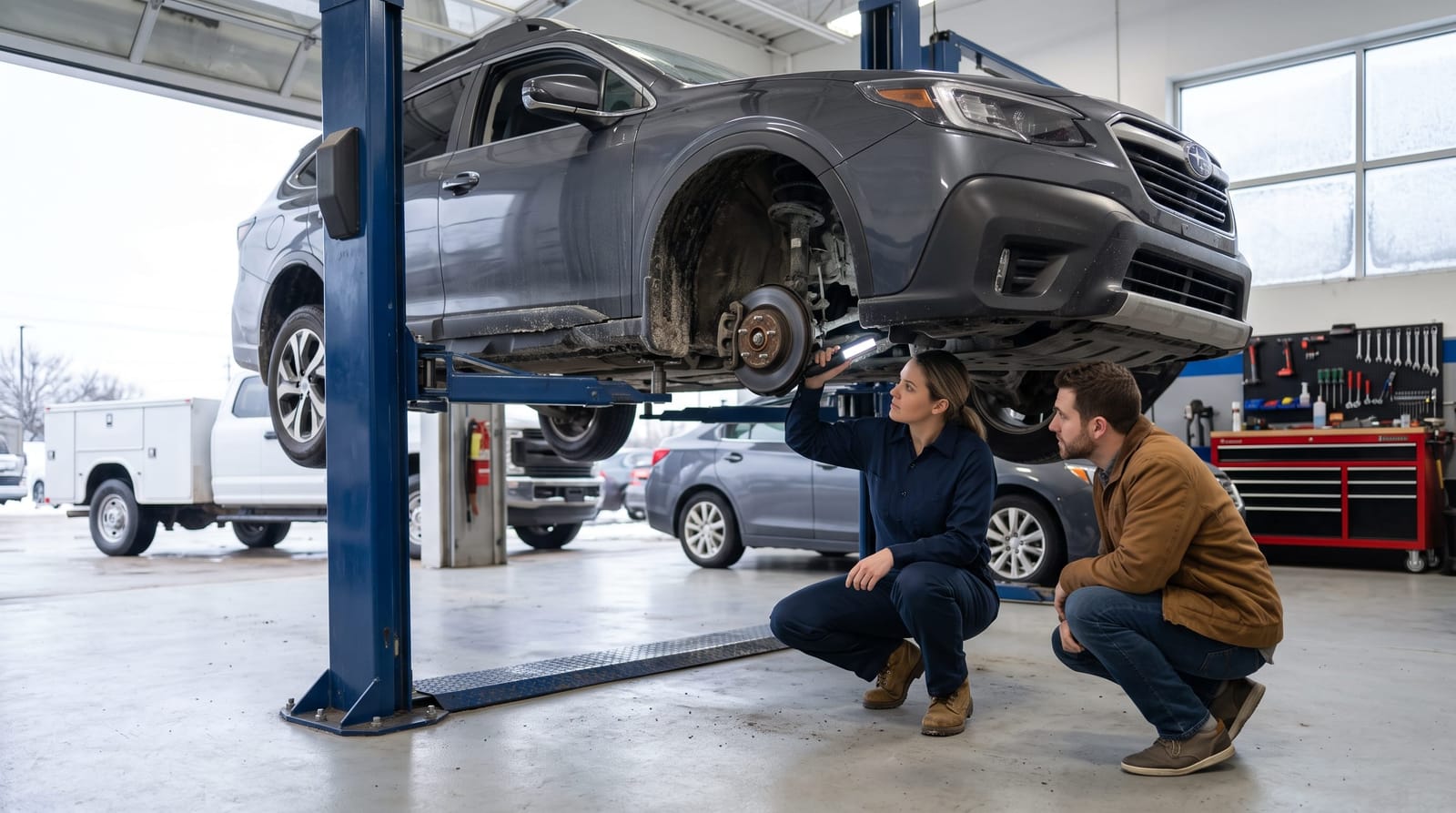
A professional inspection after a winter weather incident goes beyond what's visible from the outside. A technician will check for looseness in ball joints and tie rod ends, measure your alignment angles against factory specifications, inspect strut mounts and control arm bushings, and look for frame or subframe damage if the hit was significant. Alignment measurements, for example, are taken in fractions of a degree: small changes that you feel but can't see.
It's also worth knowing that cold weather brake performance can be affected by the same road hazards that stress your suspension, so a thorough post-storm inspection often catches brake-related concerns at the same time.
Common Post-Ice-Storm Repair Costs: A General Range
Repair costs vary based on your vehicle's make, model, and what's actually damaged. That said, here are general ballpark ranges that give you a realistic sense of what post-ice-storm repairs might involve:
- Wheel alignment: Typically $75-$150 for a standard four-wheel alignment: one of the most common and affordable fixes after a storm event.
- Tie rod end replacement: Generally ranges from $150-$400 per side depending on vehicle type, including parts and labor, with a follow-up alignment required.
- Strut replacement: Can range from $300-$700 per strut for most passenger vehicles, though some models run higher depending on parts availability.
- Ball joint replacement: Often $200-$500 per joint, again depending on vehicle and accessibility.
- Wheel/rim repair or replacement: Bent or cracked rims may cost $75-$150 to repair if the damage is minor, or $200-$600 or more to replace, depending on the wheel type.
These ranges are general estimates for informational purposes. Your actual cost depends on your specific vehicle and the extent of any damage found during inspection.
Frequently Asked Questions
How soon after an ice storm should I get my suspension inspected?
As soon as you notice any of the warning signs, pulling, vibration, unusual sounds, or a rougher ride, it's worth scheduling an inspection. If you drove during the storm and hit something you couldn't see, getting a check sooner rather than later can prevent small issues from turning into larger ones. Driving on misaligned or damaged suspension puts extra stress on tires and other components over time.
Can a pothole really knock my alignment out that much?
Yes. Alignment is measured in small degree increments, and a single hard impact, especially hitting the edge of a deep pothole at speed, can shift alignment angles enough to cause uneven tire wear within just a few hundred miles of driving. You may not immediately notice the pull, but your tires will show the effects over time.
My car drove fine during the storm. Do I still need an inspection?
Not necessarily, but it depends on what conditions you drove in. If you navigated through heavy ice and hit any rough patches, bumps, or partially-frozen debris, a quick visual check of your tires and a drive on a flat road to test for pulling or vibration is a reasonable starting point. If everything feels and looks normal, you're likely fine, but when in doubt, a professional inspection takes the guesswork out.
Does homeowner's or renter's insurance cover suspension damage from storm-related road hazards?
That's a question for your insurance provider directly: coverage varies by policy, and an insurance professional is the right resource for understanding what your specific plan covers. Keep all inspection and repair documentation in case it's useful for any claims process.
The Bottom Line for Mesquite Drivers
Texas ice storms are infrequent enough that most of us aren't prepared for what they leave behind on our roads. But the damage they cause to suspension and steering components is real and worth taking seriously, especially in Mesquite, where the February 2021 storm made it clear just how quickly our local infrastructure can be stressed by winter conditions. If you're unsure about the condition of your suspension or steering after a winter weather event, a straightforward inspection is the best starting point. Understanding the full picture of seasonal vehicle care in Texas means knowing when ice storms deserve a follow-up look under your vehicle, and acting on it before small concerns become bigger repairs.