Is a Vibrating Steering Wheel a Suspension Problem?
A steering wheel that shakes or vibrates can be unsettling, and for good reason. It's your car's way of telling you something isn't quite right. But here's where it gets a little tricky: a vibrating steering wheel doesn't always point to a single cause. It could be something as simple as an unbalanced tire, or it could be a worn suspension component that needs attention. This beginner's guide breaks down the most common causes of steering wheel vibration, how each one feels differently, and what a local shop looks for when diagnosing the problem.
What Is "Steering Wheel Vibration" and When Should You Worry?
Steering wheel vibration refers to any shaking, pulsing, or oscillating you feel through the wheel while driving. It might show up at highway speeds, during braking, when you first accelerate, or even while idling at a red light. The timing and type of vibration are actually your first clues when it comes to vibrating steering wheel suspension diagnosis, because when the shaking happens tells a technician almost as much as the shaking itself.
According to diagnostic data from automotive repair professionals, vibration that appears between 55 and 70 mph is one of the most commonly reported steering complaints. While that's often tied to wheel balance, it can also overlap with suspension wear. Roughly 20% of vehicles that come in for a "balance job" turn out to have an underlying suspension issue contributing to the problem: meaning balance alone wouldn't have fixed the shake.
The good news: this isn't usually an emergency that leaves you stranded. But ignoring it for too long can let a minor issue become a more involved repair. Understanding what's causing the vibration is the right first step.
The Most Common Causes of a Vibrating Steering Wheel
Let's walk through the main culprits, starting with the most common and moving toward the more suspension-specific causes.
1. Out-of-Balance Tires
This is the most frequent cause of steering wheel vibration, especially at highway speeds. When a tire and wheel assembly isn't perfectly balanced, even being off by as little as a quarter of an ounce, it creates a rhythmic wobble that travels up through the steering column. The vibration typically starts around 45-50 mph, peaks between 55-70 mph, and may smooth out again at higher speeds. A tire rotation and balance, which most shops recommend every 5,000-7,500 miles, can often resolve this quickly.
2. Worn or Damaged Tie Rods
Tie rods connect your steering rack to the front wheels. When they wear out or develop looseness, you'll often feel a shimmy or vibration in the steering wheel: particularly when turning or going over uneven pavement. In more advanced cases, tie rod wear creates noticeable play in the wheel. A worn tie rod also affects wheel alignment, which can cause your tires to wear unevenly. During a front-end inspection, a technician will physically check for movement in the tie rod end to determine if replacement is needed.
3. Worn Control Arm Bushings
Bushings are small rubber or polyurethane cushions that sit inside suspension joints to absorb road impact and reduce vibration. Over time, typically after 50,000 to 100,000 miles depending on road conditions, they crack, harden, or wear away. When that cushioning is gone, metal-on-metal contact creates vibration that you feel directly through the steering wheel. This type of vibration is often more constant and less speed-dependent than tire balance issues.
4. Ball Joint Wear
Ball joints are the pivot points that connect your front wheels to the suspension system. A worn ball joint creates looseness in the front end, which can result in vibration, wandering steering, or an unsteady feel on the highway. Technicians check for play in the ball joint using a pry bar and lift: any movement beyond the manufacturer's specification means it's time for replacement.
5. Warped Brake Rotors
This one's worth knowing because it's often confused with suspension problems. If your steering wheel vibrates specifically during braking, when you press the brake pedal to slow down, the cause is very likely warped brake rotors rather than a suspension issue. Rotors can warp from heat buildup, especially on vehicles that do a lot of stop-and-go driving or towing. The vibration here is a pulsing sensation that comes in sync with the braking force, not with road speed.
How a Shop Diagnoses the Real Cause
When you bring a vehicle in for a vibrating steering wheel, a thorough diagnosis goes beyond just spinning the tires on a balance machine. Here's what the diagnostic process typically looks like at a reputable shop:
- Road test: The technician drives the vehicle to feel the vibration firsthand and note when it occurs, at speed, during braking, during turns, or constantly.
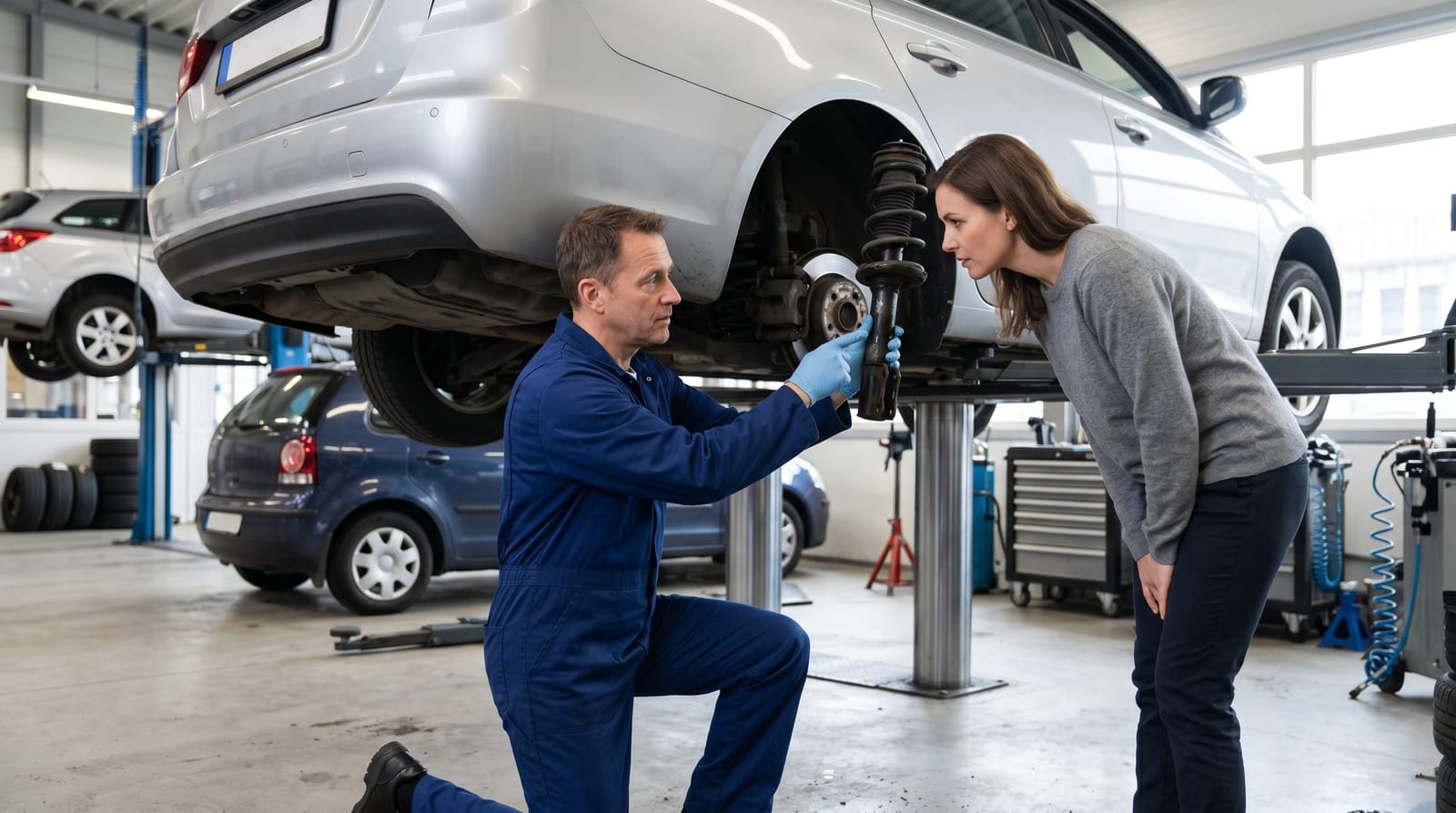
- Visual inspection: The vehicle goes up on a lift so the technician can visually inspect tires, suspension components, and steering linkage for visible wear, damage, or uneven tire wear patterns.
- Hands-on component check: Technicians physically shake and push on tie rod ends, ball joints, and control arm bushings to check for play or looseness that shouldn't be there.
- Wheel balance and runout check: Tires are checked for balance and for any out-of-round condition (called "runout") that could cause vibration independent of the suspension.
- Brake inspection: If braking-related vibration is suspected, rotors are measured for thickness variation using a micrometer.
A good diagnosis takes the guesswork out of the repair and ensures you're only fixing what actually needs to be fixed. If your vehicle has experienced any recent fluid leaks near the front axle area, that's worth mentioning at the shop too: issues like a power steering fluid leak can sometimes be related to the broader steering and suspension picture.
How to Tell the Difference Before You Get to the Shop
You don't need to diagnose your own vehicle, but paying attention to a few details before your appointment helps the technician get to the answer faster. Here's what to notice:
- Does the vibration happen at a specific speed? Speed-sensitive vibration (especially 55-70 mph) often points to wheel balance.
- Does it only happen when braking? That's a rotor conversation, not a suspension one.
- Is it constant at all speeds? Worn bushings or a faulty wheel bearing are more likely.
- Does it get worse when turning? Tie rod or ball joint wear is often behind this pattern.
- Did it start suddenly after hitting a pothole? Impact damage to a tie rod end or a knocked-out wheel alignment is common after a hard road impact.
Kaufman County roads, like many rural and semi-rural Texas roads, can be hard on front-end components. If you're driving regularly on rough roads or highways with lots of road debris, having your suspension inspected annually is a reasonable preventative step, especially if your vehicle has over 60,000 miles on it.
Frequently Asked Questions
Can I drive with a vibrating steering wheel?
It depends on the cause. Light vibration from an unbalanced tire is less urgent but should still be addressed within a few weeks to prevent uneven tire wear. If the vibration is severe, getting worse, or accompanied by pulling to one side or clunking noises, have it inspected as soon as you're able. Driving on worn ball joints or badly worn tie rods for extended periods can affect your ability to steer accurately.
How much does it cost to fix a vibrating steering wheel?
Costs vary significantly based on the cause. A tire balance is typically one of the least expensive services a shop offers. Tie rod replacement, bushing replacement, or rotor resurfacing will vary based on the vehicle and the extent of the wear. Getting a proper diagnosis first ensures you're not paying for repairs that won't solve the actual problem.
Can wheel alignment cause steering wheel vibration?
Alignment issues typically cause pulling or drifting to one side rather than vibration. However, poor alignment accelerates tire wear, and unevenly worn tires can cause vibration. It's also common for suspension component wear (like a worn tie rod) to throw off alignment and lead to tire wear that contributes to vibration. This is why a complete front-end inspection often goes hand-in-hand with alignment checks.
Does steering wheel vibration always mean something is broken?
Not always. Sometimes vibration is caused by something as straightforward as a tire that picked up a nail and has slightly uneven pressure, or a wheel weight that fell off after a balance job. It doesn't always indicate broken parts, but it does indicate something has changed that's worth checking out. Ignoring it and hoping it goes away on its own usually isn't the best approach.
The Bottom Line
A vibrating steering wheel is one of those symptoms that can come from several different places, and vibrating steering wheel suspension problems are just one part of the picture. Tire balance, tie rods, bushings, ball joints, and brake rotors can all produce similar sensations, but the timing, speed, and driving conditions help narrow it down considerably. The right diagnosis matters because the fix depends entirely on the cause. If your steering wheel has been shaking and you're not sure why, having a local shop do a proper inspection is the clearest path to an honest answer. Understanding what's happening with your suspension is part of the bigger picture covered in our Complete Guide to Suspension Symptoms, Diagnosis, and Repair for Kaufman County Drivers.