Strut Replacement: Should You Replace One or Both at the Same Time?
If your mechanic tells you one of your struts needs to be replaced, it's natural to wonder whether you really need to replace the other one too, especially if it seems fine. This is one of the most common questions drivers ask when dealing with suspension repairs, and it's a fair one. The short answer is that replacing struts in pairs is the industry standard recommendation for a reason. This beginner's guide breaks down why that recommendation exists, what can happen if you skip it, and how to tell good advice from unnecessary upselling when you're sitting in a shop.
What Is a Strut and What Does It Do?
Before diving into the "one or both" question, it helps to understand what a strut actually does. A strut is a structural component of your vehicle's suspension system that serves two purposes at once: it acts as a shock absorber to cushion bumps in the road, and it provides structural support that holds your wheel in proper alignment with the vehicle frame.
Unlike a basic shock absorber, which mainly controls bounce, a strut is load-bearing. This means it affects how your car handles turns, how it brakes in a straight line, and how stable it feels at highway speeds. Most front-wheel-drive and many all-wheel-drive vehicles use struts on the front axle. Some vehicles have struts on all four corners.
Struts wear down gradually over time. Because both sides of your vehicle experience very similar road conditions and mileage, they tend to wear at roughly the same rate: meaning when one side starts showing problems, the other is usually not far behind.
Why the Industry Recommends Replacing Struts in Pairs
The professional standard in the automotive repair industry, backed by manufacturers like Monroe Shocks & Struts, is to replace struts in pairs, meaning both struts on the same axle at the same time. Here's the reasoning behind that recommendation.
Your vehicle is designed to handle symmetrically. When both struts on an axle are performing at the same level, your car steers evenly, brakes in a straight line, and absorbs road impact consistently on both sides. When one strut is new and the other is worn, that balance disappears. The new strut rebounds faster and provides firmer support than the older one, which creates a handling imbalance that drivers often describe as pulling to one side, uneven cornering, or a vague, unpredictable feel during braking.
Monroe's guidance specifically notes that replacing only one strut on an axle results in inconsistent performance between the two sides, and that inconsistency isn't just a comfort issue. It affects vehicle control in situations where you need your suspension to respond predictably, like sudden lane changes or emergency stops.
There's also a wear factor to consider. A worn strut puts additional stress on other suspension components, including the strut mount, CV joints, and tires, because it isn't absorbing road impact effectively. When one side is compensating for the other, uneven tire wear and premature component failure can follow.
When Replacing Just One Strut Might Be Acceptable
There are situations where replacing a single strut is a reasonable choice, and a trustworthy shop will tell you honestly if that's the case for your vehicle.
If your vehicle is relatively new and has low mileage, and one strut failed due to a specific incident, like a pothole impact or a road hazard, while the other side is genuinely in good condition, replacing only the damaged strut may be appropriate. In fact, some online automotive communities point out that if one strut is clearly good and the other clearly needs replacement, you don't necessarily have to replace both, particularly when the surviving strut has very little wear.
The key word there is "genuinely." A good mechanic will inspect both struts and give you an honest assessment. If your vehicle has over 50,000 miles on it, or if you've noticed symptoms like bouncing, nose-diving during braking, or uneven tire wear on both sides, it's a strong signal that both struts are due for replacement, not just the one that failed first.
A practical benchmark many technicians use: struts typically last between 50,000 and 100,000 miles depending on road conditions and driving habits. If you're past that range and one strut has failed, the other has lived the same mileage and is likely near the end of its service life too. Replacing both at that point is cost-effective in the long run, since labor charges are similar whether you replace one or two.
How to Tell Honest Advice from Upselling
It's a fair concern. Some drivers worry that a recommendation to replace two struts instead of one is just a shop doubling up on revenue. Here's how to evaluate the advice you're getting.
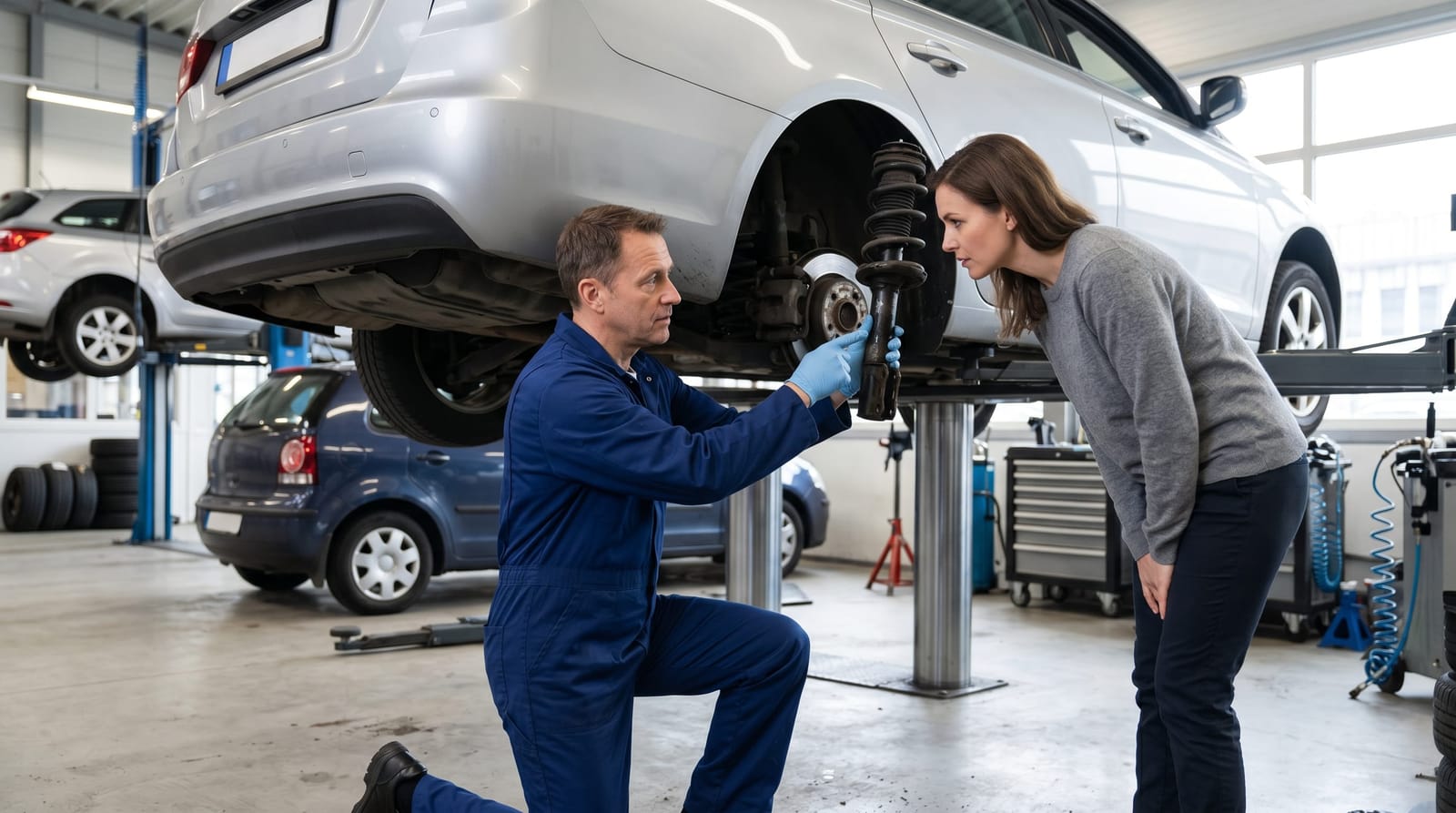
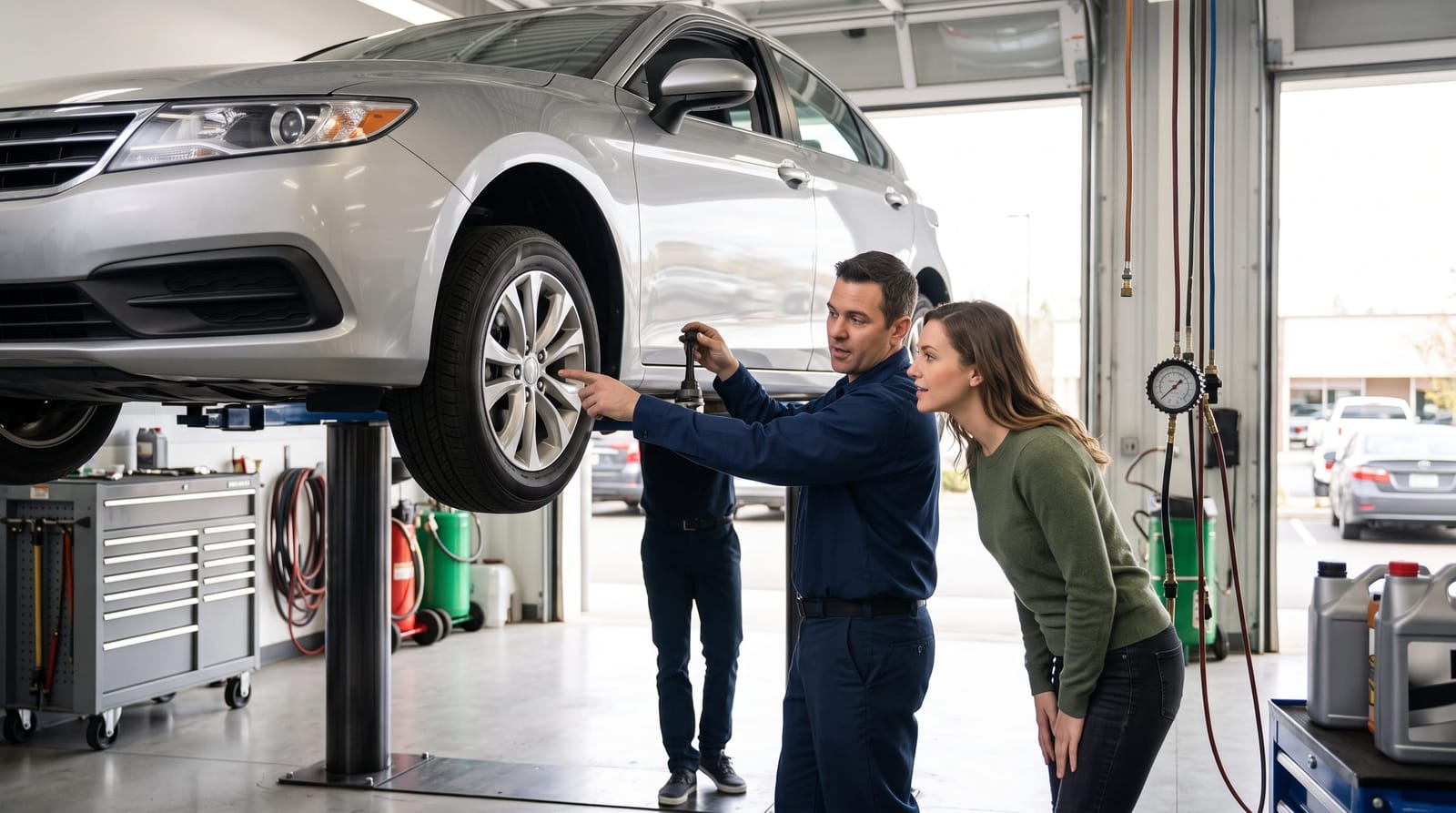
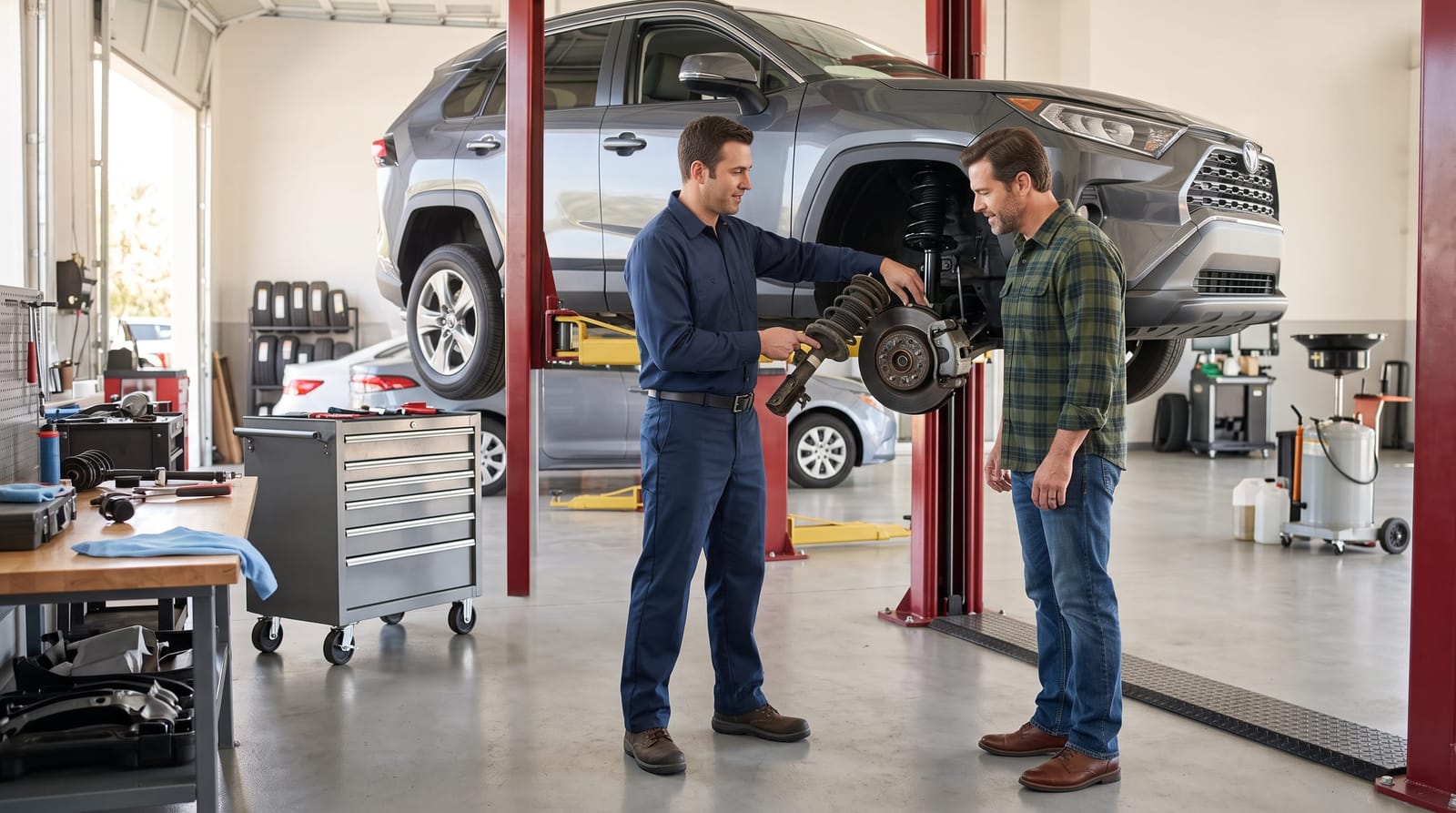
A trustworthy shop will show you their findings. They'll explain what symptoms led them to check the struts, what they observed during inspection, and what the condition of each strut looks like. If they're recommending you replace both, they should be able to tell you why, not just say "it's always better to do both."
When searching for answers about whether to replace one or both struts, you'll find that the consistent recommendation across professional sources is to replace in pairs, but that recommendation comes with context about mileage, current condition, and the specific symptoms your vehicle is showing. Any shop worth trusting will walk you through that context, not just hand you a bill.
Dealerships sometimes follow a different logic: replacing only the component covered under warranty or the one that's explicitly failed. That approach isn't always in your best interest as a vehicle owner, because it can leave you coming back for the second strut sooner than expected and paying for labor twice. An independent shop that explains the pair replacement recommendation and gives you the option to decide is generally a better experience than one that either pressures you or ignores the issue entirely.
What the Replacement Process Looks Like
Understanding the basics of what's involved in strut replacement can help you feel more confident in the conversation with your mechanic.
When a shop replaces struts, the process typically includes removing the wheel and tire on the affected side, detaching the strut assembly from the steering knuckle and the strut mount at the top, compressing the coil spring safely with a spring compressor tool (this step requires proper equipment and should never be a DIY effort without the right tools), installing the new strut, and reassembling everything.
After replacement, an alignment check is strongly recommended. When strut work is done, the wheel angles can shift slightly, and proper alignment ensures your tires wear evenly and your vehicle tracks straight. Many shops include or recommend alignment as part of any strut replacement job.
Because the labor involved in doing one strut versus two on the same axle is largely the same, the vehicle is already lifted, the wheel is already off, doing both sides at once saves on labor time compared to coming back to do the second one a few months later.
Frequently Asked Questions
Can I drive on a bad strut while I wait to get it repaired?
You can drive short distances at low speeds, but a failing strut affects handling in ways that become more noticeable, and more important, in emergency situations. It's best to get the vehicle inspected and scheduled for repair as soon as you notice symptoms rather than delaying for extended periods.
How do I know if my struts actually need replacement?
Common signs include excessive bouncing after hitting a bump, a nose-diving feeling when braking, the car leaning noticeably in turns, uneven or cupped tire wear, or a knocking sound from the suspension when going over rough pavement. A visual inspection by a technician can confirm whether the struts are leaking, worn, or damaged.
Does replacing struts improve ride quality noticeably?
Yes, particularly if the existing struts are worn. Drivers often report that a vehicle feels significantly more controlled and smoother after fresh struts are installed: less float over bumps, better responsiveness in turns, and more confidence during braking. The improvement is most noticeable on vehicles that have been running on high-mileage struts.
Is strut replacement different from shock absorber replacement?
They're related but different components. A shock absorber only controls bounce: it isn't load-bearing. A strut combines shock-absorbing function with structural support and is more involved to replace. Not all vehicles use struts on all four corners, so it depends on your specific make and model what type of suspension components you have.
The Bottom Line on Replacing One or Both Struts
The general industry recommendation is clear: replace struts in pairs on the same axle for balanced, predictable handling and consistent performance. While there are specific situations where replacing a single strut is reasonable, particularly on low-mileage vehicles with isolated damage, most everyday driving scenarios call for paired replacement. If your vehicle has significant mileage on it and one strut has failed, the other side has lived through the same conditions and is likely close behind. A shop that explains this to you honestly and walks you through their inspection findings is giving you the kind of straightforward advice that protects your vehicle and your budget over time. Understanding suspension symptoms like these is part of being an informed driver, and it starts with knowing the right questions to ask before any repair begins.