What Causes My Car to Pull to One Side?
If your car drifts or pulls to the left or right while you're driving straight, you already know how frustrating, and tiring, that can be. You're constantly making small corrections just to keep the vehicle going where you want it to go. This is one of the most common complaints drivers bring into the shop, and the good news is that it's usually fixable once the right cause is identified. As part of understanding your vehicle's suspension and steering systems, knowing why a car pulls to one side causes so many headaches is a great place to start.
Wheel Alignment: The Most Common Culprit
Wheel alignment is the most frequent reason a car pulls to one side, and it's easier to knock out of spec than most drivers realize. Alignment refers to how your wheels are angled relative to each other and to the road. There are three main angles mechanics measure, caster, camber, and toe, and when any of these fall outside the manufacturer's specifications, your vehicle will naturally drift in one direction.
Everyday driving takes a toll on alignment. Hitting a pothole, bumping a curb, or even accumulating normal wear on suspension components over time can shift these angles. Studies suggest that approximately 1 in 3 vehicles on the road has some form of misalignment at any given time, yet many drivers don't notice it until the pull becomes significant or their tires start wearing unevenly.
One easy way to check whether alignment might be the issue: find a flat, empty parking lot or straight stretch of road, let go of the steering wheel briefly, and observe whether the car drifts consistently in one direction. If it does, alignment is a strong possibility. An alignment inspection typically takes less than 30 minutes and can save you from premature tire wear that might otherwise cut tire life by 15,000 miles or more.
Uneven Tire Pressure and Tire Condition
Before assuming you need an alignment, check something much simpler first: your tire pressure. A tire that's even 5 to 8 PSI lower than its recommended pressure on one side of the vehicle can create enough difference in rolling resistance to cause a noticeable pull. This is one of the easiest car pulls to one side causes to overlook because pressure changes slowly over time and you may not feel the gradual shift.
Beyond pressure, tire condition matters too. Tires that are worn unevenly, whether from past alignment issues, aggressive braking habits, or simply age, don't grip the road the same way from side to side. A tire that's worn significantly more on one side will pull the vehicle in that direction. The same goes for a tire with internal damage or a belt separation, which can cause a very strong and sometimes sudden pull that feels almost like steering wheel vibration combined with drifting.
Check your tire pressure monthly and visually inspect your tires for uneven tread wear patterns. Most passenger tires are designed to last between 40,000 and 70,000 miles, but uneven wear can cut that lifespan significantly shorter, and cost you much more in replacements than a simple alignment service would have.
Suspension Wear and Component Problems
Your suspension system is a network of parts that keeps your tires connected to the road and your ride feeling stable. When components within that system wear out or become damaged, pulling to one side is a common result. The parts most likely to cause this include:
- Ball joints: These connect the control arms to the steering knuckles. Worn ball joints allow excess movement in the wheel, which affects how the vehicle tracks.
- Control arm bushings: Rubber bushings cushion the connection points in your suspension. As they deteriorate, which can happen within 60,000 to 100,000 miles on many vehicles, your alignment geometry shifts.
- Wheel bearings: A failing wheel bearing on one side creates uneven resistance as the wheel rotates, which can cause a subtle but consistent pull. You may also hear a humming or grinding noise from that wheel.
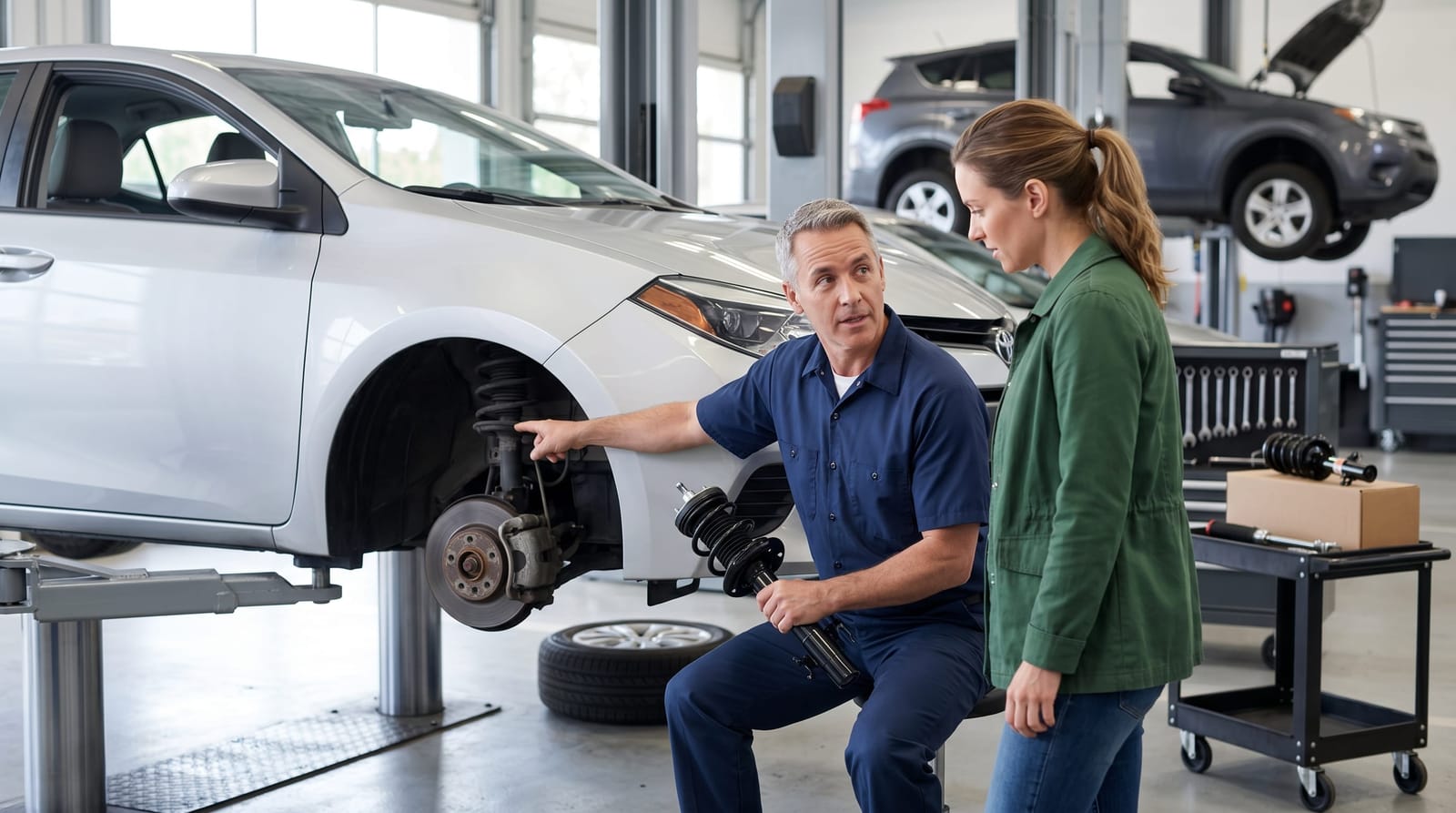
- Struts and shocks: Worn struts don't just affect ride comfort: they can change how weight is distributed across your tires, contributing to drifting.
Suspension wear is gradual, which is why it often goes unnoticed until a problem like pulling becomes obvious. Having your suspension inspected during routine oil changes or tire rotations can catch worn components before they create bigger issues. If you've also noticed your hard steering wheel problem getting worse alongside the pulling, there's a good chance a suspension or steering component is involved in both symptoms.
Brake Issues That Cause Pulling
Not all pulling happens while you're cruising at a steady speed. If your car only pulls when you apply the brakes, the cause may be in your braking system rather than your alignment or tires. This is an important distinction because brake-related pulling can be a safety concern that deserves prompt attention.
A stuck brake caliper is one of the most common brake-related causes. When a caliper doesn't release properly after you remove your foot from the brake pedal, it keeps slight pressure on the rotor, creating drag on that side of the vehicle. You may also notice the affected wheel feeling warmer than the others after driving, or a slight burning smell in some cases.
Uneven brake pad wear, where one side has significantly more material remaining than the other, can also cause pulling during braking. This is why brake inspections matter even when you feel like you still have stopping power. According to industry estimates, neglected brake issues account for a meaningful portion of preventable pulling complaints brought into repair shops each year. If the pull only happens during braking, have your brakes inspected as the first step.
Frequently Asked Questions
Is it safe to drive when my car pulls to one side?
It depends on how severe the pulling is. A mild drift from minor misalignment is generally safe for short-term driving but should still be addressed soon to avoid tire wear and worsening alignment. A strong, sudden pull, especially during braking, should be evaluated right away, as it may indicate a brake or steering issue that could affect your ability to control the vehicle safely.
Will an alignment fix my car if it pulls to one side?
Alignment fixes pulling in many cases, but not all. If the cause is a worn suspension component, uneven tire pressure, or a brake issue, those problems need to be resolved first. A thorough inspection will identify whether alignment alone will do the job or whether another repair is needed beforehand.
How often should I get an alignment check?
Most manufacturers recommend checking alignment every 12,000 miles or once a year under normal driving conditions. However, if you drive roads with frequent potholes, hit a significant curb impact, or notice any pulling or uneven tire wear, have it checked sooner rather than waiting for the scheduled interval.
Can new tires cause my car to pull?
Yes, in some cases. If new tires are installed without also checking alignment, any existing misalignment will immediately begin wearing the new tires unevenly and may contribute to pulling. It's a good practice to have alignment checked whenever you purchase new tires to protect your investment.
Getting the Pull Corrected
A car that pulls to one side is trying to tell you something, whether it's misaligned wheels, uneven tire pressure, worn suspension parts, or a brake component that isn't releasing properly. The car pulls to one side causes listed here cover the most common culprits Kaufman County drivers encounter, and in most cases, the fix is straightforward once the right diagnosis is made. Catching these issues early keeps your tires lasting longer, your steering feeling precise, and your drive more comfortable overall. If you're not sure where to start, bring your vehicle in for an inspection and we'll help you figure out exactly what's going on.