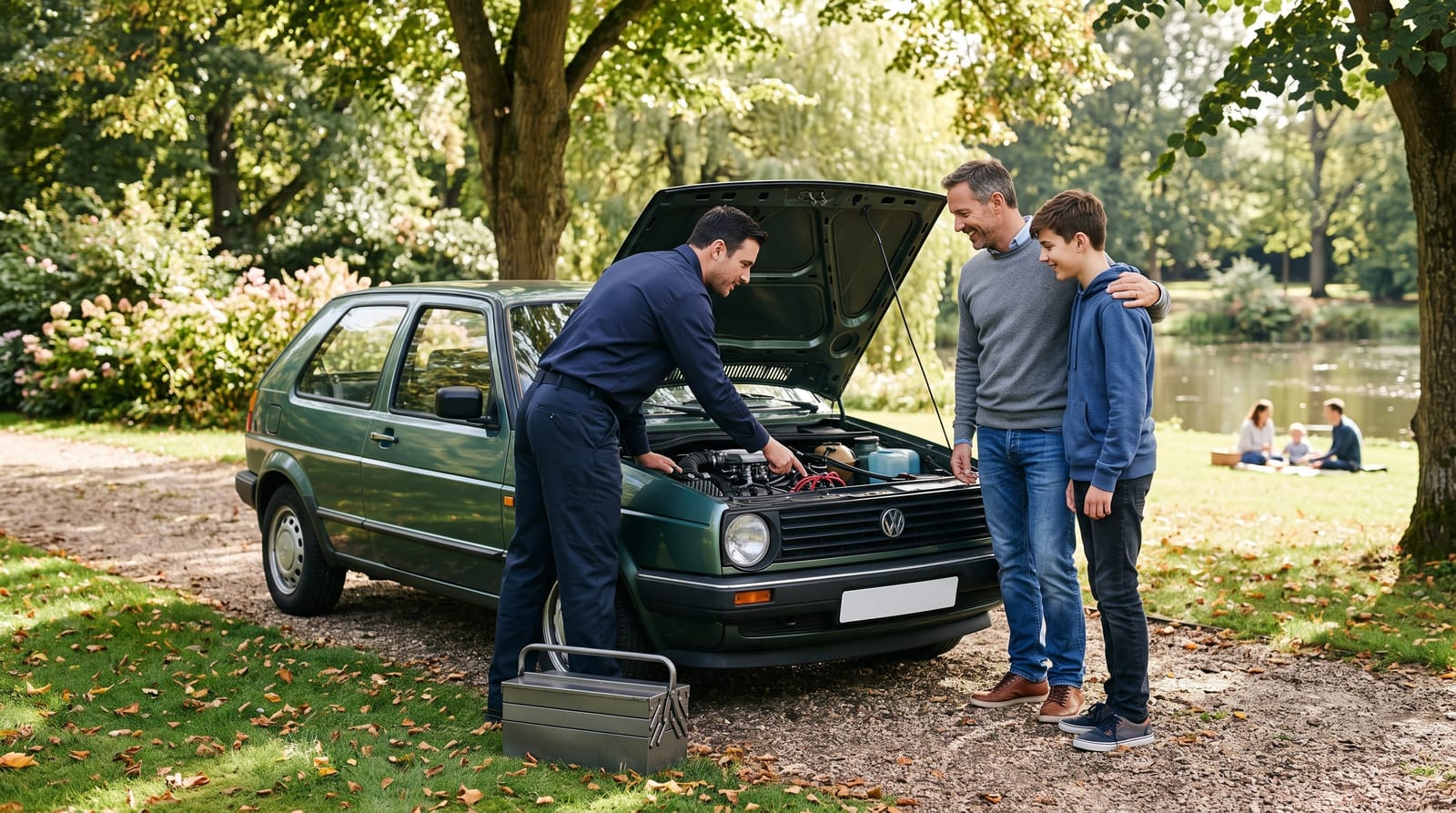
What Does a Tune-Up Actually Do for Your Car's Performance?

If you've ever wondered whether a tune-up is really worth it, or what's actually happening under the hood when you bring your car in for one, you're not alone. It's one of those services that gets recommended regularly but rarely gets explained in plain terms. As part of our complete engine tune-up guide for Forney and Kaufman County drivers, this post focuses on something most service write-ups skip entirely: the real-world performance impact you actually feel behind the wheel. We'll walk through what a worn-out engine looks like before a tune-up, what gets addressed during the service, and what most drivers notice when it's done right. Whether your car has been feeling sluggish lately or you're just trying to stay ahead of problems, understanding the "why" behind a tune-up helps you make smarter decisions about your vehicle.
Your Engine Is Always Working Against Wear: Even When It Seems Fine
One of the most common misconceptions about engine performance is that a car either works or it doesn't. In reality, engines degrade gradually, so gradually that most drivers don't notice the decline until it's already significant. You don't go to bed with a smooth-running engine and wake up with a rough one. It happens over thousands of miles, a little at a time.
Spark plugs are a good example. A new spark plug fires cleanly and consistently, igniting the air-fuel mixture in each cylinder at exactly the right moment. Over time, the electrode wears down, the gap widens, and the spark becomes less reliable. Your engine compensates, the fuel management system adjusts, the timing shifts slightly, but compensation has limits. Eventually, you start to feel it: a slight hesitation when you press the accelerator, a rough idle at a stop light, or a small but noticeable dip in fuel economy.
The same pattern plays out with air filters, fuel filters, and throttle body buildup. None of these cause an immediate, dramatic failure. They just quietly reduce how efficiently your engine breathes, fuels, and fires, and that reduced efficiency shows up as performance you slowly stop expecting your car to deliver.
This is exactly what a tune-up is designed to address: not a breakdown, but a gradual drift away from how your car is supposed to run.
The Parts That Get Addressed: and Why Each One Matters
A modern tune-up isn't a fixed checklist the way it was in your grandparents' era. The service is tailored to your vehicle's make, model, mileage, and what a technician actually finds during the inspection. That said, there are several components that consistently show up in a thorough tune-up, and understanding what each one does helps explain the performance difference you feel afterward.
Spark Plugs
Spark plugs are the most commonly replaced tune-up component, and for good reason. They're directly responsible for ignition, without a reliable spark, combustion is incomplete, and incomplete combustion wastes fuel while reducing power. If you've noticed your car feeling a little flat when merging onto the highway or pulling away from a stop, worn spark plugs are often part of the picture. Replacing them restores the sharp, consistent ignition your engine was designed to have. For a closer look at replacement intervals and what the service involves, see our post on spark plug replacement cost frequency.
Air Filter
Your engine needs a precise mixture of air and fuel to run efficiently. A clogged air filter restricts airflow, which throws that balance off. The result is an engine that works harder than it should to produce the same output, which means more fuel burned for less performance. Replacing a dirty air filter is one of the simplest improvements a tune-up can deliver, and it's often underestimated.
Throttle Body Cleaning
Over time, carbon deposits and oil vapors build up inside the throttle body: the component that regulates how much air enters the engine. That buildup disrupts airflow and can cause rough idling, hesitation, and poor throttle response. A thorough cleaning restores smooth airflow and often makes a noticeable difference in how responsive the engine feels, especially at lower speeds.
Fuel System Components
Depending on your vehicle's mileage and service history, a tune-up may also include inspection or service of the fuel system. Fuel injectors that aren't atomizing fuel properly, or a fuel filter that's restricting flow, can contribute to poor combustion and reduced efficiency. If you're curious whether your car specifically needs fuel system attention, our post on fuel system cleaning worth it breaks that down in more detail.
What Drivers Actually Notice After a Tune-Up
This is where it gets concrete. Talking about spark plug electrodes and throttle body deposits is useful, but what you really want to know is: what will I feel when I drive away?
The feedback we hear most often from drivers after a tune-up falls into a few consistent categories:
- Smoother idle: That subtle shudder or roughness at a red light disappears. The engine settles into a steady, quiet rhythm instead of feeling like it's working to stay running.
- Better throttle response: Acceleration feels more immediate and linear. When you press the gas, the car responds, not after a slight hesitation, but right away.
- Improved fuel economy: Many drivers notice they're filling up less often. When the engine is burning fuel efficiently and completely, you get more miles out of every gallon.
- Easier cold starts: Engines that have been struggling with worn ignition components often show the most improvement in cold-weather starting, where clean, reliable spark matters most.
- Less engine noise: Misfires and rough combustion can create subtle knocking or ticking sounds that go away once the ignition system is back in good shape.
Not every driver notices every one of these improvements: it depends on how far the vehicle had drifted from its baseline before service. But it's worth saying: the drivers who notice the least improvement after a tune-up are often the ones who stayed on schedule. That's not a failure of the service. That's the service working exactly as intended: maintaining performance rather than trying to recover it.
Before vs. After: Recognizing the Signs That a Tune-Up Is Due
Because engine wear is gradual, it helps to know what to watch for. You don't need to wait for a warning light or a major symptom. These are the quieter signals that often mean your car is ready for a tune-up:
Signs Your Engine May Need Attention
- Fuel economy has dropped noticeably over the past several months
- The engine hesitates or stumbles when accelerating from a stop
- Idling feels rough or uneven, especially when the car first warms up
- You've noticed a slight decrease in power when climbing hills or passing
- The engine takes a little longer to turn over when starting
- You're approaching or past the recommended service interval for your vehicle
None of these are emergencies on their own, but together they paint a picture of an engine that's ready to be refreshed. Addressing them during a scheduled tune-up is far less disruptive, and less expensive, than waiting until the symptoms become serious enough to affect drivability.
How Often Does a Modern Vehicle Actually Need a Tune-Up?
This question comes up constantly, and the honest answer is: it depends on your vehicle. Older cars with conventional spark plugs and distributor ignition systems needed tune-ups more frequently: sometimes every 30,000 miles or less. Modern vehicles with platinum or iridium spark plugs and electronic ignition systems can go significantly longer between services, sometimes 60,000 to 100,000 miles depending on the manufacturer's recommendation.
The key is to follow your owner's manual intervals and have the vehicle inspected by a technician who can assess the actual condition of your components, not just the mileage on the odometer. Driving habits, climate, and how often you use your vehicle all affect how quickly components wear. A vehicle that spends a lot of time in stop-and-go traffic around Forney and the surrounding Kaufman County area may need more frequent attention than one that primarily sees highway miles.
When in doubt, a visual inspection during your next oil change or service visit is a low-effort way to stay informed without guessing.
Related Topics Worth Exploring
If this post sparked more specific questions, there's more detail available on two topics that frequently come up alongside tune-up conversations:
- How often spark plugs should be replaced, what different plug types cost, and what to expect during that service, all covered in our post on spark plug replacement cost frequency.
- Whether a fuel system cleaning is genuinely necessary for your vehicle or just an upsell: that's answered honestly in our guide on fuel system cleaning worth it.
The Bottom Line on What a Tune-Up Does for Your Car
A tune-up doesn't transform your car into something it wasn't. What it does is bring your engine back to what it was supposed to be: running cleanly, efficiently, and reliably the way it was designed to run. The performance difference most drivers feel isn't dramatic or sudden. It's the absence of sluggishness, the return of smooth acceleration, and the quiet confidence of an engine that's not working harder than it should be.
If your car has been feeling a little off lately, or if you're simply overdue for routine service, the team at Gregg Automotive is happy to take a look. We'll tell you honestly what your vehicle needs and what it doesn't. Give us a call or stop by to schedule a tune-up inspection for your car today.