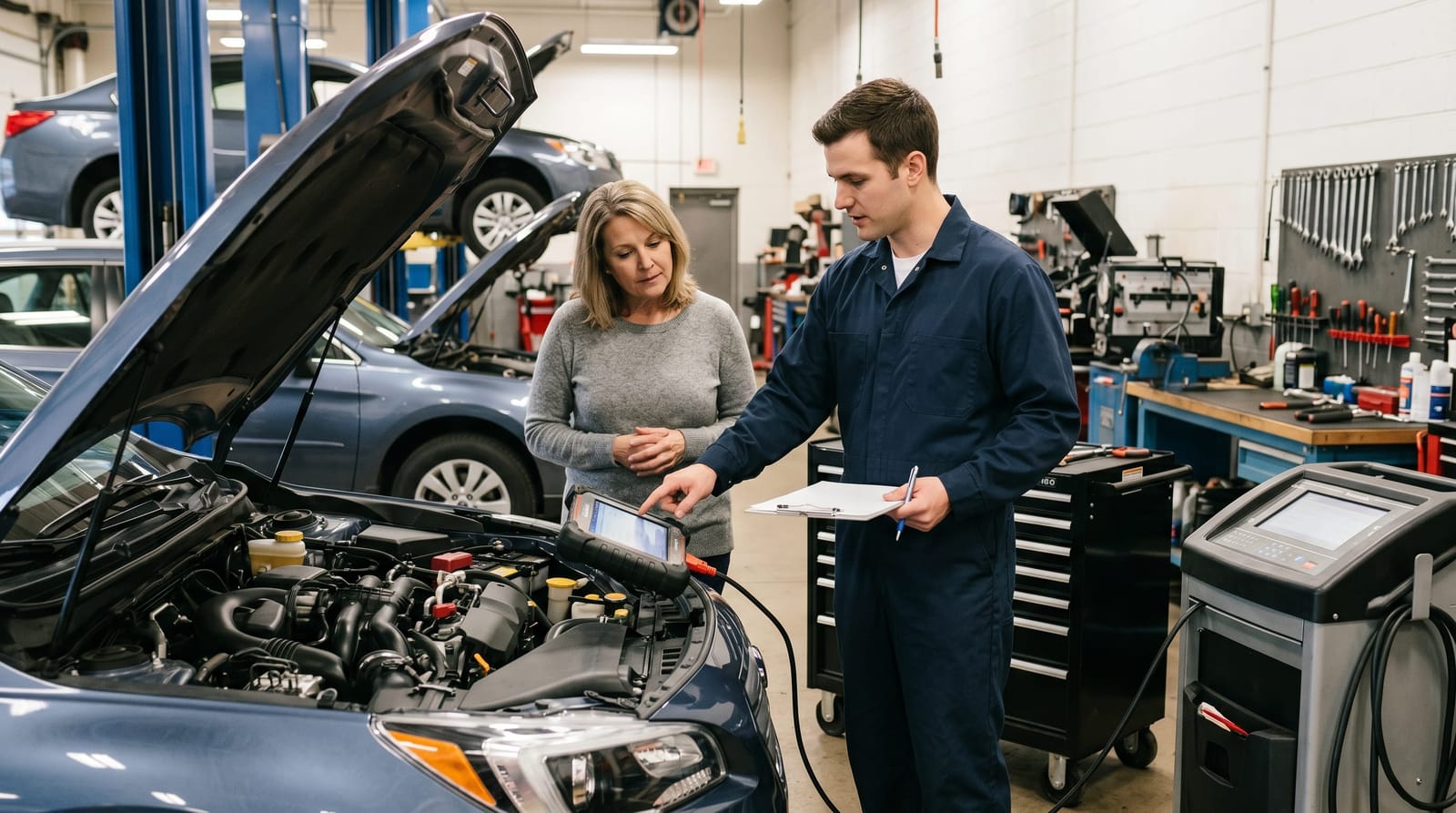
Why Is My Check Engine Light On After an Oil Change?
You just picked up your car from an oil change and everything felt fine, until that orange light appeared on your dashboard. It's one of the more frustrating experiences a driver can have, especially after paying for routine maintenance. The good news is that a check engine light after an oil change is usually triggered by something minor, not a serious engine problem. This post walks you through the most likely causes, what you can safely check yourself, and when it's time to bring the car back to the shop.
Is the Oil Change Actually to Blame?
Here's something worth knowing right away: the check engine light and the oil change service often have nothing to do with each other. According to automotive data, roughly 40% of check engine light triggers are related to emissions components like oxygen sensors or the evaporative emissions system: areas that a standard oil change doesn't touch at all. So the timing may be coincidental rather than causal.
That said, it's also true that oil change services involve physically working under your hood. A technician opens your engine bay, handles the oil fill cap, may disconnect components to access filters, and in some cases interacts with sensors near the oil drain or oil pressure system. Any of those touchpoints can occasionally disturb something, even unintentionally.
The key is figuring out which category your situation falls into: something disturbed during service, or a pre-existing issue that was already developing before you came in. Both are common. Neither means you need to panic.
Common Reasons the Check Engine Light Comes On After an Oil Change
1. The Oil Cap Wasn't Secured Properly
This is one of the simplest explanations and more common than most drivers expect. When the oil filler cap isn't tightened down completely after service, it can allow unmetered air into the engine. Modern vehicles use sensors to monitor the air-fuel ratio very precisely, and even a small leak can trigger a fault code. Check the oil cap first: it should twist firmly into place with no wobble. If it was loose, tighten it, clear the light if possible, and see if it returns.
2. The Oil Life Monitor Wasn't Reset
Most vehicles made in the last 15 years have an oil life monitoring system that tracks when your next oil change is due. If that monitor isn't manually reset after service, it may trigger a warning light or a maintenance alert that looks similar to a check engine light, especially on dashboards that combine multiple alerts in one indicator. This isn't a mechanical problem at all. Your shop can reset it in under a minute, or your owner's manual will show you how to do it through the instrument cluster menu.
3. A Sensor Was Disturbed During Service
During an oil change, technicians work near several engine components. On some vehicles, the oil pressure sensor, mass airflow sensor, or oxygen sensor connectors sit close to the oil filter or drain area. If a connector was bumped, unplugged accidentally, or not fully reseated, it can generate a fault code. Studies on OBD-II fault data show that sensor-related codes account for approximately 25 to 30% of all check engine light triggers logged at repair shops. If a sensor connector is the issue, it's a straightforward fix: no parts needed, just reconnecting what came loose.
4. The Gas Cap Is Loose or Worn
This one surprises people because it has nothing to do with oil. The evaporative emissions system on your vehicle is sealed, and a loose or degraded gas cap is one of the top five most common check engine light causes overall. If you stopped for gas around the time of your oil change and didn't tighten the cap fully, or if your cap has a worn seal, it can trigger a P0440 or P0442 code. Try tightening your gas cap until you hear it click. On many vehicles, the light will clear on its own within 50 to 100 miles of driving once the seal is restored.
5. A Pre-Existing Issue That Was Already There
Sometimes the timing is simply coincidental. A fault code that was building up before your visit can surface at any time, and the day you get an oil change is just when it crossed the threshold. Oxygen sensors, catalytic converters, and ignition coils are common examples of components that degrade gradually. If your vehicle was already close to triggering a fault, the light might appear the same day or day after your service without any connection to what happened at the shop.
What You Can Check at Home Before Going Back to the Shop
Before calling the shop, take five minutes to go through this short list:
- Oil filler cap: Open the hood and make sure the oil cap is seated and tightened firmly.
- Gas cap: Remove it, inspect the rubber seal for cracks, and retighten it until it clicks.
- Oil level: Pull the dipstick and confirm the oil level is within the normal range. Low oil after a change is rare but possible if there was a fill or drain issue.
- Dashboard indicator type: Is the check engine light solid or flashing? A solid light is typically a stored code that can be diagnosed at your convenience. A flashing check engine light means the issue is active and potentially affecting the engine right now: that warrants a same-day visit.
If you have access to an OBD-II scanner (available for under $30 at most auto parts stores), you can read the fault code yourself and share it with the shop. That gives the technician a head start and often speeds up the diagnostic process.
When to Return to the Shop and What to Tell Them
If your basic checks don't resolve the light within a day or two of normal driving, it's time to head back. When you do, be specific with what you share:
- Tell them the light appeared within a short window after the oil change: give them an approximate timeframe like "within two hours" or "the next morning."
- Mention any other symptoms: rough idle, reduced power, unusual smells, or a change in how the car drives.
- Let them know if the light is solid or flashing.
- Share the fault code if you retrieved it yourself.
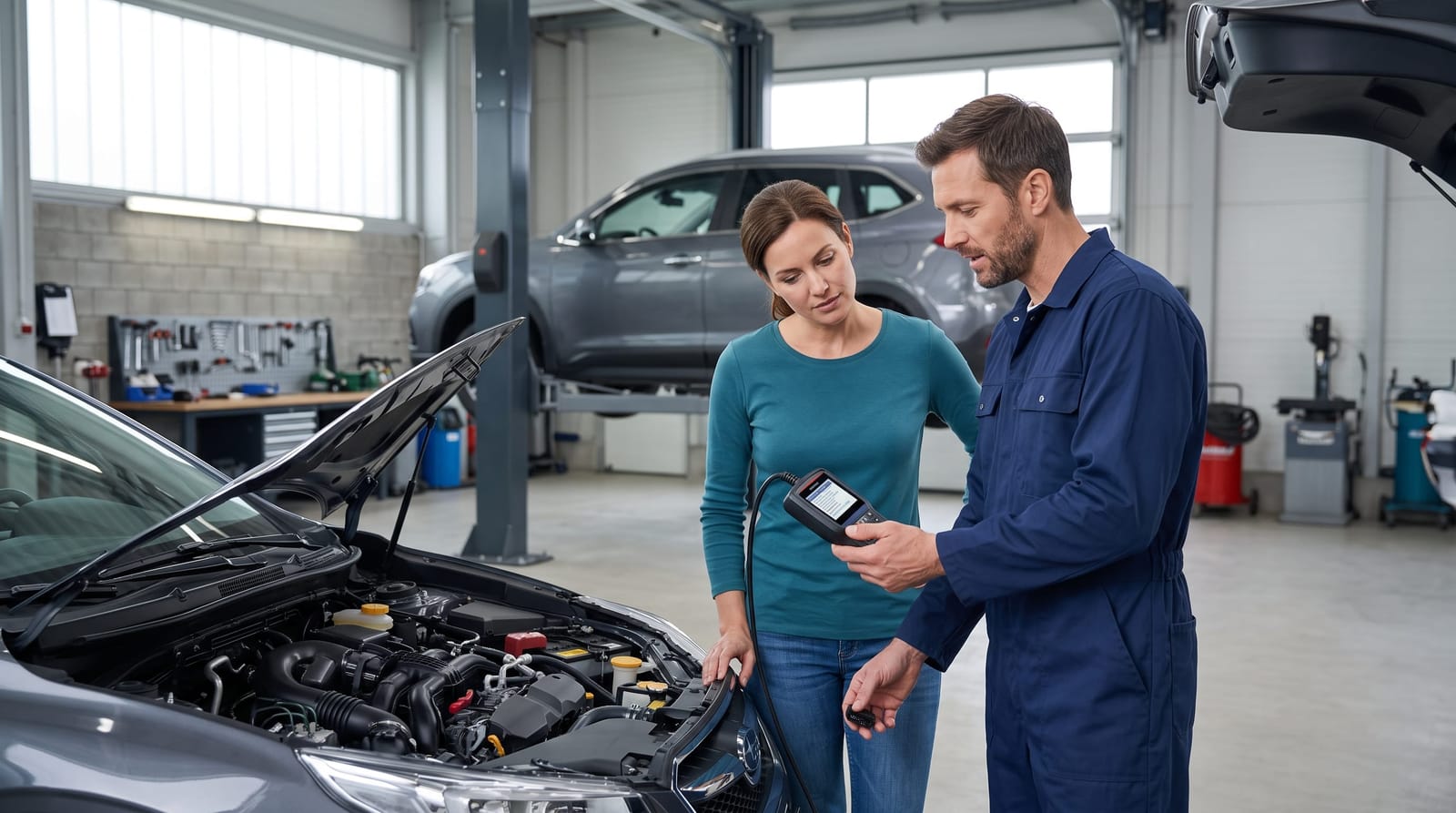
A reputable shop will run a diagnostic scan, typically using an OBD-II scanner connected to your vehicle's data port, to pull the specific fault code before recommending any repairs. That code narrows the cause down significantly and prevents guesswork. If the issue turns out to be something disturbed during your oil change service, most shops will make it right at no additional charge.
Staying current with broader maintenance also matters here. If you're wondering whether your vehicle might be overdue for other services beyond an oil change, understanding your engine tune up frequency schedule can help you catch developing issues before they reach the warning light stage.
Frequently Asked Questions
Can an oil change cause a check engine light to come on?
Yes, though it's usually indirect. An oil change can disturb a sensor connector, leave the oil cap loose, or fail to reset the oil life monitor: any of which can trigger a warning light. In most cases, these are minor and easy to resolve. A pre-existing problem that coincidentally surfaces around the same time is also possible.
Will the check engine light go off on its own after an oil change?
It depends on the cause. If the trigger was a loose gas cap or an oil cap that's now secured, many vehicles will clear the light automatically within 50 to 100 miles once the system confirms the issue is resolved. If the root cause hasn't been fixed, the light will stay on or return shortly after being reset.
Is it safe to drive with a check engine light on after an oil change?
A solid, steady check engine light generally means you can drive to get it diagnosed without immediate risk. A flashing or blinking check engine light is a different situation: that typically signals an active misfire or other issue that could cause damage with continued driving. In that case, have it looked at the same day.
How much does it cost to diagnose a check engine light?
Most shops charge a diagnostic fee in the range of $75 to $150 to read and interpret the fault codes. Some shops will waive or apply that fee toward the repair if you proceed with service. It's worth asking upfront so there are no surprises.
The Bottom Line
A check engine light after an oil change is almost always tied to something manageable: a loose cap, an unsettled sensor, a monitor that needs resetting, or a coincidental fault that had been developing for a while. Start with the simple checks at home, and if the light doesn't clear within a couple of days, bring it in for a proper diagnostic scan. The more clearly you can describe what you observed and when, the faster a technician can pinpoint the cause and get you back on the road with confidence.