Coolant System Maintenance for Diesel Trucks in Mesquite and Kaufman County TX
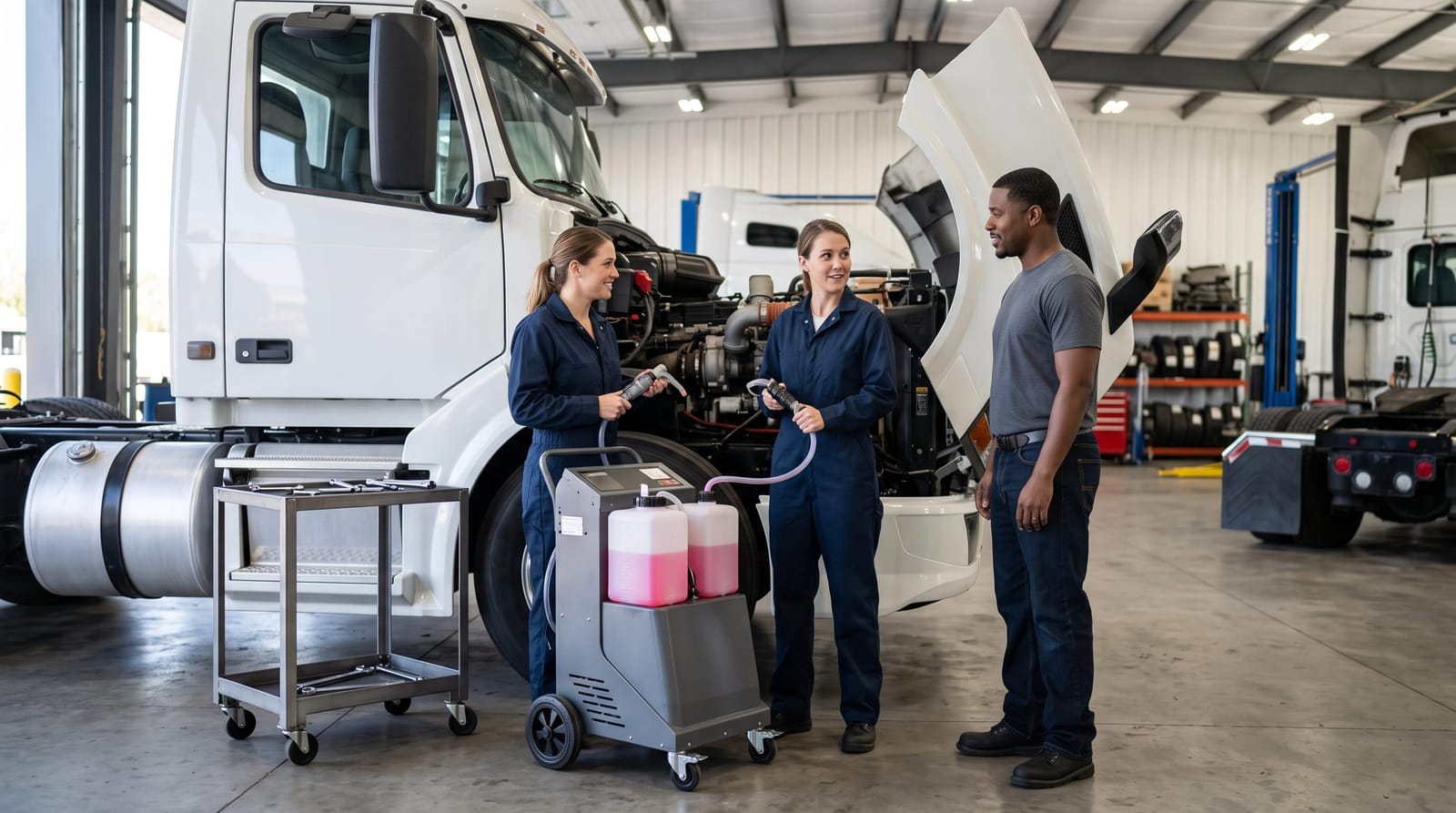
If you own a diesel truck and rely on it for work, hauling equipment, towing trailers, or logging long miles across Kaufman County, your coolant system deserves more attention than it typically gets. Diesel engines run hotter and put more stress on their cooling systems than gas engines do, which means standard coolant maintenance schedules don't always apply. This guide covers what makes diesel coolant service different, how often it should be done, and what drivers in Mesquite and the surrounding area should watch for, especially during Texas summers that regularly push temperatures above 100°F.
Why Diesel Engines Have Different Coolant Needs
Most drivers are familiar with the idea of flushing coolant every few years, but diesel trucks aren't most vehicles. Diesel engines generate significantly more heat during combustion and operate at higher internal pressures than comparable gasoline engines. That extra heat and pressure puts unique demands on the coolant circulating through the system.
One of the biggest differences is something called cavitation erosion. In diesel engines, the cylinder liners can flex slightly with each combustion event. Over time, this flexing creates tiny vapor bubbles in the coolant that collapse rapidly: a process that gradually erodes the metal surfaces of the cylinder walls. This isn't a problem in gas engines, but it's a real concern in diesels, particularly high-mileage work trucks.
To combat this, diesel coolant systems rely on Diesel Coolant Additives (DCA): also called SCAs, or Supplemental Coolant Additives. These chemical compounds create a protective coating on the internal surfaces of the engine, reducing the damage caused by cavitation and corrosion. DCA levels deplete over time and with mileage, which is why diesel coolant isn't something you can simply top off and forget about for five years.
Standard green antifreeze used in many passenger cars does not contain the right additive package for diesel engines. Using the wrong coolant, or running low on DCA, leaves the engine's internal surfaces unprotected in ways that won't show up immediately but can lead to significant wear over time.
How Often Should Diesel Truck Coolant Be Tested and Serviced?
The answer depends on your truck's make, model, and the type of coolant it uses, but there are general benchmarks that most diesel owners can follow as a starting point.
For trucks using conventional diesel coolant with DCA additives, most manufacturers recommend testing coolant condition every 15,000 miles or at every oil change, whichever comes first. A full coolant flush is typically recommended every 60,000 to 100,000 miles, though this varies by manufacturer and coolant type.
Trucks using newer Extended Life Coolant (ELC) formulations, which are pre-loaded with a higher concentration of additives, can often go longer between flushes, sometimes up to 300,000 miles or six years with proper top-off maintenance. However, even ELC still needs to be tested periodically to ensure the additive package is holding up.
Here's what a good diesel coolant service interval looks like in practice:
- Every oil change: Visually inspect coolant level and note any color changes or debris
- Every 15,000 miles: Test coolant with test strips or send a sample for lab analysis to check DCA levels, pH balance, and freeze/boil protection
- As needed based on test results: Add DCA additive to bring levels back into the correct range
- Every 60,000-100,000 miles (conventional coolant): Full system drain, flush, and refill with fresh coolant and a new DCA charge
Coolant test strips are inexpensive and available at most auto parts stores, making it easy for diesel truck owners to do a quick check between shop visits. That said, having a shop perform a proper analysis gives you a more complete picture of what's actually happening inside your cooling system.
What Hot Texas Summers Do to a Diesel Coolant System
Kaufman County and the greater Mesquite area don't get much relief from heat between June and September. Ambient temperatures regularly exceed 100°F, and when you factor in a diesel truck working hard, towing a trailer, idling on a job site, or navigating stop-and-go traffic, coolant temperatures climb fast.
Heat accelerates the breakdown of coolant additives. DCA levels that might last 15,000 miles under moderate conditions can deplete faster in extreme heat, especially in trucks that spend a lot of time under load. A coolant that's already low on additives going into summer is more vulnerable to overheating events, internal corrosion, and cavitation damage by the time fall arrives.
Heat also affects the coolant's ability to transfer heat effectively. Over time, coolant becomes more acidic as additives break down, and acidic coolant actually conducts heat less efficiently than fresh coolant. Trucks running degraded coolant in July and August are working harder to stay in the right temperature range, which puts extra stress on the water pump, thermostat, and radiator.
A few warning signs that your diesel's coolant system may need attention:
- Temperature gauge running higher than normal, especially under load
- Coolant that looks rusty, brown, or has visible particles in it
- A sweet smell coming from under the hood (can indicate a small leak)
- Having to top off the coolant reservoir frequently
- White smoke from the exhaust that doesn't clear after warm-up
None of these symptoms should be ignored, but they're also not cause for immediate panic. They're signals that it's time to get the system checked before a small issue becomes a bigger one.
What Happens When Diesel Coolant Maintenance Gets Skipped
Skipping coolant maintenance in a diesel truck doesn't typically cause an immediate, visible problem, which is part of why it gets overlooked. The damage tends to be gradual.
When DCA levels run low for extended periods, the cylinder liners can experience pitting from cavitation erosion. Over tens of thousands of miles, this pitting can become significant enough to affect engine compression and oil consumption. Studies from coolant manufacturers suggest that diesel engines without proper DCA protection can experience measurable cylinder liner damage in as few as 50,000 to 75,000 miles under heavy-duty use.
Acidic, degraded coolant also accelerates corrosion of other system components, including aluminum parts like the intake manifold, water pump housing, and radiator core. Radiator replacement alone can cost $500 to $1,500 or more depending on the truck, making regular coolant maintenance a genuinely cost-effective habit.
Just as staying on top of diesel fuel filter replacement Terrell TX drivers need keeps fuel systems clean and efficient, keeping coolant properly maintained protects the engine from the inside out: both are part of a complete diesel maintenance routine that keeps working trucks on the road longer.
Frequently Asked Questions
Can I use regular antifreeze in my diesel truck?
Standard green antifreeze is not recommended for most diesel trucks. Diesel engines require coolant that either already contains DCA additives or can be used with them. Using the wrong coolant can leave the engine's cylinder liners and internal metal surfaces without proper protection. Always check your owner's manual or ask a shop familiar with diesel maintenance for the right coolant specification for your truck.
How do I know if my diesel truck's DCA levels are low?
The most reliable way is to use coolant test strips designed for diesel systems, which measure DCA concentration, pH, and freeze/boil protection points. You dip the strip into the coolant reservoir and compare the color results to the chart on the package. Many shops also offer coolant analysis as part of routine diesel service. Visual inspection alone won't tell you much about additive levels.
Is it okay to just top off diesel coolant instead of flushing it?
Topping off is fine for maintaining the fluid level between services, but it doesn't restore additive levels or address coolant that has become acidic or contaminated. Think of it like adding fresh oil to a crankcase that's due for an oil change: it helps temporarily, but it's not a substitute for proper service. Diesel coolant should still be tested regularly and flushed on the recommended schedule regardless of how often it's topped off.
How long does a diesel coolant flush typically take at a shop?
A standard coolant flush and refill on a diesel truck usually takes between one and two hours, depending on the truck's size and system complexity. Some shops include a coolant system pressure test and visual inspection of hoses and connections as part of the service, which adds a little time but gives you a more complete picture of the system's overall condition.
Keep Your Diesel Running Right Through Every Texas Season
Diesel trucks are built to work hard, and with the right maintenance, they can do that for hundreds of thousands of miles. Coolant system care is one of those maintenance items that's easy to overlook because problems develop slowly, but staying on top of DCA levels, pH balance, and flush intervals pays off in engine longevity and reliability. Whether you're hauling equipment through Kaufman County or commuting through Mesquite in August heat, a properly maintained cooling system keeps your diesel doing what it's supposed to do. If it's been a while since your coolant was tested or serviced, it's worth getting it checked before the next summer arrives.