Suspension Health for Trucks That Work: A Guide for Kaufman County Drivers
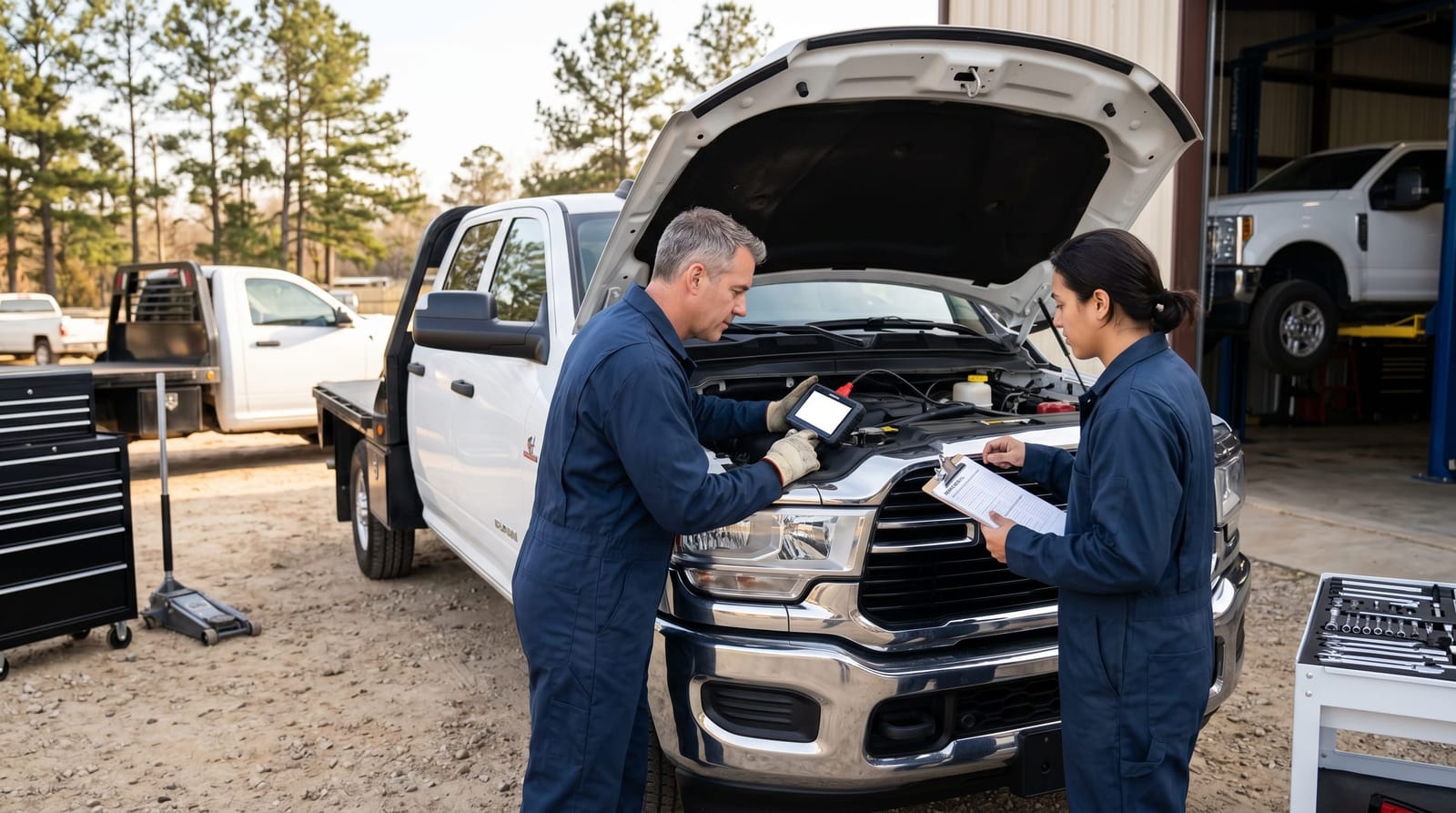
If you use your truck the way it was meant to be used, hauling feed, pulling trailers, navigating rough county roads, or carrying heavy loads across Kaufman County, your suspension is working harder than most people realize. While a lot of truck maintenance content focuses on engines and tires, suspension health is just as critical for vehicles that carry real weight and cover real ground. This guide is part of our broader resource on truck and SUV performance for Kaufman County drivers, and it zeroes in on something working truck owners need to understand: your suspension wears differently than a passenger car's, it wears faster, and catching problems early makes a significant difference in both safety and repair costs. Here's what to know.
Why Work Trucks Put Unique Demands on Suspension Systems
A half-ton or three-quarter-ton pickup truck sitting in a suburban driveway and one being used on a working ranch in Terrell or Crandall are mechanically similar, but they live very different lives. Suspension systems are engineered with a range of load tolerance in mind, but consistent use at or near maximum payload puts components under sustained stress that ordinary driving simply doesn't replicate.
East Texas roads add another layer to this. County roads, caliche surfaces, field entrances, and rural farm-to-market stretches are rougher than city streets. Combined with frequent stops and starts under load, these conditions accelerate wear on virtually every suspension component. Shock absorbers, in particular, cycle far more frequently on rough roads than on smooth highways, and when a truck is also carrying weight, those shocks are working against both road impact and downward load simultaneously.
There's also the issue of repetitive load patterns. A truck that hauls hay bales every weekend, or pulls a livestock trailer several days a week, is experiencing sustained compression and rebound cycles that add up over months and years. This isn't a flaw in the truck: it's simply the reality of working vehicle life, and it means suspension maintenance needs to be a regular priority, not an afterthought.
Which Suspension Components Wear First on Work Trucks
Understanding what fails first helps you know what to watch for and what to ask about during routine service visits.
Shock Absorbers and Struts
Shocks and struts are typically the first components to show wear on trucks that carry loads regularly. Their job is to dampen the bounce and movement of the suspension as the truck rolls over uneven surfaces. Over time, the internal fluid and seals wear out, and the shocks lose their ability to control that movement. On a lightly used vehicle, this might take 60,000 to 80,000 miles. On a truck doing heavy work on rough roads, meaningful wear can appear significantly sooner. Signs include excessive bouncing after hitting a bump, a nose-dip feeling when braking, or the back end squatting noticeably when loaded.
Ball Joints and Control Arm Bushings
Ball joints connect the steering knuckle to the control arm and allow the front wheels to move and turn. On trucks with front independent suspension, which includes most modern half-tons, ball joints take a beating from both road impact and the additional stress of a loaded front axle. Worn ball joints often produce a clunking or knocking sound when going over bumps, and in advanced cases, they can cause steering to feel loose or wandering. Control arm bushings, which cushion the connection between the control arm and the vehicle frame, are similarly vulnerable to wear from constant vibration and load stress.
Leaf Springs and Rear Suspension Components
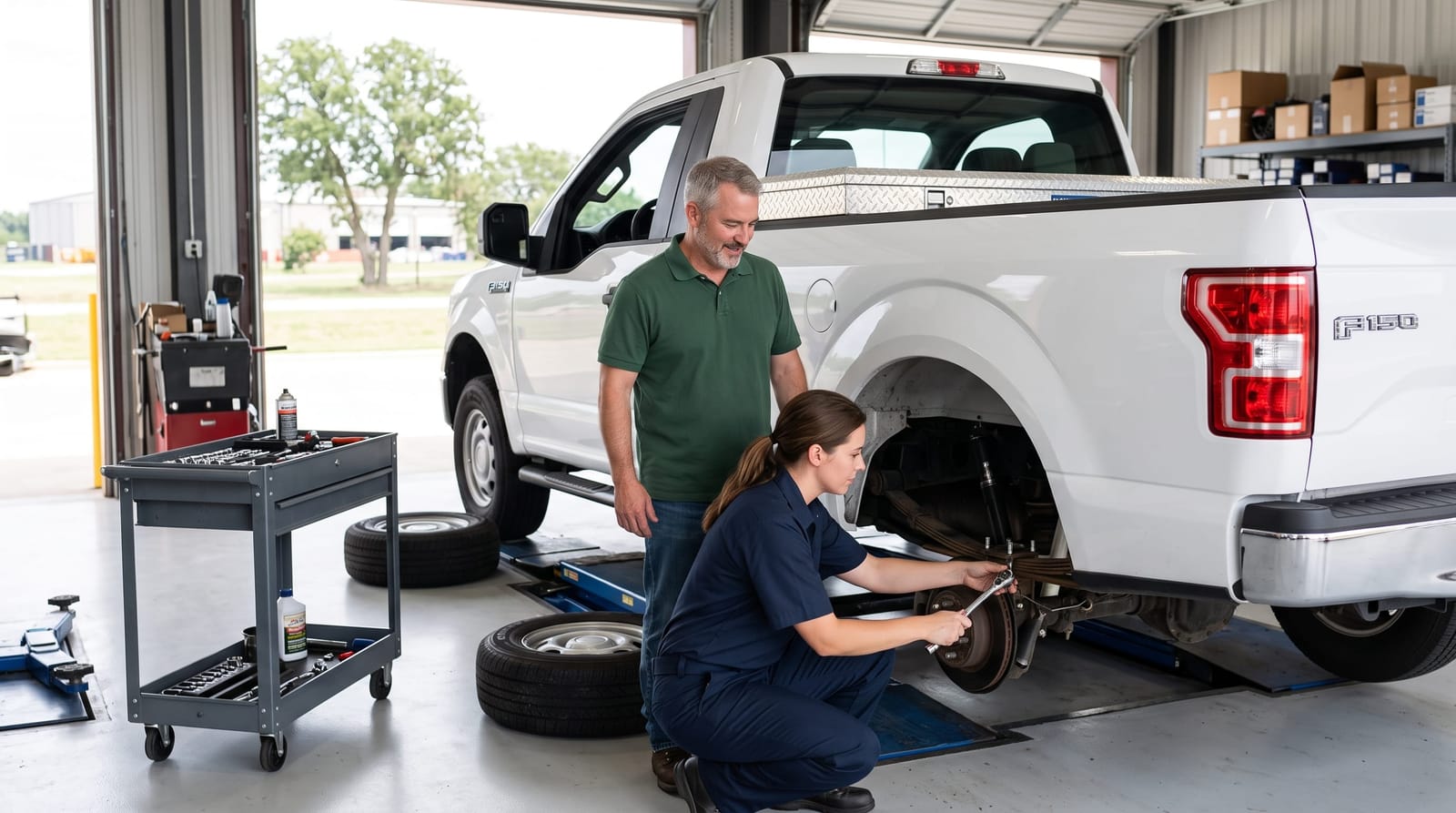
Many trucks, especially heavier-duty models and older pickups, use leaf spring rear suspension. Leaf springs are durable, but they can develop sags or cracks over time, particularly on trucks that regularly carry heavy loads. A truck with a sagging rear spring sits noticeably lower in the back even when unloaded and may handle differently when turning or braking.
Sway Bar Links and End Links
Sway bars help keep the truck stable during cornering by connecting left and right suspension components. The links and bushings that attach the sway bar are smaller parts that often get overlooked, but they wear relatively quickly, especially on trucks navigating uneven terrain. A worn sway bar link often produces a rattling or clunking noise on rough roads, particularly at lower speeds.
Warning Signs Every Truck Owner Should Recognize
You don't need to be a mechanic to notice early signs of suspension trouble. Your truck communicates through the way it drives, and paying attention to changes in handling or noise patterns is one of the most practical things a working truck owner can do.
- Bouncing or floating after bumps: If the truck continues to rock or bounce for more than a moment after hitting a rough patch, the shocks may no longer be doing their job effectively.
- Pulling to one side: While this can indicate a tire or alignment issue, it can also point to uneven suspension wear or a failing component on one side of the vehicle.
- Clunking or knocking sounds: Especially when going over speed bumps, turning, or braking: these sounds often indicate worn ball joints, sway bar links, or bushings.
- Uneven tire wear: Suspension problems frequently show up in tire wear patterns before drivers notice any handling changes. Cupping (a scalloped, uneven wear pattern) is a classic sign of worn shocks.
- Rear end sagging under load: Some squat under a heavy load is normal, but excessive sagging, or a truck that stays low even after unloading, points to worn springs or shocks.
- Steering that feels vague or loose: This can have multiple causes, but worn suspension components are often a contributing factor.
If you're noticing any of these patterns, particularly if your truck is used for towing or hauling regularly, it's worth having the suspension inspected. For more specific information on what overloading does to suspension components over time, our post on truck suspension overload damage Crandall TX covers those wear patterns in detail.
Proactive Maintenance: What a Suspension Inspection Should Cover
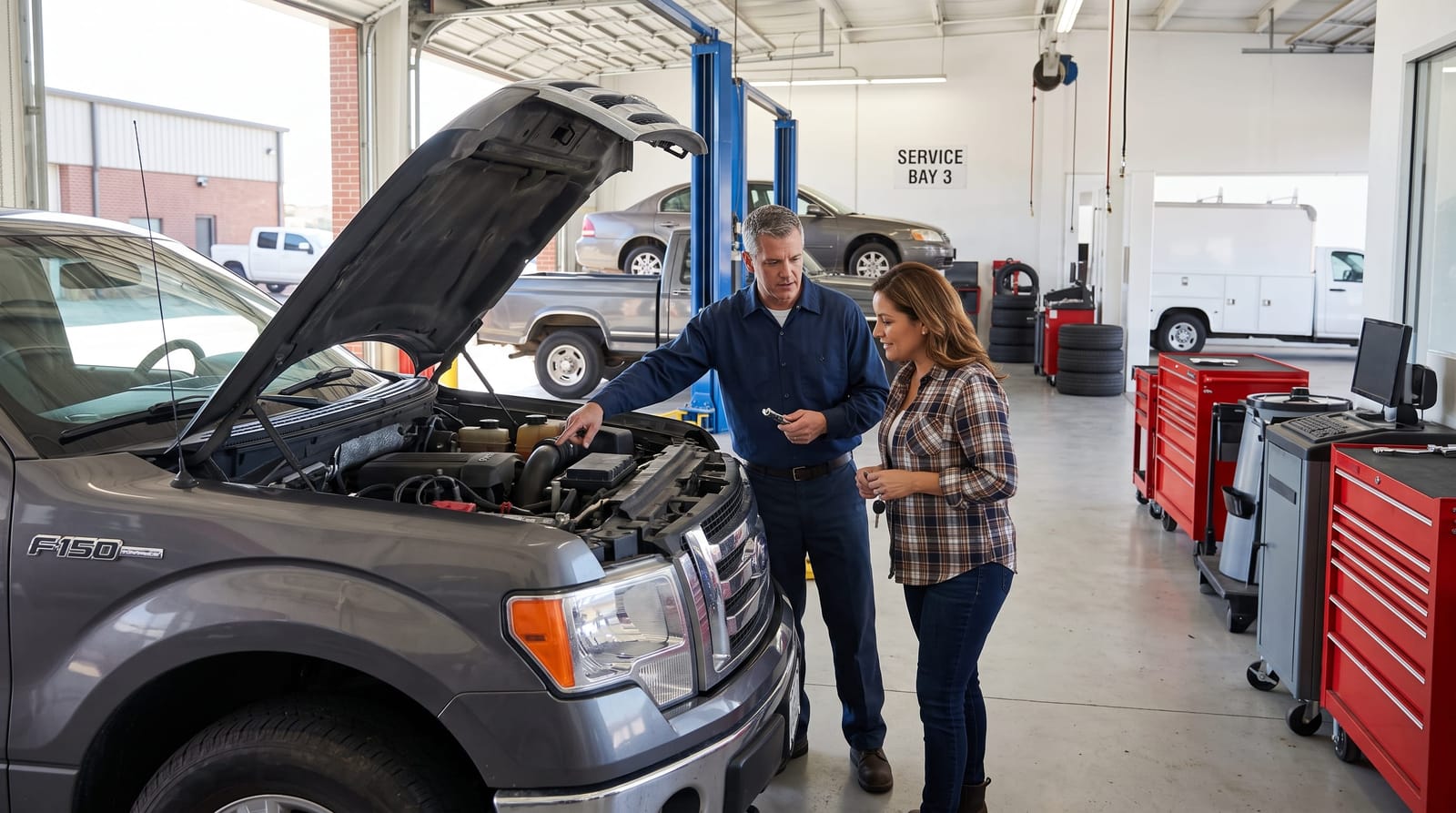
Suspension maintenance isn't just about fixing what's broken: it's about catching gradual wear before it becomes a problem that affects safety or requires more expensive repairs. A thorough suspension inspection on a work truck should include a look at all of the following:
Visual and Physical Component Check
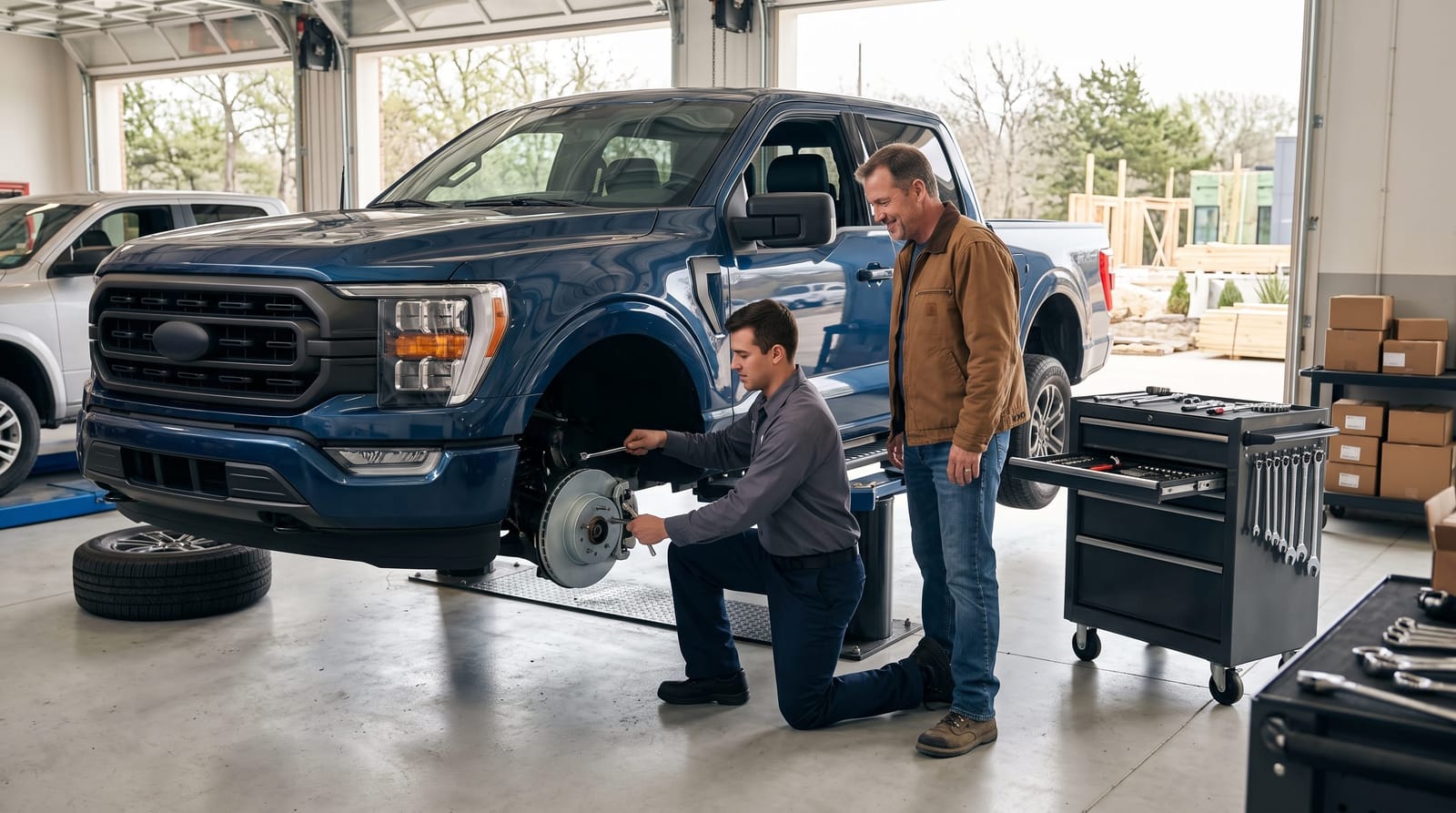
A technician should visually inspect shocks and struts for leaking fluid, which is a clear sign of seal failure. Ball joints and tie rod ends should be checked for play: a small amount of movement that indicates wear has progressed to a point where replacement is appropriate. Bushings should be inspected for cracking or deterioration, and leaf springs (if applicable) should be checked for cracks, missing leaves, or sag.
Alignment Check
Suspension and alignment are closely connected. When suspension components wear, alignment often shifts, and misalignment accelerates tire wear. A proper suspension service should include an alignment check or adjustment as part of the overall evaluation. Trucks that tow frequently or drive rough roads should have alignment checked more often than the standard interval.
Steering Component Inspection
The steering system and front suspension share components, so a suspension inspection on a truck should also include a look at the tie rods and steering linkage. Loose or worn steering components combined with worn suspension can create handling that feels unpredictable, especially at highway speed or when the truck is loaded.
If your truck has a leveling kit or lift kit installed, it's also worth knowing how those modifications can interact with factory suspension wear and warranty coverage. Our post on leveling kit suspension warranty Texas goes into more detail on that topic.
How Often Should Work Trucks Have Suspension Inspected?
There's no single mileage interval that applies to every truck, because wear rate depends heavily on how the vehicle is used. A general baseline for trucks used in normal driving conditions is an inspection every 30,000 to 50,000 miles. But for trucks in Kaufman County that are regularly hauling loads, towing trailers, or driving unpaved roads, a more frequent schedule makes sense: particularly for shocks, ball joints, and bushings.
A practical approach is to have suspension components visually inspected at every other oil change or at least once a year. This doesn't mean replacing parts on a fixed schedule: it means having a technician take a look so that gradual wear is tracked over time. Catching a ball joint or bushing that's beginning to show wear before it fails completely is far less disruptive and expensive than dealing with the consequences of a component failure on the road.
Suspension health also connects directly to braking performance. A truck with compromised shocks takes longer to stop, especially under load, which is one reason towing and brake upgrades go hand in hand with suspension maintenance. Our resource on truck brake upgrade towing Forney TX covers how those systems work together for trucks pulling heavy loads.
Suspension Maintenance and Long-Term Vehicle Value
A well-maintained suspension system doesn't just make a truck safer and more comfortable to drive: it protects the rest of the vehicle. Poor suspension leads to uneven tire wear, which means replacing tires sooner. It puts additional stress on wheel bearings and steering components. It can affect transmission mounts and driveline components over time through increased vibration and movement. And on trucks that tow, worn suspension directly affects trailer stability and braking distance.
For truck owners in Canton, Terrell, Crandall, and across Kaufman County who depend on their vehicles for work, keeping the suspension in good shape is one of the highest-value maintenance habits you can build. The cost of preventative inspection and component replacement at appropriate intervals is nearly always less than the cost of repairing damage caused by neglected suspension, and significantly less disruptive to a work schedule.
Related Topics Worth Exploring
Suspension is one piece of a larger picture when it comes to truck performance and capability. If you're looking to go deeper on specific aspects of this topic, here are a few areas we cover in more detail:
- What happens to suspension components when trucks are regularly overloaded, including how to recognize the signs, is covered in our post on truck suspension overload damage Crandall TX.
- How leveling kits interact with factory suspension components and warranty considerations is addressed in our guide on leveling kit suspension warranty Texas.
Keeping Your Work Truck Ready for the Road
Trucks built for real work deserve maintenance that matches how hard they're used. Suspension health isn't a glamorous topic, but it's one of the most practical things you can stay on top of as a truck owner in Kaufman County. Worn shocks, tired ball joints, and cracked bushings don't usually announce themselves dramatically: they show up gradually in the way the truck feels and handles, and addressing them before they become serious keeps your vehicle safer, more capable, and more reliable over the long haul.
If it's been a while since your truck's suspension was inspected, or if you've been noticing any of the warning signs covered here, Gregg Automotive is happy to take a look. We work with truck owners across Kaufman County and can give you a straightforward assessment of what's in good shape and what's worth keeping an eye on. Give us a call or stop by to schedule a suspension inspection today.