Do I Need Bigger Brakes After Lifting My Truck in Forney TX?
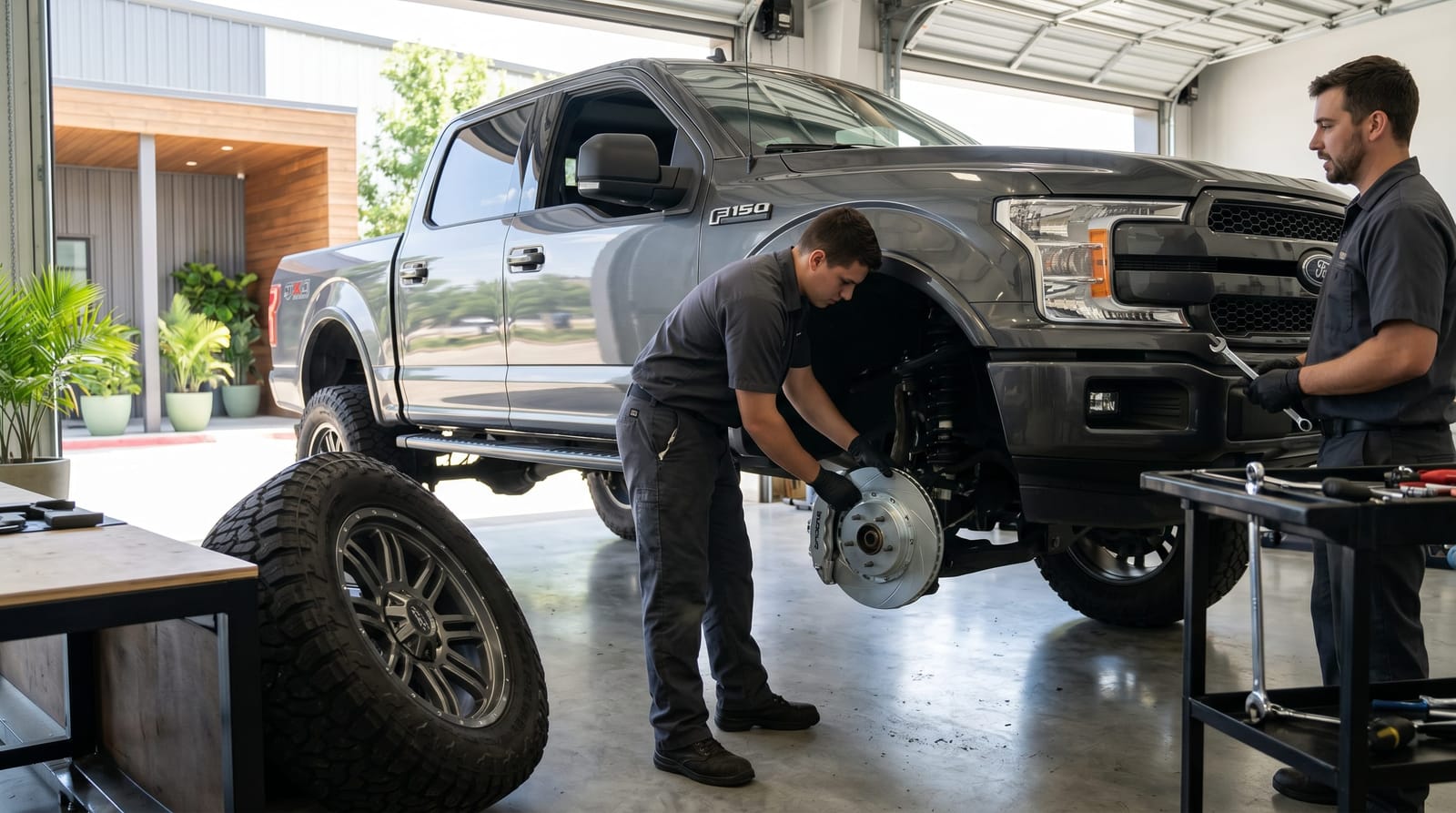
Lifting your truck changes the way it looks, rides, and handles, but one question that doesn't always come up during the planning stage is what it does to your brakes. If you've recently installed a lift kit or you're getting ready to, understanding your brake system is just as important as choosing the right suspension. This post breaks down when bigger brakes after a truck lift in Forney TX become genuinely necessary, what factors affect that decision, and what a brake upgrade actually looks like in practice.
What a Lift Kit Actually Does to Your Braking System
When a truck is lifted, the changes aren't limited to ride height. Most owners also switch to larger tires, and that's where the brake system starts to feel the strain. Larger tires have more rotational mass, meaning they take more force to stop than your factory brakes were designed to handle. Think of it this way: your original brake components were sized and calibrated for your truck's stock weight, stock tire diameter, and stock driving conditions.
A lift kit, especially one that raises the truck four inches or more, combined with tires that are 33, 35, or 37 inches changes that equation significantly. The braking distance can increase, brake fade (when brakes overheat and temporarily lose effectiveness) can happen more easily, and the factory brake hardware has to work harder every time you slow down. In everyday Forney driving, navigating FM 548, stopping at intersections along US-80, or hauling weight across Kaufman County roads, that added strain is real and cumulative.
It's also worth noting that a lift changes the geometry of your brake lines. On some trucks, the stock rubber brake hoses don't have enough slack to accommodate the new suspension travel. Extended or stainless steel brake hoses are often required just to restore normal function: let alone improve performance.
Is a Brake Upgrade Mandatory or Optional? It Depends on These Factors
This is the honest answer: it depends. For some drivers, a modest lift with moderate tire sizing may not require a full brake upgrade right away. For others, an upgrade isn't optional: it's a safety necessity. Here are the factors that determine where you fall:
- Lift height: A 2-inch leveling kit with factory-sized tires creates far less brake stress than a 6-inch lift with 37-inch tires. The larger the lift, the more likely a brake upgrade becomes necessary.
- New tire size: Tires 33 inches and under on a moderate lift are often manageable. Tires 35 inches and above significantly increase stopping demands and often benefit from upgraded rotors and calipers.
- Towing and hauling use: If you regularly pull a trailer, haul heavy loads in the bed, or use your truck for work, your brakes are already working harder than average. Combined with a lift and bigger tires, this makes an upgrade much more urgent.
- Driving conditions: Highway driving at higher speeds puts more demand on your brakes than slow neighborhood roads. Forney-area drivers who commute into Dallas or regularly drive at highway speeds should weigh this carefully.
- Current brake condition: If your existing brakes were already worn before the lift, that's a clear starting point for service: upgrades or not.
If two or more of these factors apply to your truck, a brake evaluation isn't just a good idea: it's something you should schedule before putting serious miles on your lifted setup.
What a Brake Upgrade Actually Involves
When people hear "brake upgrade," they sometimes picture a high-dollar racing setup. In reality, a practical brake upgrade for a lifted truck is about matching your brake components to your actual vehicle weight, tire size, and use case. Here's what that typically includes:
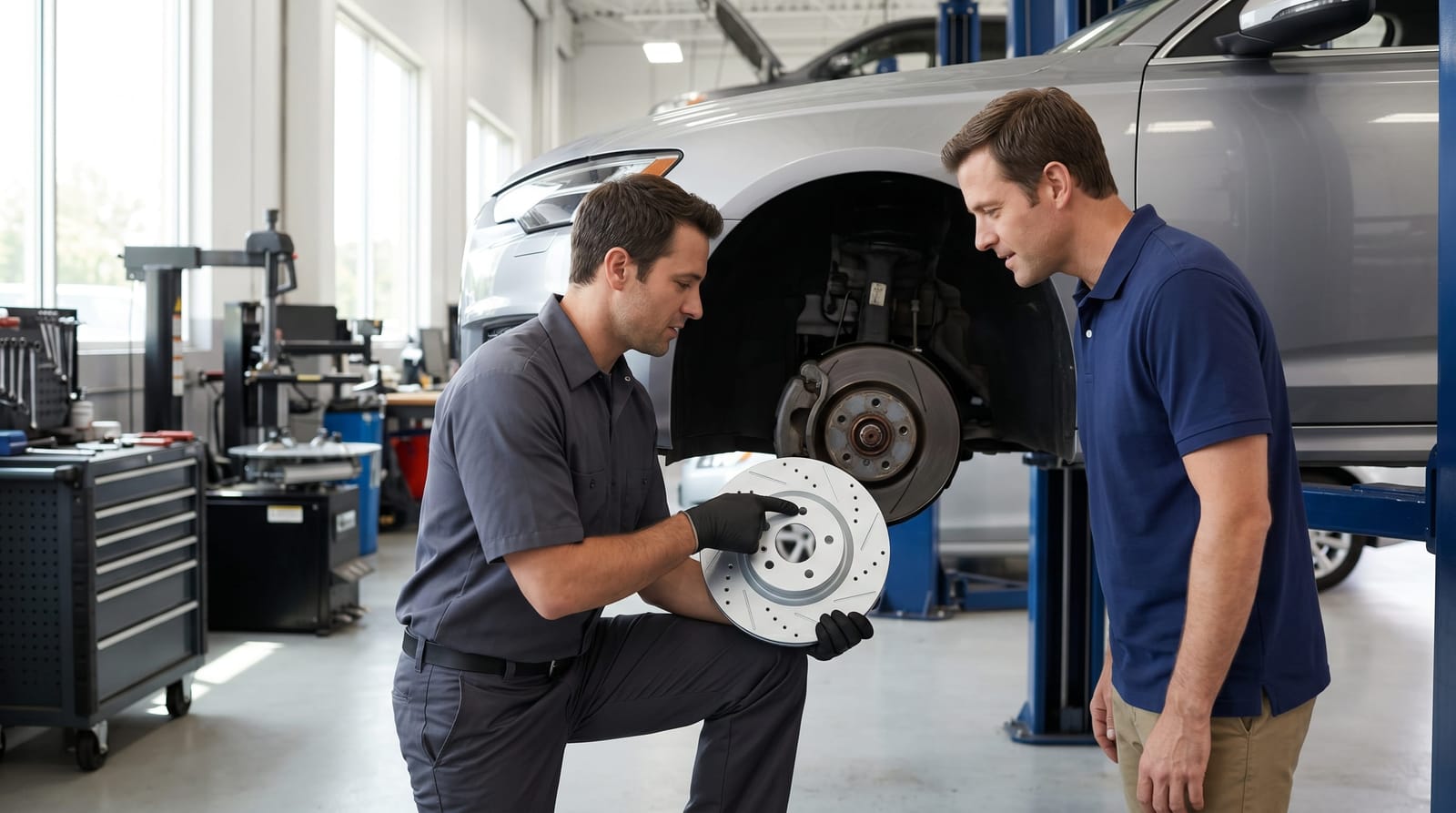
- Larger rotors: Bigger rotors provide more surface area for the brake pads to grip and do a better job dissipating heat, which is the main enemy of braking performance under heavy loads.
- Upgraded calipers: Larger calipers apply more clamping force to the rotor, giving you more stopping power without requiring extra pedal pressure.
- Extended brake hoses: As mentioned, a lift changes how much flex your brake lines need. Extended stainless steel hoses replace the factory rubber lines that can stretch or fail with increased suspension travel.
- Proportioning valve adjustment: Some lifted trucks need adjustments to how brake force is distributed between front and rear axles, especially if weight distribution has changed.
- Brake fluid flush: Heat degrades brake fluid over time. When you're upgrading the system, it's a logical time to refresh the fluid as well.
Not every truck needs every one of these components. A shop that evaluates your specific lift height, tire size, and driving habits can tell you which upgrades genuinely make sense and which ones aren't necessary for your situation. If you've also noticed your pedal feeling soft or inconsistent since the lift, that's a separate concern covered in our post on why a brake pedal feels spongy after installing bigger tires in Forney TX.
When to Schedule a Brake Inspection After a Lift in Forney TX
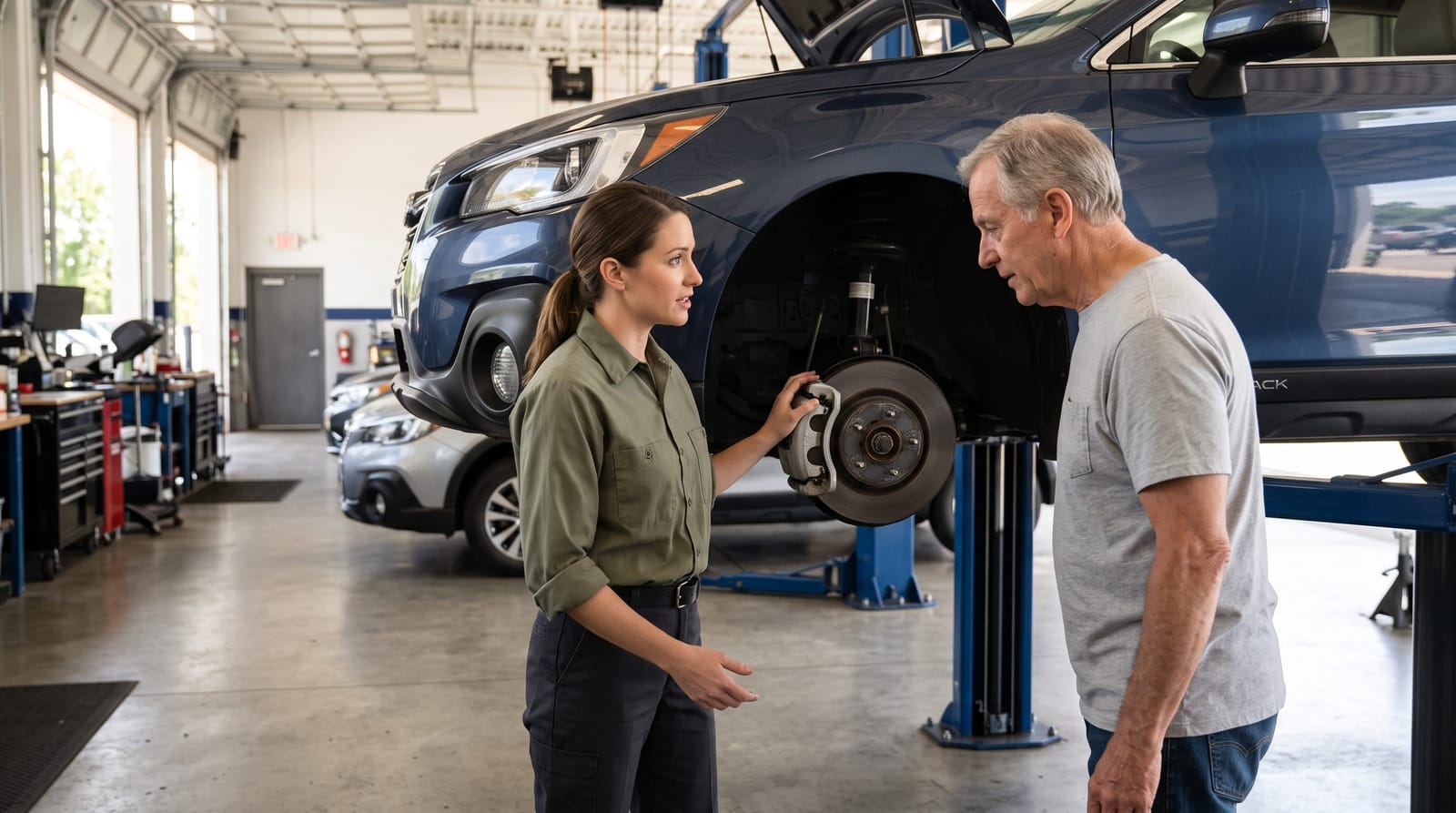
If your truck has already been lifted and you haven't had the brake system inspected since the install, now is a reasonable time to do that, even if everything feels fine. Brake wear and reduced stopping efficiency don't always announce themselves with noise or a warning light right away. A proper inspection will measure rotor thickness, check pad wear, evaluate brake line condition, and assess whether your current setup matches your truck's current configuration.
For drivers in Forney TX and across Kaufman County who are planning a lift kit install, the best approach is to factor brake service into your upgrade budget from the start. Getting a bigger brakes assessment after a truck lift in Forney TX alongside the lift installation, rather than treating it as an afterthought, means you're set up properly from the first mile.
At Gregg Automotive, we work with lifted trucks regularly and can assess your brake system in the context of your specific setup, whether that's a mild leveling kit or a full suspension lift with oversized tires.
Frequently Asked Questions
Do I need bigger brakes right after lifting my truck, or can I wait?
It depends on how much you lifted the truck, what size tires you're running, and how you use the vehicle. A small lift with stock tires may not require immediate brake changes, but a significant lift with larger tires, especially if you tow or haul, should be evaluated right away. Waiting too long with an undersized brake setup can increase stopping distances and wear components faster.
Will my truck's ABS still work correctly after a lift and tire upgrade?
In many cases, yes, but not always without adjustment. Your ABS (anti-lock braking system) is calibrated to your factory tire diameter. Installing significantly larger tires can affect how the system reads wheel speed, which may cause the ABS to activate at unexpected times or not perform as designed. A shop familiar with lifted trucks can check whether your system needs recalibration.
How much does a brake upgrade cost for a lifted truck in the Forney area?
Costs vary depending on what components are needed. Extended brake hoses are relatively affordable. A full big brake kit with upgraded rotors and calipers is a more significant investment. The best way to get an accurate number is to have your truck inspected first: that way you're only paying for what your specific setup actually requires.
Can I just use my factory brakes with bigger tires if I replace the pads and rotors?
Fresh pads and rotors are always a good starting point, but if your tires are significantly larger than stock, simply replacing worn components with identical factory parts doesn't address the underlying mismatch between stopping power and the truck's new demands. For moderate lifts with tires close to stock size, this may be adequate short-term. For larger setups, a more complete assessment is worthwhile.
The Bottom Line
Lifting your truck is a legitimate and popular modification in Forney and across Kaufman County, but it changes how your brake system performs. Whether a full brake upgrade is mandatory or simply recommended depends on your lift height, tire size, and how you use the truck day to day. The most important step is getting an honest evaluation from a shop that understands lifted vehicles. Understanding the full picture of your brake system, as part of the broader conversation about brake system upgrades in Kaufman County TX, means you can make decisions based on facts rather than guesswork.