Grinding, Squealing, or Clunking: What Car Noises Mean in Forney TX
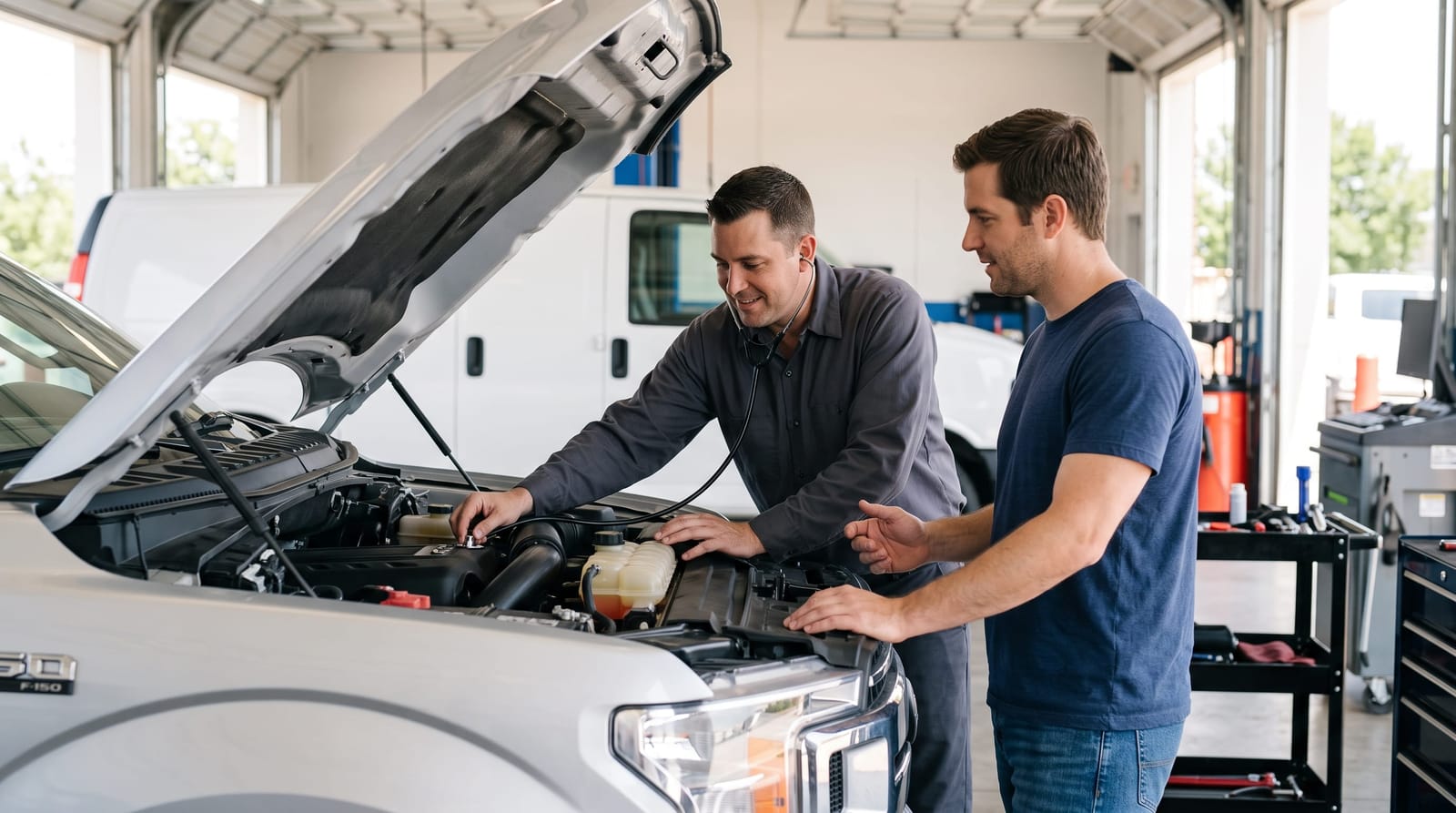
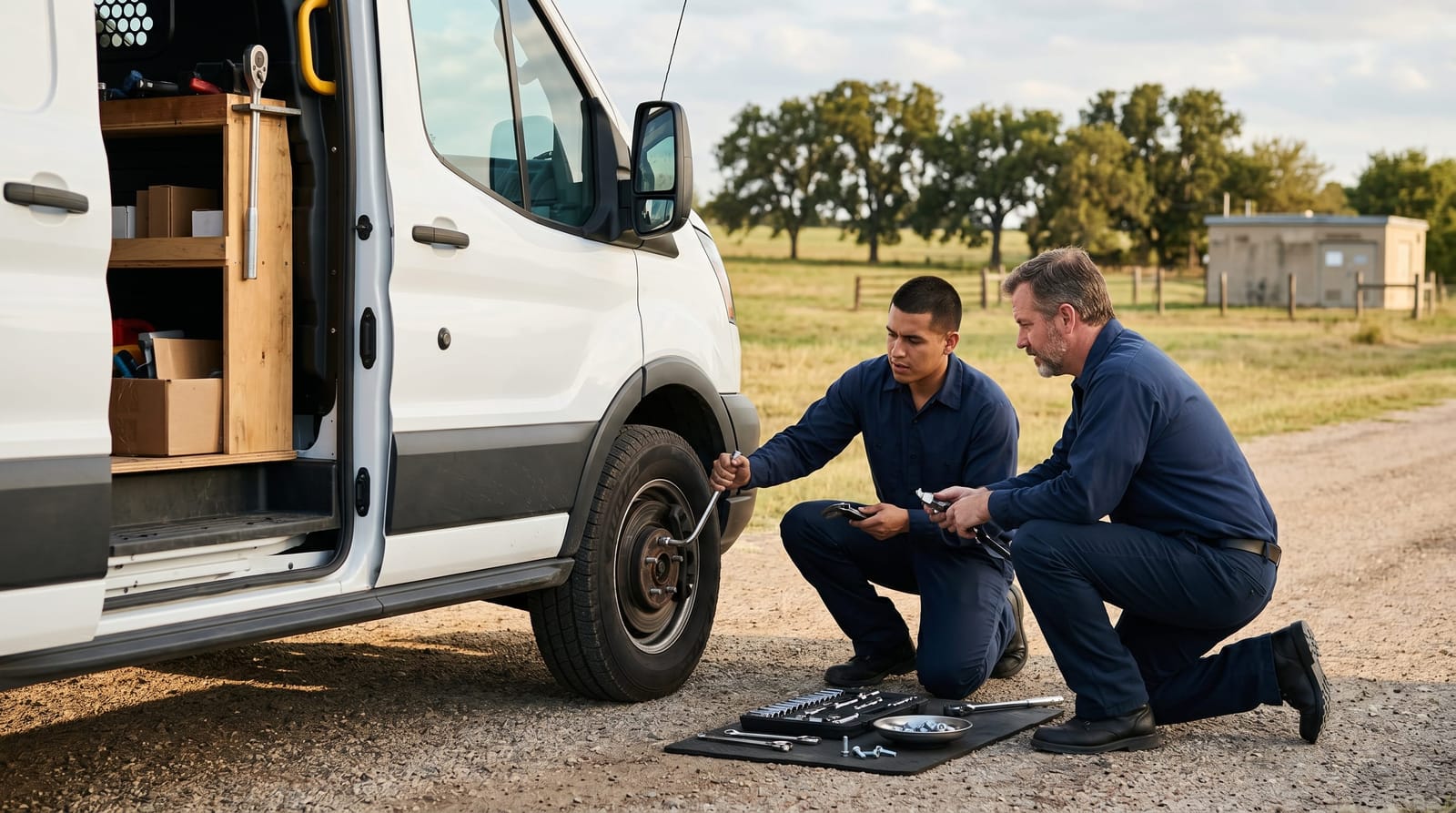
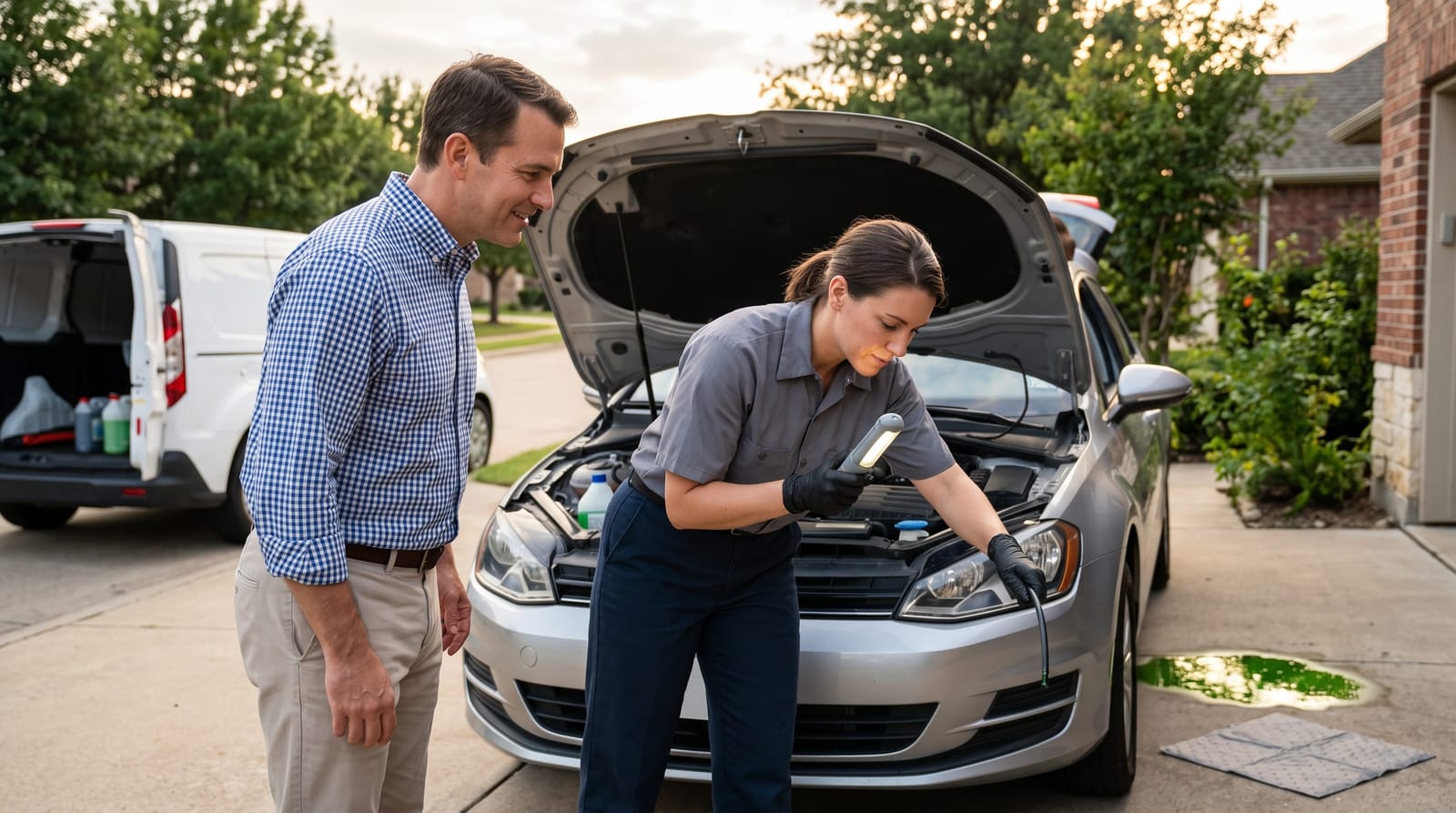
Grinding during braking usually directs attention toward the brakes, while grinding that continues as you cruise calls for checks of other rotating components. Squealing can involve the brakes or an under-hood belt system. Clunking often points toward movement in the suspension, steering, or drivetrain, the parts that transfer power to the wheels.
The sound alone does not identify a failed part. The most useful clues for car noise diagnosis are when it happens, where it seems to come from, and what changes it. A clunk over a bump, for example, calls for different checks than a clunk when shifting into reverse.
First, Notice Any Change in Braking or Steering
A new noise deserves closer attention when it comes with reduced braking, unusual steering movement, strong shaking, smoke, or a warning light. The accompanying symptom can matter more than how loud the noise is.
If braking or steering feels compromised, stopping in a safe location and arranging professional assistance is safer than continuing the drive to investigate. A new, pronounced engine knock with an oil-pressure or overheating warning also calls for stopping safely rather than trying to reproduce the sound.
This is general guidance, not a vehicle-specific safety assessment. At Gregg Automotive in Forney, we offer brake and suspension service, and our team can assess concerns involving those systems through an inspection.
For an intermittent noise without changes in vehicle control, notes about its pattern are more helpful than repeated attempts to make it happen.
Match the Sound to the Driving Condition
People describe the same sound differently. “Grinding” or “rattling” is a useful starting point, but the condition that triggers it often narrows the inspection more effectively.
- Only while braking: Brake pads, rotors, calipers, and nearby hardware are primary inspection areas.
- Over bumps: Suspension joints, bushings, mounts, exhaust clearance, and loose items deserve attention.
- While turning: Steering and suspension components, axle joints, and tire clearance may be involved.
- With engine speed, even when stationary: The engine, accessory belt system, or something vibrating against them becomes more relevant.
- With road speed: Tires, wheel bearings, brakes, axles, or other rotating drivetrain components become the focus.
- During acceleration or gear engagement: Engine and transmission mounts, drivetrain joints, or exhaust contact may explain the sound.
Sound travels through a vehicle’s body, so its apparent location can be misleading. A dashboard rattle might originate under the hood, and a rear-end rumble can be difficult to distinguish from tire noise. Location guides the inspection without proving which part needs replacement.
Wheel Noises: Brakes, Bearings, and Tires
Grinding when the brakes are applied
A coarse grinding sound during braking can indicate worn brake-pad material and contact between metal surfaces. Trapped debris, a rubbing brake shield, or loose or damaged brake hardware can also produce grinding. Inspection distinguishes these causes.
Useful details include whether the sound occurs with light or firm pedal pressure during normal braking, whether it happens at every stop, and whether there is vibration through the pedal or steering wheel. Mention whether the noise stops when the brake pedal is released.
Temporary brake noise can occur after a vehicle sits in damp conditions and surface rust forms on the rotors, the discs the brake pads press against. Persistent grinding is different from a brief moisture-related sound. Our guide to a grinding noise when braking in Forney, TX explains these distinctions in more detail.
Squealing while braking
Brake squeal can come from vibration between components, the characteristics of the pad material, or a pad wear indicator touching the rotor. Not every vehicle uses an audible wear indicator. Squealing does not automatically mean the pads are worn out, and quiet brakes do not prove that everything is in good condition.
An inspection checks pad thickness, rotor condition, hardware fit, and caliper operation to determine whether brake pad replacement or another repair is appropriate. Calipers hold the pads and apply pressure during braking.
Recent brake work is worth mentioning. A noise that began immediately after service gives a technician a different starting point than one that developed gradually.
Grinding, humming, or growling while rolling
When noise follows vehicle speed rather than brake use, the inspection expands to wheel bearings, tires, and drivetrain components. Wheel bearings support the wheels as they rotate. Uneven tire wear can create a rumble that resembles a bearing problem.
Changes with road surface or ordinary turns are useful observations. There is no need for deliberate swerving or high-speed testing. A technician can compare the reported pattern with tire wear and the condition of rotating components.
Clunking at the Front or Rear: Suspension and Steering
Clunks over bumps or driveway entrances
Suspension parts allow the wheels to move over uneven ground while controlling that movement. Worn joints, loose connections, damaged mounts, or deteriorated bushings, the rubber cushions between certain parts, can allow movement that produces a clunk.
Inspection areas include sway-bar links, control-arm bushings, ball joints, and shock or strut mounts. Because several components can sound alike, the important finding is where unwanted movement or contact occurs.
Loose cargo, a spare tire, or its tools can also make a surprisingly mechanical-sounding clunk. Checking whether those items are secure can separate a simple source of noise from a suspension concern. Any accompanying wandering or change in steering feel is important to report.
Clunks when turning
A single clunk as steering direction changes differs from rhythmic clicking during a turn. A single clunk may involve movement in a steering connection, suspension joint, or mount. Repeated clicking during a tight turn can point toward an axle joint on some vehicles.
Useful details include whether the car is stationary or moving, whether the sound occurs in both directions, and whether acceleration affects it. Our guide to a clunking noise when turning in Kaufman County, TX takes a closer look at these patterns.
Clunks when selecting drive or reverse
A clunk during gear engagement can involve drivetrain movement rather than suspension travel. Engine and transmission mounts hold those assemblies in place while cushioning vibration. Worn mounts, axle connections, or driveline joints are among the inspection areas, depending on the vehicle.
“One clunk when shifting from reverse to drive” is a more useful description than “a transmission noise.” The first reports what happened; the second jumps to a diagnosis.
Under-Hood Noises: Squealing, Rattling, and Knocking
A squeal at startup or with accessory use
An under-hood squeal may involve the accessory belt, which drives certain engine accessories, or the pulleys and tensioner that guide the belt and keep it tight. Belt slippage, misalignment, and worn rotating components can produce similar sounds.
Mention whether the noise happens only at startup, continues after the engine warms, or changes when the air conditioning operates. These observations help narrow the inspection without touching moving parts. Belt sprays and other noise-masking products do not identify or correct every possible cause.
Rattling at idle or during startup
An engine-area rattle can come from a loose bracket, a vibrating shield, an accessory component, or an internal engine mechanism. Timing matters: a brief startup rattle calls for different checks than a rattle that continues after the engine warms.
Describe how long the sound lasts and whether it occurs after the vehicle has been parked for a while or at every start. The vehicle’s engine type and service history also help a technician choose the relevant checks.
Knocking that changes with engine speed
“Knocking” can describe sounds from fuel combustion, internal mechanical movement, or an external component striking another part. A phone recording may capture the rhythm, but it cannot reliably distinguish all those causes.
A new, deep knock deserves prompt assessment, particularly with a warning light or a change in engine operation. Repeatedly revving the engine adds little useful information for the owner. The warning-light details, when the sound began, and recent service history provide a better starting point.
Underneath the Vehicle: Exhaust and Drivetrain Sounds
Tinny rattling at certain engine speeds
A lightweight metallic rattle beneath the vehicle may involve an exhaust heat shield, hanger, bracket, or contact between the exhaust and nearby structure. Some loose parts vibrate noticeably only within a narrow engine-speed range.
A rattle can also originate inside an exhaust component. That is why inspection focuses on attachment points, clearance, and component condition rather than assuming every tinny sound is a loose shield.
Scraping or clunking after a bump
If a new sound follows contact with a pothole, road debris, or a steep driveway, that timing is worth sharing. Underbody panels, shields, exhaust supports, wheels, or suspension parts may need inspection.
There is no need to crawl beneath a vehicle to describe the concern. Exhaust parts can remain hot, and a vehicle without proper support presents a serious hazard. Appropriate lifting equipment gives a technician access to inspect beneath it.
Help the Shop Reproduce the Noise
A useful noise description does not require automotive vocabulary. A short set of observations can make an intermittent concern easier to investigate:
- When it started: Suddenly, gradually, after service, or after a road impact.
- What it sounds like: One clunk, repeated clicks, a tinny rattle, or a continuous grind.
- Where it seems loudest: Front left, rear, under the hood, or beneath the center.
- What triggers it: Braking, turning, bumps, startup, acceleration, or a particular road speed.
- Whether temperature matters: Only after sitting, only when warm, or at any time.
- What accompanies it: Vibration, pulling, warning lights, smells, or changed pedal feel.
For example: “There is one clunk near the front passenger side when entering my driveway slowly. It started last week, and I do not hear it on smooth roads.” That gives a technician a clearer starting point than “the front end is bad.”
A recording captured by a passenger or while safely parked can help communicate an intermittent sound. Microphones can distort its character and location, so a recording supplements the inspection rather than replacing it.
Diagnosis Comes Before the Parts List
A noise investigation can include reproducing the symptom, inspecting related components, checking for looseness or contact marks, and comparing findings with vehicle-specific service information. Computer fault-code checks help when electronic symptoms are involved, but many mechanical noises do not trigger a code.
Useful questions when reviewing a proposed repair include:
- Was the noise reproduced?
- What inspection finding explains the sound?
- Could there be more than one source?
- How will the repair be checked afterward?
Clear answers connect the recommended work to the vehicle’s condition. A familiar sound is a starting clue, not a reason to replace a part without checking it.