Why Is My Car Making a Grinding Noise When I Brake in Forney TX?
That grinding noise when braking is one of the most unsettling sounds a driver can hear, and for good reason. If you're a Forney TX driver noticing a harsh, metal-scraping sound every time you slow down, your brakes are telling you something important. This post breaks down the most common causes of grinding brake noise, explains what level of urgency you're actually dealing with, and walks you through what a typical repair involves. Understanding your brakes doesn't require being a mechanic: it just requires knowing what to listen for.
What Causes a Grinding Noise When Braking?
Grinding when you apply the brakes almost always points to metal-on-metal contact somewhere in the braking system. Here are the most common culprits:
Worn-Down Brake Pads
Brake pads are designed with a small metal wear indicator, sometimes called a wear tab, built into them specifically to alert you when the pad material is running low. When the usable pad material wears away, this metal tab contacts the rotor directly, creating that grinding or scraping sound. Most brake pads are designed to last between 30,000 and 70,000 miles depending on driving habits, road conditions, and vehicle type. Stop-and-go driving in areas like Forney TX, where traffic on US-80 can get congested during peak hours, tends to wear pads down faster than highway driving.
Worn or Damaged Rotors
The rotor is the large metal disc that the brake pad clamps against to slow your vehicle. When brake pads wear down completely and aren't replaced in time, the metal backing of the pad begins grinding directly against the rotor surface: scoring and gouging it. Rotors that are deeply grooved or warped can also cause a grinding or pulsing sensation when you brake. In some cases, rotors with more than 0.030 inches of surface variation may need to be resurfaced or replaced entirely.
Debris Caught in the Brake Caliper
Sometimes a grinding noise has a simpler explanation: a small rock, gravel chip, or road debris has gotten lodged between the brake pad and rotor. This is especially common after driving on unpaved roads or through construction zones: both of which are common for Forney-area drivers traveling through developing parts of Kaufman County. This type of grinding can be intermittent rather than constant, and in many cases, the debris works itself out on its own. But if the sound continues for more than a day or two, it's worth having a technician take a look.
How Serious Is Grinding When Braking? Understanding the Safety Risk
Grinding brake noise should be taken seriously, but "serious" doesn't have to mean panic. Here's a straightforward way to think about it:
Your front brakes handle approximately 70% of your vehicle's stopping power. That means worn front brake components have a more immediate impact on your ability to stop safely than rear brake issues. If the grinding is consistent every time you brake, occurs at highway speeds, or is accompanied by the vehicle pulling to one side, those are signs that the brakes need attention soon, not eventually.
Stopping distances increase significantly when brake pads are worn. A vehicle traveling at 60 mph with healthy brakes stops in roughly 130 to 140 feet under normal conditions. Severely worn or damaged brakes can extend that stopping distance by 20% or more, which matters a great deal at intersections or in emergency braking situations.
The good news: catching grinding noise early, before it progresses to complete pad failure, typically means a more straightforward and less expensive repair. Once pads are fully worn and rotors are damaged, the job almost always involves replacing both components rather than just the pads.
What Does a Brake Repair Typically Involve in the Forney TX Area?
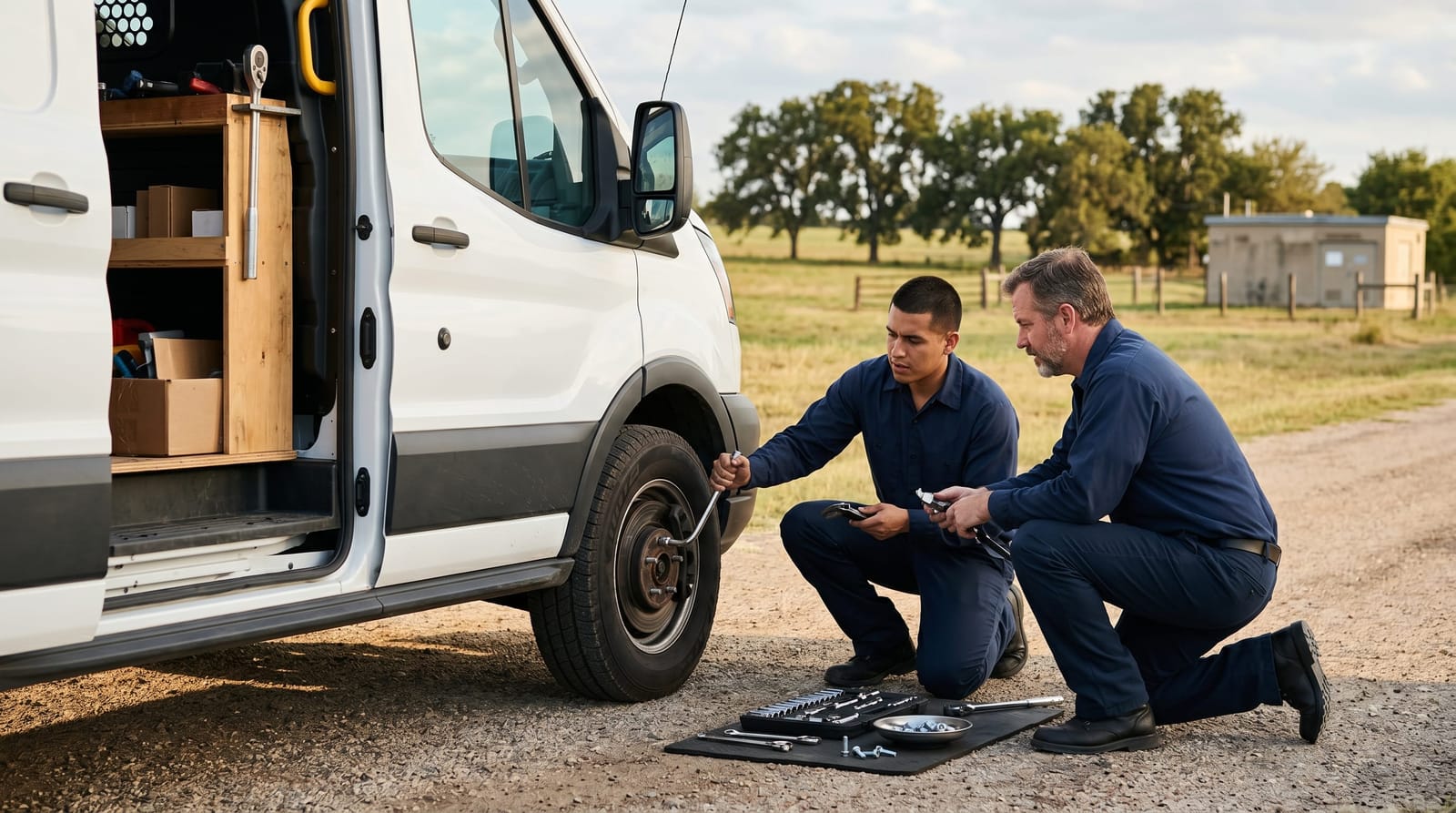
When you bring your vehicle in for a brake inspection, a technician will typically start by removing the wheels to get a clear look at the pads, rotors, and calipers. Here's what the process generally looks like:
- Visual inspection: The technician checks the remaining pad thickness (pads below 2mm are considered worn out), examines the rotor surface for scoring or uneven wear, and checks caliper function.
- Measurement: Rotors are measured with a micrometer to determine if they're still within the manufacturer's minimum thickness specifications for safe use.
- Repair recommendation: Depending on what's found, the repair may involve replacing just the pads, replacing pads and rotors together, or cleaning out debris from the caliper area.
- Reassembly and test drive: After the repair, the technician will test the brakes at low and moderate speeds to confirm the grinding is gone and the braking feels smooth and even.
Most standard brake jobs, replacing pads and rotors on one axle, can be completed in two to three hours at a well-equipped local shop. If you're also noticing other unusual sounds from your vehicle, like a clunking noise when turning on your Kaufman County TX car, it's worth mentioning those symptoms during the same visit so a technician can check whether multiple systems may be involved.
When Should You Stop Driving Altogether?
Most grinding brake situations still allow for careful, limited driving to get to a repair shop, but there are a few situations where parking the vehicle and arranging a tow is the safer call:
- The brake pedal feels soft, spongy, or sinks toward the floor
- You notice smoke or a burning smell coming from a wheel area after driving
- The vehicle pulls strongly to one side when braking
- The grinding noise has become a loud metal-on-metal screech or is accompanied by vibration through the steering wheel
These signs may indicate brake fluid issues, a seized caliper, or advanced rotor damage, all of which go beyond routine wear and could affect your ability to stop safely in an emergency.
Frequently Asked Questions
How long can I drive with grinding brakes before it becomes dangerous?
There's no single answer because it depends on how much pad material is left and what's causing the grinding. Some vehicles grind lightly for several days before the situation becomes critical, while others are already at the metal-on-metal stage when the noise starts. As a general rule, if you're hearing grinding consistently with every brake application, schedule an inspection within a few days, not weeks. Continued driving with worn brakes accelerates rotor damage, which usually means a higher repair cost.
Is grinding different from squealing when braking?
Yes. Squealing is typically the first warning: it's the wear indicator tab lightly contacting the rotor to signal that pads are getting low. Grinding is usually a step beyond that, indicating the pad material itself is significantly worn or gone. Grinding can also be caused by debris in the caliper, which squealing typically does not indicate. If you heard squealing a few weeks ago and are now hearing grinding, that's a sign the condition has progressed.
Do both sides need to be repaired at the same time?
Brake work is almost always done in axle pairs: both front brakes or both rear brakes together. This keeps your vehicle's braking balanced from side to side. If one front pad is worn, the other is typically close behind. Replacing only one side can cause the vehicle to pull when braking, which creates a handling concern on top of the original brake issue.
What does a brake job typically cost in the Forney TX area?
Costs vary based on vehicle make, model, and what specifically needs to be replaced. Pad replacement alone tends to be more affordable, while replacing both pads and rotors on a single axle is a more involved job. Getting a direct estimate from a local shop after an in-person inspection is the most accurate way to understand what your specific vehicle needs and what the repair will cost.
The Bottom Line on Grinding Brake Noise in Forney TX
A grinding noise when braking is your vehicle's way of flagging a real issue, and in Forney TX, where daily driving often involves a mix of highway miles, stop-and-go traffic, and unpaved surfaces, brake wear is something every vehicle owner will eventually deal with. Understanding whether you're hearing early wear indicators, metal-on-metal contact, or something like trapped debris helps you make a smarter decision about timing and urgency. Addressing brake concerns early is almost always less expensive and safer than waiting. If your brakes are grinding, getting a straightforward inspection is the right first step.