How to Build a Used Car Repair Budget in Forney, TX
The cost of getting a used car into good shape depends on three things: maintenance already completed, work currently due, and problems that need diagnosis. A car with recent tires, documented fluid services, and healthy brakes needs a different budget than one with the same mileage and little service history.
The most useful starting point is an itemized estimate divided into immediate repairs, due maintenance, and work that can wait. That gives you a practical total without paying to replace everything simply because the car is new to you.
Build a maintenance baseline before buying a catch-up package
Start with the vehicle’s year, model, engine, mileage, and maintenance records. Compare completed services with the manufacturer’s maintenance schedule. A receipt showing what was done and at what mileage is more useful than a general statement that the car was “recently serviced.”
Sort each item into one of three categories:
- Documented and current: Work that does not need repeating just because ownership changed.
- Due by schedule or condition: Maintenance supported by mileage, age, inspection findings, or the manufacturer’s requirements.
- Needs diagnosis: Warning lights, leaks, noises, or driving concerns that need an explanation before assigning repair costs.
This separates routine ownership expenses from deferred maintenance on a used car. An overdue air filter and an unexplained coolant leak both deserve attention, but they are not the same kind of budget item.
Price complete jobs, not just replacement parts
An advertised parts price rarely represents the full job. Labor, fluid specifications, related components, and installation services affect the total. These are the details worth comparing across the major catch-up items.
| Maintenance item | What changes the cost | What a useful estimate identifies |
|---|---|---|
| Engine oil and filter | The required oil specification, engine oil capacity, filter, and service access. | The correct oil and filter for the engine, rather than a generic oil-change description. |
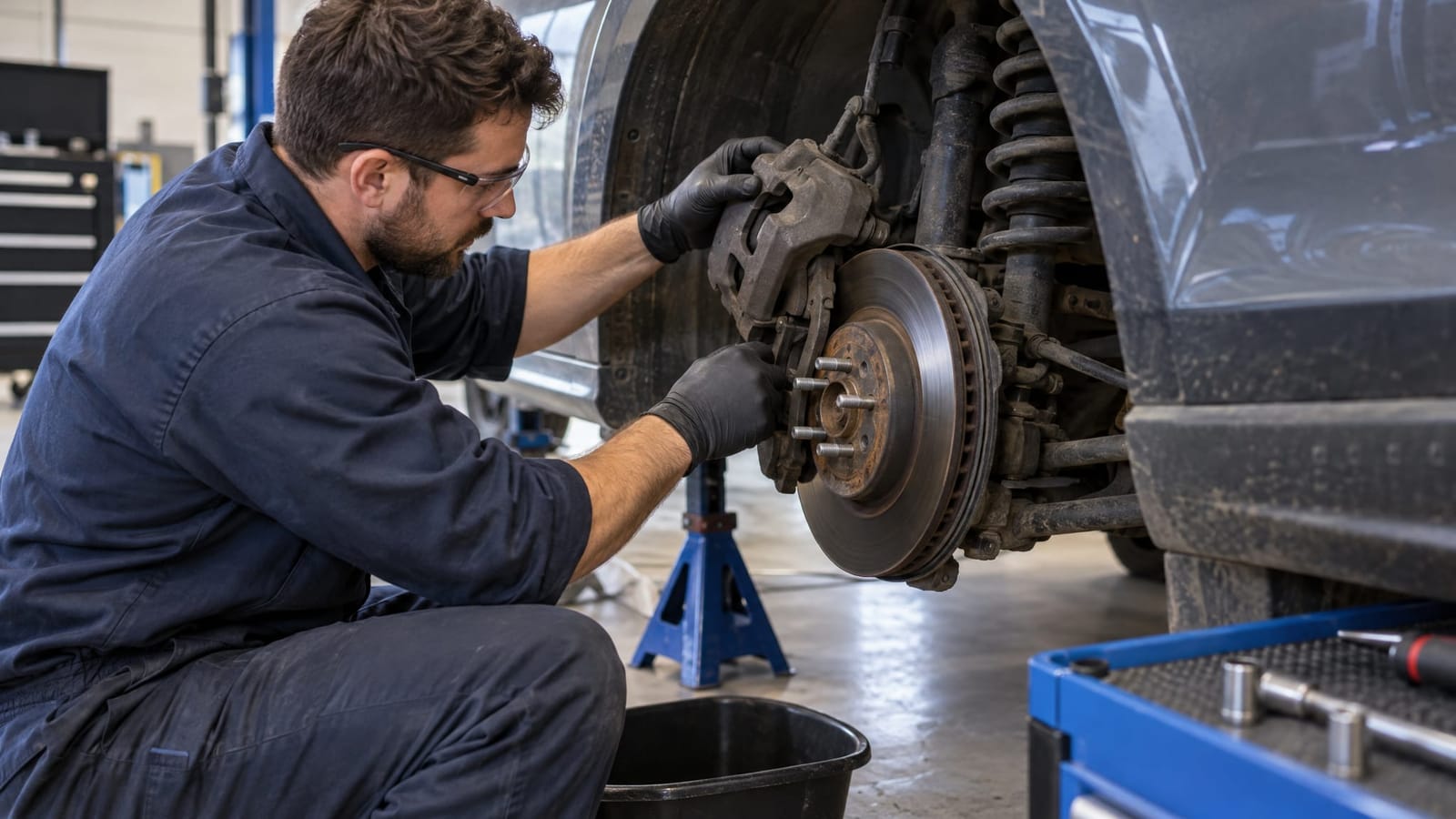
| Brakes | Which axle needs work and whether the job involves pads, rotors, calipers, or a fluid leak. | Front and rear work separately, the components included, and inspection findings supporting replacement. |
| Tires | Tire size, specification, quantity, and installation services. | The tire model and size, mounting, balancing, valve service, and disposal charges. Alignment is a separate consideration when wear or handling warrants it. |
| Air filters | Whether the engine air filter, cabin air filter, or both need replacement, plus access time. | Each filter listed separately. The engine filter serves the engine; the cabin filter serves the ventilation system. |
| Belts | The belt’s purpose, access, and any related worn components. | Whether the estimate concerns an accessory belt or a scheduled timing-belt service. These are very different jobs. |
| Other fluids | The fluid specification, quantity, service method, and components involved. | Separate entries for coolant, brake fluid, transmission fluid, and other applicable fluids, with the reason each service is due. |
A fluid-service package is not automatically a better value than individual services. Match each item to the vehicle’s schedule and condition. Likewise, an accessory-belt replacement does not complete a timing-belt service, and not every engine uses a timing belt.
Stage the work by consequence, not invoice size
The smallest bill is not always the best first expense. Organize the estimate around what the work addresses.
Immediate assessment and repair needs
Brake concerns, tire damage, overheating, and significant fluid leaks belong ahead of comfort upgrades or appearance work. Vehicle-specific safety decisions need an in-person assessment; our team can evaluate brake and suspension concerns rather than treating them as items to postpone automatically.
Maintenance that establishes a reliable baseline
Next comes work that is due, such as an oil change, worn filters, or scheduled belt and fluid services. Prioritizing by the manufacturer’s schedule and inspection findings is more useful than approving every service associated with the car’s mileage.
Items to monitor or plan for later
Some components may still be serviceable but approaching replacement. Keep those separate from work needed now. A useful plan records the component’s condition and a mileage or time for reassessment.
For example, if the tires are recently installed, the oil service is documented, the front brakes need repair, and the cabin filter is dirty, the immediate budget centers on the brakes. Repeating the oil change adds expense without addressing the main need.
Compare dealership and independent-shop estimates line by line
At Gregg Automotive in Forney, we offer maintenance and repairs with pricing below dealership pricing. A fair comparison still depends on whether both estimates cover the same work.
- Match the scope: Brake pads alone are not equivalent to pads and rotors.
- Match the specifications: Compare equivalent parts and the correct fluids, not just similar service names.
- Include the full total: Account for diagnostic charges, labor, and listed fees or taxes.
- Look for shared labor: Related work may overlap, but any savings depend on the vehicle and repair.
- Separate required and optional work: Keep an immediate repair total distinct from future maintenance.
That produces a clearer budget than comparing one shop’s complete repair estimate with another shop’s starting price.
Common questions about used-car catch-up costs
Do I need an oil change immediately after buying a used car?
A recent receipt documenting the correct oil and service mileage can prevent unnecessary repetition. Without that history, an oil change after buying a used car can establish a clear starting point. Oil color alone does not establish when it was last changed.
Does a tuneup cover all overdue maintenance?
No. “Tuneup” can describe different work, so the estimate needs to name the included services. Spark-plug replacement, for example, does not address worn brakes, tires, or overdue fluid maintenance. The vehicle’s service schedule helps define what is actually due.
Can a check-engine-light code tell me the repair cost?
A code identifies a detected condition, not necessarily the failed part. Diagnosis connects that information with testing and the vehicle’s symptoms. Keeping diagnosis separate from the repair estimate helps avoid building a budget around an assumed parts replacement.
Make the first round of work your ownership baseline
A useful catch-up budget has a priced list of work needed now and a separate plan for later. After service, keep the invoice, mileage, and next service dates together. That record makes future maintenance easier to plan and helps prevent paying twice for work already completed.