How to Spot a Flood-Damaged Used Car at a Dealer in Forney or Terrell TX
Texas flooding events are not rare, and Kaufman County sits in a region that sees its share of heavy rainfall and flash floods. After major storms, a percentage of water-damaged vehicles get cleaned up, retitled, and quietly moved onto used car lots across the state. If you're shopping for a used vehicle in Forney or Terrell, knowing how to spot flood damage could save you from an expensive and frustrating ownership experience. This post walks you through the most reliable signs to look for, so you can shop with confidence and protect your investment from day one.
Why Flood-Damaged Cars Are a Real Risk in This Region
According to the Texas Department of Insurance, flood-damaged vehicles are one of the most common problem cars that resurface on used car lots following major weather events. Texas consistently ranks among the top states for flood-related vehicle damage, and with Dallas-area storms pushing water southeastward through communities like Forney, Terrell, and Kaufman, local buyers face a genuine risk when shopping used.
What makes flood damage particularly tricky is how well a vehicle can be cosmetically cleaned. A thorough detailing job can eliminate visible dirt and most odors temporarily, which means a car can look and even smell fine during a quick lot visit. Within a few weeks of purchase, however, the hidden effects of water intrusion start showing up: electrical gremlins, mold growth in the HVAC system, corrosion on wiring connectors, and rust forming in places you wouldn't normally look.
Industry estimates suggest that approximately 1 in 4 flood-damaged vehicles are never properly disclosed to buyers. That's a significant number when you consider how many used cars change hands each year in the Forney-Terrell corridor. Being an informed buyer isn't just smart: it's genuinely necessary in this market.
Understanding what to inspect before purchasing a used vehicle in Kaufman County starts with knowing which damage types are hardest to detect and most expensive to repair. Flood damage sits near the top of that list.
The Physical Signs You Can Check on the Lot
You don't need to be a mechanic to spot the most common indicators of flood damage. Here's what to look for during a walk-around and a basic interior inspection.
Unusual Rust Locations
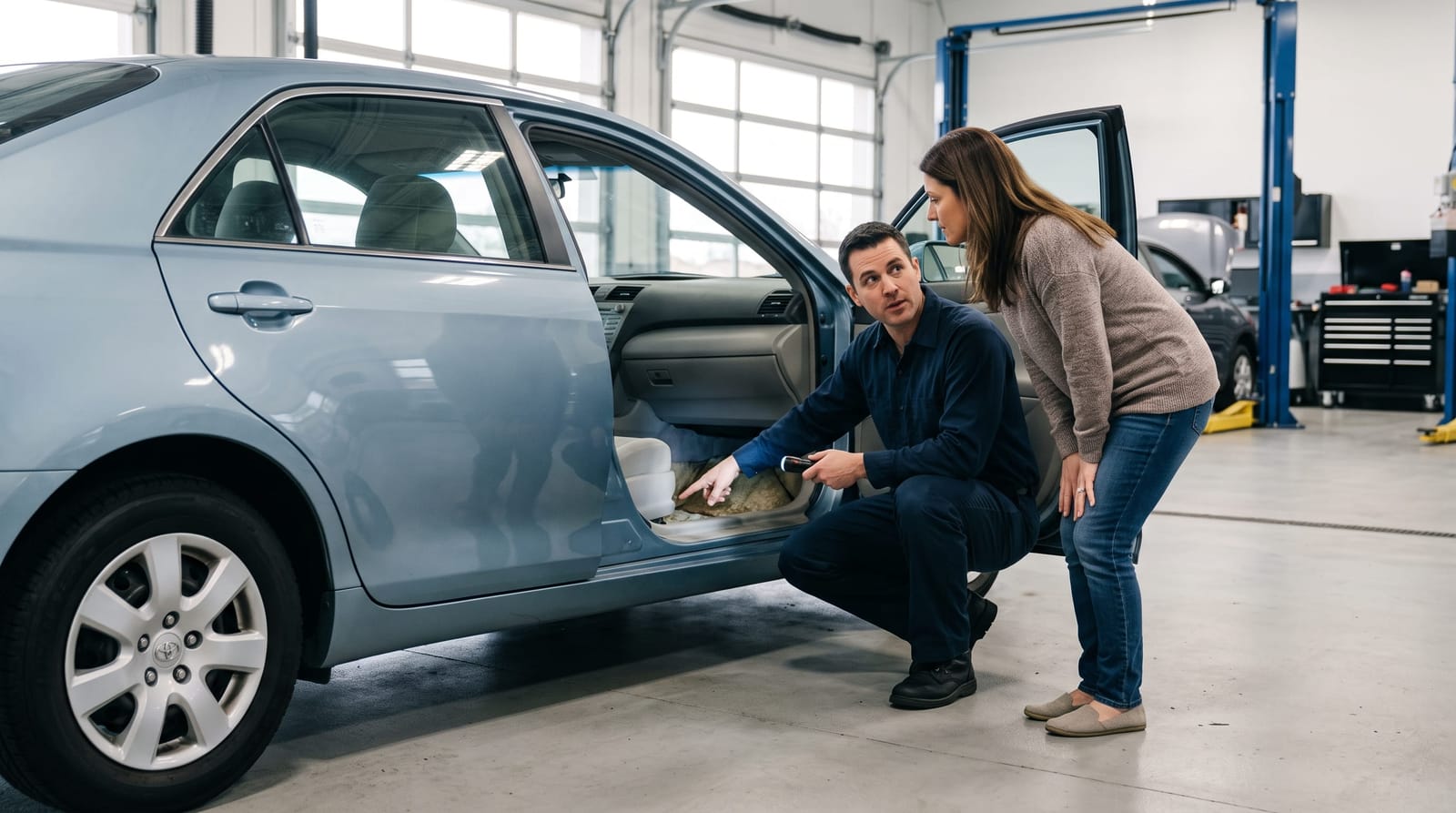
Some surface rust on older vehicles is completely normal. But rust in low-lying or interior areas is a red flag. Check underneath the seats, inside the trunk along the floor seams, around the spare tire well, and on the metal brackets under the dashboard. If you see rust or significant corrosion in spots that wouldn't normally be exposed to rain or road spray, water intrusion is likely the cause. Also look at the seat rail bolts and door hinge interiors: these are spots that rarely rust unless the vehicle has been submerged or heavily flooded.
Waterline Marks and Staining
Close inspection of the interior door panels, the lower portion of the dashboard, and the seat upholstery can reveal faint tide or waterline marks. These are subtle horizontal discoloration lines left behind when flood water recedes. Fabric seats may show uneven fading or stiffness in lower sections. Carpet that has been replaced or recently shampooed heavily can also be a sign: check whether the carpet seems newer than the rest of the vehicle's interior condition would suggest.
Musty or Mildew Odor
This is one of the most reliable indicators. A musty, damp, or mildew-like smell that lingers, especially when you run the air conditioning, strongly suggests moisture has been trapped in the vehicle for an extended period. Sellers sometimes use air fresheners to mask this smell, so if the interior odor seems unusually strong or perfume-heavy, take a moment to sit quietly and see if an underlying musty smell comes through.
Electrical and Mechanical Warning Signs
Flood damage is especially destructive to vehicle electrical systems, and the problems often don't show up immediately. When you're sitting inside the vehicle, take a few minutes to test everything you can reach.
- Power windows and locks: Test all four windows and all door locks. Sluggish response, intermittent failures, or unusual noises can indicate corroded wiring or moisture-damaged motors.
- Dashboard warning lights: Start the vehicle and watch the dashboard for a few minutes. Multiple warning lights illuminating, or lights that flicker and disappear: can reflect water-damaged sensors or corroded connector points.
- Air conditioning: Run the AC for at least two to three minutes. A musty smell coming from the vents is a strong indicator of mold growth in the evaporator core or ductwork, which is a direct result of moisture exposure.
- Infotainment and controls: Water intrusion frequently damages touchscreen modules and control panels. Test the radio, navigation, and any climate controls to see if they respond normally.
- Fuse box inspection: If you can access the fuse box (typically located in the engine bay or under the dashboard), look for corrosion, white mineral deposits, or signs of moisture around the fuse panel itself.
Electrical repairs on a flood-damaged vehicle can be among the most expensive fixes in automotive repair, often running into thousands of dollars for wiring harness replacements or module replacements. These are not simple or predictable repairs.
How to Use the Vehicle History Report and VIN
Always run a vehicle history report using the 17-digit VIN before making any purchase decision. Services like Carfax and AutoCheck pull from insurance databases, state title records, and auction histories. Look specifically for the following entries:
- Salvage title or rebuilt title: A salvage title indicates the vehicle was declared a total loss by an insurance company, which may include flood damage. A rebuilt title means the vehicle was repaired and passed a state inspection, but the underlying history of that damage remains.
- Flood damage notation: Some reports will specifically flag flood-related insurance claims. This is not always present, but when it is, it's definitive.
- Auction history: Vehicles sold through salvage auctions frequently reappear on used car lots. If the report shows the vehicle passed through a salvage-focused auction, that warrants additional scrutiny.
It's also worth checking the National Motor Vehicle Title Information System (NMVTIS), which is a federally supported database that some state title offices use to flag problem vehicles. The report won't tell you everything, but it provides a foundation for your evaluation.
Even a clean report doesn't guarantee a clean vehicle: that's why a pre-purchase inspection from a trusted local shop is worth every penny. A professional pre-purchase inspection in Forney or Kaufman County can uncover water damage evidence that no history report will show.
What Flood Damage Means for Long-Term Ownership Costs
If you purchase a flood-damaged vehicle unknowingly, here's what you may face over the first one to three years of ownership:
- Recurring electrical issues as corrosion continues to spread through wiring connectors
- HVAC system mold that requires evaporator cleaning or replacement, typically ranging from $400 to $900 depending on the vehicle
- Accelerated rust on underbody components, brake lines, and suspension hardware
- Engine and transmission issues if water entered those systems during the flood event
- Diminished resale value, as flood history, once disclosed, significantly reduces what a vehicle is worth on resale
These aren't worst-case scenarios. They're common outcomes that owners of undisclosed flood-damaged vehicles regularly experience. The good news is that many of these problems are identifiable before purchase if you know what to look for and take the time to check.
For a broader look at how to evaluate a used vehicle before and after purchase, the complete used vehicle owner's guide for Kaufman County covers the full range of inspections and maintenance priorities that protect your investment long-term.
Frequently Asked Questions
Can a flood-damaged car ever be a good purchase?
In most cases, no, especially for everyday drivers. Flood damage affects systems throughout the vehicle that are difficult and expensive to fully repair. If a vehicle is disclosed as flood-damaged and priced extremely low, some buyers accept the tradeoff, but the long-term ownership costs and unpredictability make it a risky choice for most people who depend on reliable daily transportation.
How reliable are vehicle history reports for detecting flood damage?
History reports are a useful starting point but are not comprehensive. They only reflect damage that was reported to insurance companies or recorded by state title agencies. Vehicles that were flooded in private situations, or where owners chose not to file a claim, may show a clean history report despite having significant water damage. A physical inspection is always necessary alongside any report.
Does mold from flood damage go away on its own?
No. Mold growth in a vehicle's HVAC system or interior panels requires professional cleaning and treatment to eliminate. Left untreated, it continues to grow, worsens air quality inside the vehicle, and can cause the musty odor to intensify over time. This is one of the reasons flood-damaged vehicles often reveal themselves within the first few weeks after purchase: the mold smell returns once the initial detailing wears off.
What should I do if I suspect a vehicle I'm looking at has flood damage?
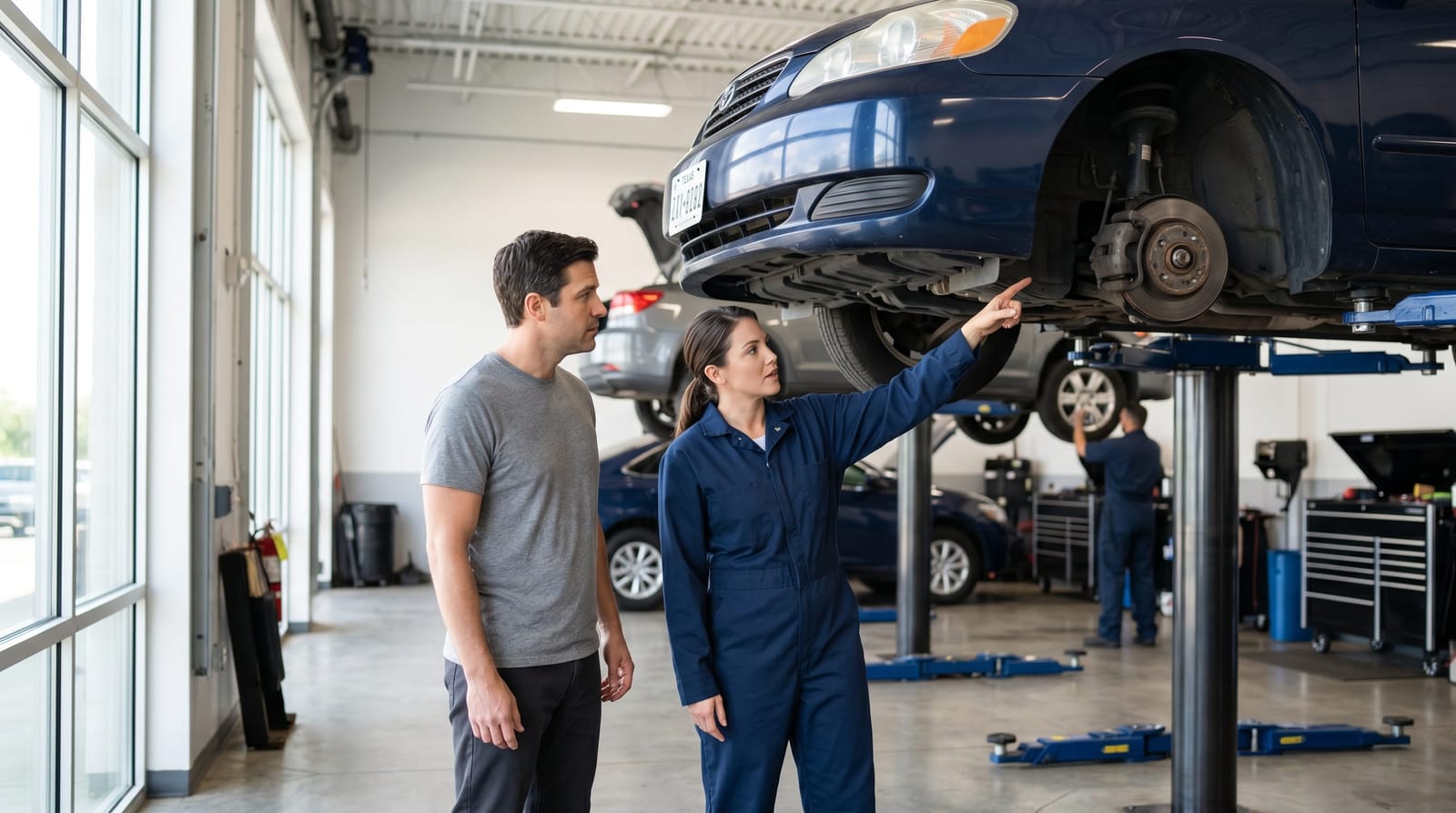
Walk away from the immediate purchase and schedule a pre-purchase inspection at a trusted local shop before committing. A mechanic can put the vehicle on a lift, inspect the underbody for rust and corrosion, check the electrical connectors, and evaluate the HVAC system, all of which give you a much more complete picture than a lot walk-around alone.
Protecting Yourself Before You Buy
Shopping for a used vehicle in Forney, Terrell, or anywhere in Kaufman County comes with real advantages, but also real risks, especially in a state with Texas's history of flooding. Knowing how to identify flood damage signs puts you in a far stronger position as a buyer. Look for rust in unexpected places, trust your nose when something smells off, test every electrical system you can reach, and always run the VIN before signing anything. And when you're not sure, a pre-purchase inspection from a shop you trust is the most reliable protection you have. A little extra time before the purchase can save you a significant amount of money and frustration over the life of the vehicle.