Signs Your Truck's Suspension Is Damaged from Overloading in Crandall TX
Working trucks in Crandall and across Kaufman County are built to haul, but even the toughest half-ton or three-quarter-ton pickup has its limits. When trucks are regularly loaded past their rated capacity, the suspension system takes the brunt of that stress over time. The damage doesn't always happen all at once. It builds gradually, and by the time something obvious breaks, several components may already be worn out. This post walks through the most common warning signs of suspension damage from overloading, explains what's typically failing underneath your truck, and gives you a realistic sense of what repairs look like.
Why Overloading Is Hard on Suspension Components
Your truck's suspension system is engineered to absorb road impacts, support the vehicle's weight, and keep your tires in consistent contact with the pavement. Every truck has a payload rating, usually found on a sticker inside the driver's door jamb, that represents the maximum weight the vehicle is designed to carry safely, including passengers, cargo, and anything in the bed.
When you regularly exceed that rating, the springs, shocks, and related hardware are working harder than they were designed to. Springs compress further than intended. Shocks wear out faster because they're cycling under greater pressure. Bushings, the rubber or polyurethane pieces that cushion joints throughout the suspension, deteriorate more quickly under the constant strain.
This is especially relevant for trucks used around Crandall for agriculture, construction, landscaping, or hauling equipment. A truck that makes multiple loaded runs per week accumulates suspension wear much faster than one used primarily for commuting. The good news is that identifying the problem early makes repairs considerably more straightforward and less expensive.
Warning Signs You Shouldn't Ignore
Sagging or Squatting in the Rear
One of the most visible signs of overload-related suspension wear is a rear end that sits noticeably lower than usual, even when the truck is empty. This sagging happens when the rear leaf springs or coil springs have been compressed so many times under heavy loads that they lose their ability to return to their original shape. Springs aren't designed to bounce back indefinitely under excessive weight, and once they start to weaken, the truck's ride height drops.
If you park your truck on a level surface and notice the rear sitting lower than the front, or if you see a gap between your rear tires and the wheel wells that's noticeably smaller than the front, that's worth having looked at. A quick visual comparison from the side of the truck tells you a lot.
Bouncing After Bumps
A simple test can tell you a lot about your shocks: push down firmly on one corner of your truck and let go. If the truck bounces more than once before settling, your shock absorbers are likely worn. Shocks that have been repeatedly compressed under heavy loads wear out their internal seals and fluid, reducing their ability to control spring movement. The result is a truck that bounces, wallows, or feels loose over rough roads, especially noticeable on the county roads around Crandall that aren't always smooth.
Uneven Tire Wear
Overloaded suspension can throw off your truck's alignment and the way weight is distributed across the axles. When that happens, your tires don't make even contact with the road surface. You might notice the inside or outside edge of a tire wearing down much faster than the rest of the tread, or a cupping pattern across the tire surface. Cupping, small, scalloped dips in the tread, is often a direct sign of worn shocks that are no longer controlling tire movement properly. Uneven tire wear shortens the life of your tires significantly and can also affect braking and handling.
Bottoming Out on Dips and Railroad Crossings
If your truck is clunking or scraping when you go over a dip, a railroad crossing, or pull into a steep driveway, that's a sign your suspension is running out of travel. With weakened springs, the truck drops lower than it should under the vehicle's own weight, leaving less room for the suspension to compress before it hits its limits. Bottoming out is uncomfortable, but it's also putting sudden stress on suspension components, the frame, and the undercarriage, which can accelerate damage further.
Steering That Feels Vague or Pulls to One Side
Suspension damage from overloading doesn't stay isolated to the rear of the truck. Over time, worn components affect alignment and can impact steering. If your truck pulls to one side on a straight road, or if the steering wheel feels less responsive than it used to, that can indicate that control arms, tie rods, or alignment angles have been affected by the suspension settling under repeated overloads.
Which Components Typically Need Repair
The most commonly replaced components after overload-related suspension damage include:
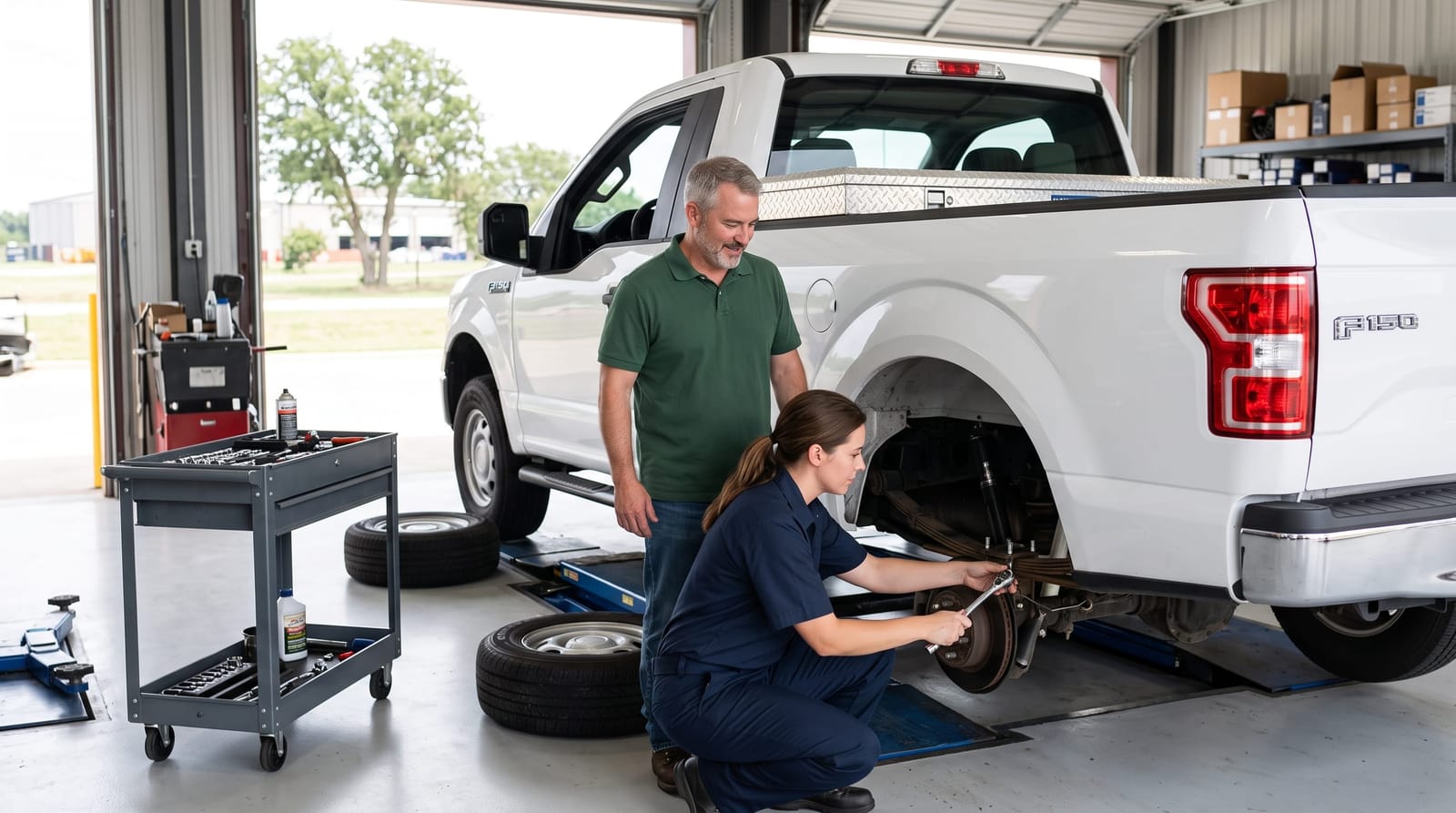
- Leaf springs or coil springs: Springs that have lost their tension need to be replaced. On most pickup trucks, rear leaf springs are the first thing to show wear from overloading.
- Shock absorbers: Worn shocks are among the most common repairs after extended overloading. They're also one of the more straightforward fixes.
- Bump stops: These small rubber cushions prevent metal-to-metal contact when suspension compresses fully. They wear quickly in overloaded trucks.
- Suspension bushings: Rubber bushings throughout the suspension joints degrade faster under heavy use. Worn bushings contribute to clunking noises and imprecise handling.
- U-bolts and spring mounts: On trucks with leaf springs, the hardware that holds the spring pack in place can bend or crack under sustained overload.
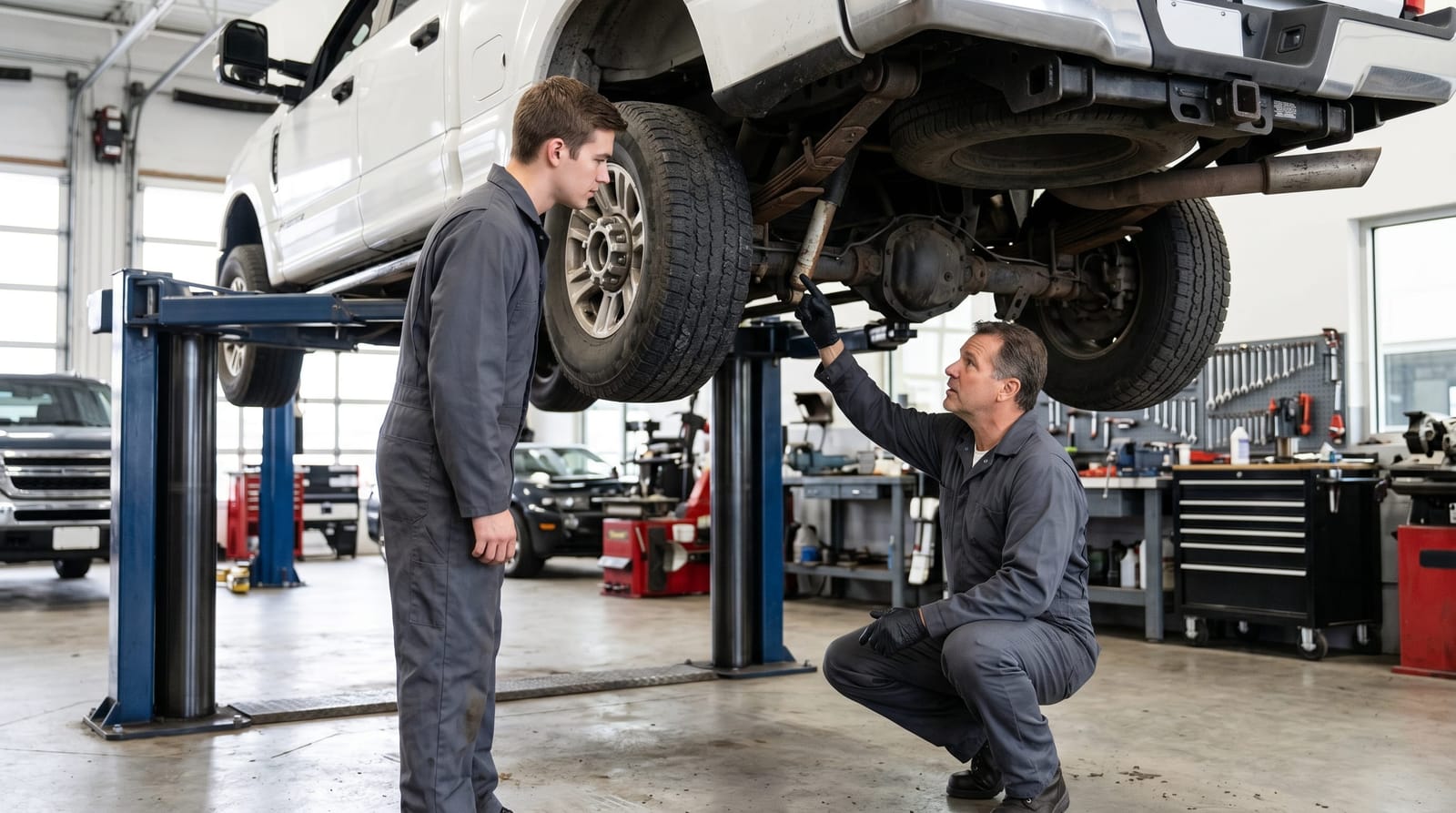
In more severe cases where overloading has gone on for a long time without attention, control arms or other structural suspension parts may also be involved. A thorough inspection is the only way to know exactly what's been affected.
What Suspension Repairs Typically Cost in the Crandall Area
Repair costs vary depending on which components need attention and your specific truck. Here's a general breakdown to help set expectations:
- Shock absorbers (pair): Typically ranges from $200 to $500 depending on the truck and parts quality. Replacing all four at once often makes sense if mileage and wear are comparable.
- Leaf spring replacement: A single rear leaf spring replacement generally runs $300 to $600 in parts and labor. A full spring pack replacement may run higher.
- Suspension bushings: Individual bushing replacement is relatively affordable, but if multiple bushings throughout the suspension need attention, costs add up. Budget $150 to $400 depending on quantity and location.
- Alignment: After any suspension repair, a wheel alignment is almost always necessary. Plan on $80 to $120 for a standard alignment.
Catching these issues early rather than waiting until multiple components fail is almost always less expensive in the total. A sagging spring caught early is a simpler repair than a spring that's failed and taken other hardware with it.
If you've also made modifications to your truck, it's worth understanding how those can interact with suspension integrity. For instance, if you're wondering whether a leveling kit could affect your truck's suspension warranty in Texas, that's an important question to have answered before adding any aftermarket components to a truck already under suspension stress.
Frequently Asked Questions
How do I know if my truck's springs are worn out versus just needing better shocks?
Springs and shocks often show wear together, but they fail differently. Worn springs are most obvious when the truck sits lower than normal even when empty, especially in the rear. Worn shocks show up as excessive bouncing after bumps. A mechanic can inspect both during the same visit and tell you exactly what's contributing to the problem.
Can I keep hauling heavy loads if my suspension is showing early signs of wear?
It's not a good idea. Continuing to overload a truck with weakened suspension accelerates damage to other components, including tires, brakes, and even the frame, and reduces the truck's stability and stopping ability. Getting the suspension addressed before continuing heavy hauling is the safer and more cost-effective path.
Will a suspension repair fix my uneven tire wear?
Repairing the suspension components that caused the issue will stop the problem from getting worse, but tires that have already developed uneven wear patterns won't recover on their own. Depending on how much wear occurred, your mechanic may recommend rotating the tires, adjusting alignment, or replacing tires that are beyond even wear.
Is it worth upgrading to heavier-duty suspension components if I haul frequently?
For trucks that regularly carry near or at their payload limits, upgraded heavy-duty springs, shocks rated for higher load capacities, or supplemental support options like helper springs can extend the life of the suspension system significantly. It's worth discussing with a shop familiar with working trucks in your area.
Bottom Line for Crandall Truck Owners
Suspension damage from overloading doesn't announce itself with a loud failure: it creeps in gradually through a sagging rear end, a bouncy ride, and tires that wear faster than they should. For truck owners in Crandall who depend on their vehicles for real work, catching these signs early and getting the right components replaced keeps the truck reliable, safe, and ready for the next load. If you're noticing any of these symptoms, a suspension inspection is a straightforward first step toward understanding exactly what your truck needs.