The Complete Used Vehicle Owner's Guide for Kaufman County TX: What to Check, Fix, and Maintain

The best starting point with a used vehicle is a condition check, not a shopping list of replacement parts. Before buying, compare its maintenance records with its current mechanical condition. After buying, address problems affecting safe operation, identify scheduled services that are due, and keep a record of the work completed.
This approach helps separate routine upkeep from substantial repair needs. It also avoids a common mistake: spending on appearance or replacing parts based on a warning light before understanding the underlying problem.
For drivers in Forney and across Kaufman County, a practical ownership plan also accounts for how the vehicle is used. Commuting, frequent short trips, towing, and extended idling can involve different maintenance considerations. Here is how to evaluate a used vehicle, prioritize repairs, and build a maintenance plan around its condition and use.
Before Buying, Compare the Records With the Vehicle
Mileage and age provide context, but neither tells the whole story. Maintenance history, current symptoms, wear, and upcoming scheduled work all matter. A clean interior says little about mechanical condition, and a well-maintained engine can still be paired with worn brakes or suspension parts.
Start with records and the maintenance schedule
Match the vehicle identification number, often called the VIN, on the vehicle with the records being reviewed. Then compare dated service receipts with the maintenance schedule for that specific year, model, and engine.
Useful records identify the mileage, work performed, and parts or fluids used. An entry that says “serviced” tells you less than one identifying an oil change, spark plug replacement, or cooling-system repair.
- Look for routine maintenance: Oil and filter changes, tire service, and other scheduled items.
- Identify larger scheduled jobs: For engines equipped with a timing belt, check its replacement schedule and any receipt documenting the work.
- Read repair descriptions: Repeated visits for the same symptom deserve a closer look at what was diagnosed and repaired.
- Separate past work from current needs: New tires tell you nothing about brake condition, and a recent oil change does not replace a broader inspection.
A vehicle-history report can add background, but it does not replace a mechanical inspection. Records explain past work; an inspection assesses current condition.
Make the inspection broader than the engine
A pre-purchase inspection is most helpful when it produces specific findings rather than a simple “looks good.” Important areas include:
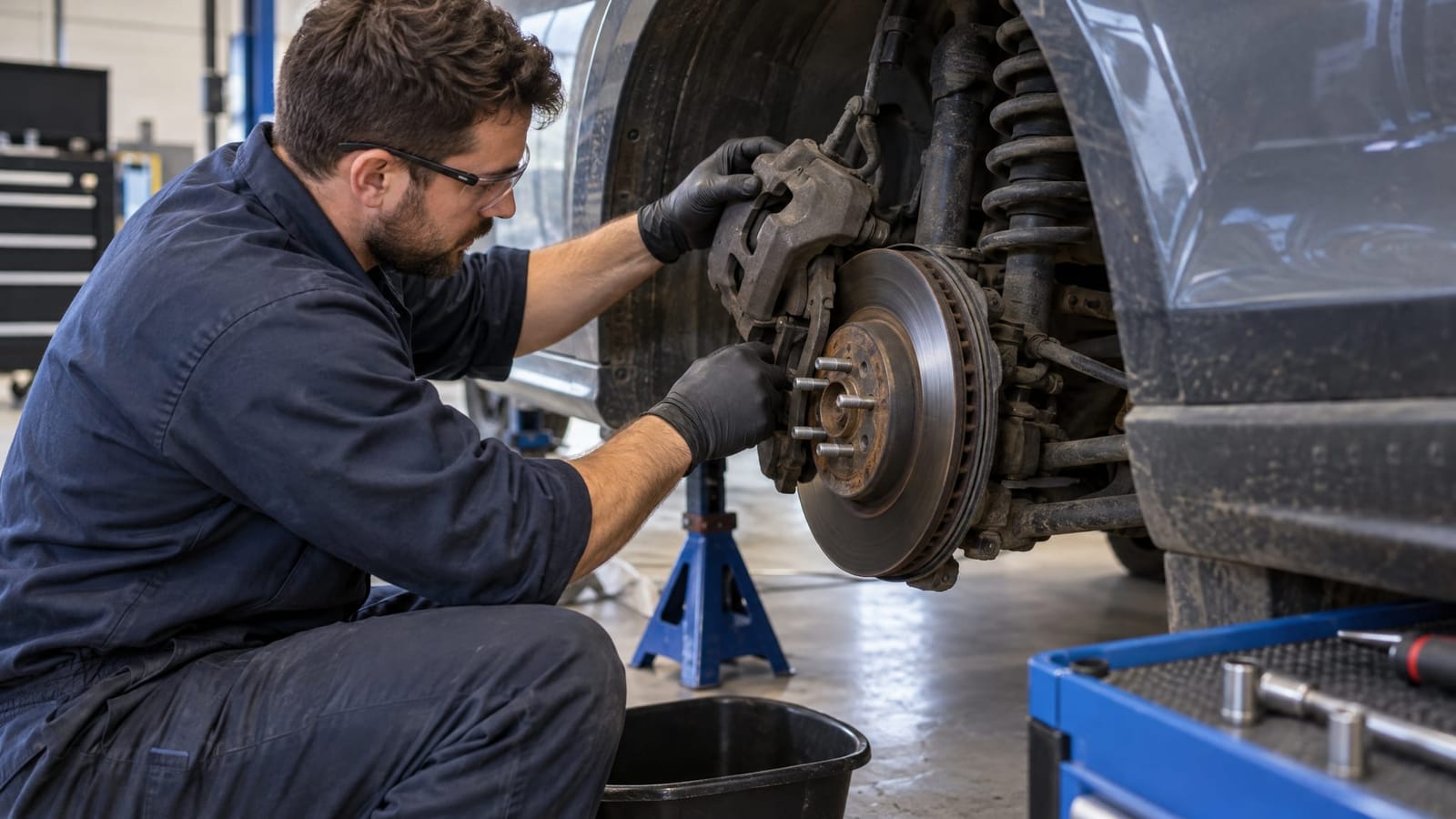
- Brakes: Brake pad or shoe lining thickness, rotor or drum condition, fluid leaks, hose condition, and braking behavior.
- Steering and suspension: Excessive movement, worn joints or bushings, leaking shocks or struts, and damaged components.
- Tires and wheels: Tread condition, uneven wear, visible damage, and correct sizing.
- Engine and cooling system: Leaks, abnormal noises, operating temperature, fluid condition, and how smoothly the engine runs.
- Transmission and drivetrain: How the vehicle engages gear and shifts, along with vibration, noises, and visible leaks.
- Air conditioning and electrical equipment: Cooling performance, blower operation, lights, windows, locks, and battery-charging concerns.
- Underbody: Corrosion, damaged protective covers, fluid leakage, and visible evidence of repairs.
An inspection is a snapshot of accessible conditions at that time. It cannot predict every future failure or reveal the condition of every internal component without further testing.
Use the test drive to gather observations
A test drive can reveal symptoms during ordinary driving: turning, parking, accelerating, braking, and traveling at different road speeds. If practical, observing a cold start adds information that a fully warmed engine may not provide.
Describe symptoms rather than naming a part. “The steering wheel vibrates during braking” is more helpful than “it needs rotors.” “The AC becomes warmer while stopped” is more helpful than “it needs refrigerant.” These observations guide testing without jumping to a repair.
A diagnostic scan adds information, but it is not a mechanical clean bill of health. Some problems do not set a fault code. If codes have recently been cleared, some of the vehicle’s built-in checks may not yet have completed.
Prioritize Findings by Urgency
A long inspection report can feel overwhelming. Grouping findings by their effect on the vehicle and how soon they need attention makes the next steps clearer.
Symptoms affecting braking or steering need an in-person assessment. At Gregg Automotive, our team can assess brake and suspension concerns and explain their repair priority.
Conditions that interrupt normal driving
A major loss of braking ability, sudden difficulty controlling the vehicle, a flat tire, visible smoke, or a strong fuel odor are reasons to stop driving when safe and arrange professional assistance. An overheating indication or oil-pressure warning also calls for stopping rather than continuing to see whether it clears.
A flashing check engine light, especially with shaking or reduced power, belongs in this category too. It can indicate an active engine misfire that may damage the catalytic converter, part of the exhaust system. This differs from a steady light on a vehicle that otherwise runs normally.
Problems that need prompt diagnosis
A steady check engine light, recurring fluid loss, brake noise, new vibration, suspension clunks, and uneven tire wear deserve attention even when the vehicle still drives. Being able to keep driving does not mean a symptom is harmless.
The next step is to identify its cause and consequence. For example, a fluid leak needs to be traced to the system involved before its urgency can be judged. The type of fluid, leak rate, and fluid level matter more than the size of a single driveway spot.
Items that can enter a planned repair list
Paint scratches, ordinary upholstery wear, and minor trim blemishes usually belong behind mechanical concerns. A cabin filter due for replacement or a nonessential convenience feature may also fit into a scheduled visit rather than an urgent repair.
For an item being monitored, the plan needs a clear follow-up point: a service interval, a change in symptoms, or a condition identified during inspection. “Keep an eye on it” is less helpful than knowing what change would call for another assessment.
Appearance alone does not determine priority. A damaged mirror, loose exterior panel, failed light, or door-latching problem can affect visibility or operation. What matters is what the defect affects, not whether it looks cosmetic.
Recognize Deferred Maintenance Without Replacing Everything
Deferred maintenance is scheduled care that has been postponed. It differs from an unexpected component failure, although neglected maintenance can contribute to wear.
On a used vehicle, the backlog might include overdue oil service, worn filters, spark plugs past their scheduled interval, or fluid services due by time or mileage. Several items can accumulate while the vehicle continues to feel normal.
Build the maintenance list from three kinds of information:
- Documented work: What was completed, when, and at what mileage?
- The manufacturer’s schedule: What applies to this engine, transmission, and vehicle configuration?
- Current condition: What does inspection or testing show needs attention now?
When records are incomplete, condition checks and the maintenance schedule help establish a starting point. Missing receipts alone are not a reason to replace every fluid or approve a package of unrelated services.
For example, “tuneup” can mean different things on different vehicles. Spark plugs, filters, ignition components, and diagnostic work are separate items. A clear estimate identifies the actual work and why it applies.
Fluid appearance is only one clue. Color alone does not reliably show how much service life remains, and the correct fluid specification matters. Transmission maintenance, in particular, needs to match the vehicle and account for existing symptoms rather than being treated as a universal fix for shifting problems.
Understand the Major Systems Before Approving Repairs
A clear repair explanation connects the symptom, the inspection or test finding, and the proposed work. The following distinctions can help when reviewing a used vehicle’s first inspection or repair estimate.
Brakes: Measurements matter more than noise alone
Brake pads and shoes are wear items. Rotors, drums, calipers, hoses, and other brake components have different jobs and may need different repairs. Replacing worn pads does not correct a fluid leak or a sticking caliper, the part that presses the pads against the rotor.
Squealing, grinding, pulling, pedal changes, and vibration are useful observations, but none identifies every needed part by itself. A brake assessment can explain remaining pad or shoe lining thickness, rotor or drum condition, and any findings involving leaks or parts that are sticking or moving incorrectly.
For example, vibration during braking may involve rotor condition, but wheel, tire, or suspension issues can also influence what the driver feels. Inspection keeps the repair focused on the cause.
When reviewing an estimate, distinguish parts that are worn out from related components that have also been affected.
Suspension and tires: Uneven wear is a clue, not a diagnosis
Suspension parts support the vehicle and control wheel movement. Shocks and struts control bouncing. Joints and bushings allow controlled movement between connected parts. Wear can show up as noise, looseness, poor ride control, or changing tire wear.
A vehicle pulling to one side does not automatically need only an alignment. Tire pressure, tire condition, a brake that is not releasing fully, and worn components can also contribute. An alignment adjusts wheel angles; it does not repair a loose joint or damaged bushing.
Repair order matters. If worn suspension parts are affecting wheel position, those parts need attention before alignment. Replacing unevenly worn tires without investigating the wear pattern can also leave the underlying cause in place.
For a clunk over a driveway entrance, note which end of the vehicle it comes from, whether it happens while turning, and whether it occurs once or repeatedly.
Engine and cooling system: Separate maintenance from diagnosis
Engine condition involves more than starting reliably. Running quality, fluid consumption, leaks, temperature behavior, and warning lights all contribute to the picture.
An oil change is maintenance. Diagnosing a recurring low oil level, rough idle, or overheating condition is a separate task. Fresh oil cannot correct a mechanical fault, and repeatedly adding coolant does not explain why coolant is being lost.
A check engine code identifies a condition detected by the vehicle’s computer, not necessarily a failed part. A code related to an oxygen sensor reading, for example, does not by itself mean the sensor needs replacement. Wiring, air leaks, fuel delivery, and other conditions can affect the reading.
Rough running or unusual noises may call for targeted testing rather than a broad tuneup. If substantial engine work enters the discussion, start with the diagnosis, the proposed repair scope, and the condition of the rest of the vehicle.
Transmission and drivetrain: Note when symptoms occur
Delayed engagement when selecting a gear, harsh shifting, slipping, and vibration need careful description. Note whether the symptom occurs when cold or warm, during acceleration, while turning, or at a particular road speed.
Those details help distinguish transmission concerns from engine-running problems, mounts, tires, or other parts that transfer power to the wheels. A fluid service is maintenance, not a substitute for diagnosing an existing symptom.
Air conditioning: Separate cooling from airflow
For warm-weather driving around Forney, AC performance is an important part of a used vehicle’s everyday usability. Check both the strength of the airflow and how well the system cools.
Weak airflow can involve a filter, blower, or air-distribution problem. Strong airflow that stays warm points toward a different diagnostic path. Cooling that changes between idling and road driving is another useful observation.
Low refrigerant can indicate a leak because refrigerant is not normally consumed like fuel. Adding more without identifying the cause may only provide a temporary improvement. Diagnosis also considers airflow across the system, controls, electrical operation, and compressor function.
AC operation helps remove moisture from cabin air, so its role includes defogging as well as comfort.
Build a Maintenance Baseline After the Purchase
Once the vehicle is yours, bring its records and inspection findings into one place. A maintenance baseline captures present condition, completed work, and the next service due points.
Create a short ownership file
Keep the owner’s manual, service receipts, inspection findings, current mileage, and tire information together. A folder, spreadsheet, or phone note works as long as it is easy to update.
For each service, record the date, mileage, work performed, and next due point where applicable. Keep diagnostic findings too, not just the invoice total. They provide context if a symptom returns.
Choose work by condition and priority
- Address immediate operating concerns. Braking, steering, tire condition, and serious warning indications take priority over appearance upgrades.
- Diagnose unresolved symptoms. Testing helps determine repair urgency. A list of possible causes is not a list of parts to replace.
- Complete due maintenance. Match the work to records, inspection findings, and the manufacturer’s schedule.
- Document items being monitored. Record the finding and what would trigger another assessment, such as a changing noise, increased leakage, or a specified service interval.
Make observations between visits useful
During the first weeks of ownership, pay attention to starting behavior, dashboard messages, new spots beneath the parked vehicle, ride changes, and AC performance. Follow the owner’s manual for fluid-level and tire-pressure checking procedures.
A short symptom log is more helpful than relying on memory. Record whether the vehicle was cold or warm, the road conditions, and what was happening when the symptom appeared.
The maintenance schedule may include different provisions for particular operating conditions. Frequent short trips, towing, or extended idling can affect which schedule applies, depending on the manufacturer’s definitions. Match the schedule to actual use rather than assuming every vehicle needs identical service intervals.
Plan for Maintenance and Repair Costs Separately
A vehicle’s purchase price does not describe the work it may need next. Separating predictable maintenance from condition-based repairs makes estimates and upcoming work easier to compare.
Organize the work into clear categories
- Immediate corrective work: Repairs identified as urgent during the condition assessment.
- Catch-up maintenance: Scheduled services identified as due after reviewing records, condition, and the maintenance schedule.
- Recurring service: Oil service and other routine care tied to time, mileage, or the vehicle’s maintenance reminder system.
- Wear items: Tires, brakes, and other components whose condition can be tracked.
- Unplanned repairs: Mechanical or electrical faults that arise outside the scheduled maintenance list.
Keeping fuel and other recurring ownership expenses separate from the repair list helps distinguish routine operating costs from a maintenance backlog or a specific mechanical problem.
Look for estimates that explain the work
An itemized estimate is more informative than a single total. Look for diagnostic work, proposed parts, labor, and any related services needed to complete the repair.
Questions that help clarify an estimate include:
- What finding supports this repair?
- Is this scheduled maintenance, a wear item, or a response to a symptom?
- Does another repair need to happen first?
- Are these separate jobs, or do they share access and labor?
- What additional testing could change the repair scope?
For example, a due cabin filter and worn brake components belong in different priority categories. They might be handled during the same visit, but appearing on the same estimate does not make them equally urgent.
For a larger repair, consider its scope alongside the rest of the condition report. Mileage alone says less than a combined picture of the engine, transmission, structure, tires, brakes, and remaining maintenance needs.
Keep Repair Visits Connected
Consistent records help each visit build on the last. Before a visit, gather prior invoices and a concise symptom description. Afterward, keep the findings with the vehicle’s records so completed work, recurring symptoms, and upcoming maintenance remain easy to track.
At Gregg Automotive in Forney, we offer brake and suspension work, tuneups, check engine light service, oil changes, maintenance, and air conditioning system service. These services address many of the concerns that come up during used vehicle ownership.
A clear repair conversation connects each recommendation to a reason. Scheduled work relates to a maintenance interval. A warning-light repair follows diagnostic findings. A wear-item recommendation rests on a measurement or condition. Understanding that distinction helps keep the plan focused on what the vehicle needs.
Related Guides for Buying and Maintaining a Used Vehicle
These guides explore individual checks and early ownership tasks in more detail:
- Spot brake and suspension warning signs: The guide to used car brake suspension problems Terrell TX focuses on clues that deserve closer attention when evaluating ride and braking condition.
- Organize early maintenance: The used car maintenance checklist Kaufman County TX covers the first 1,000 miles and helps turn early ownership observations into a practical checklist.
- Understand the inspection before buying: The guide to pre-purchase car inspection Forney TX explains what deserves attention and why those checks matter.