Towing Capacity and Brake Upgrades: What Forney TX Truck Owners Need to Know
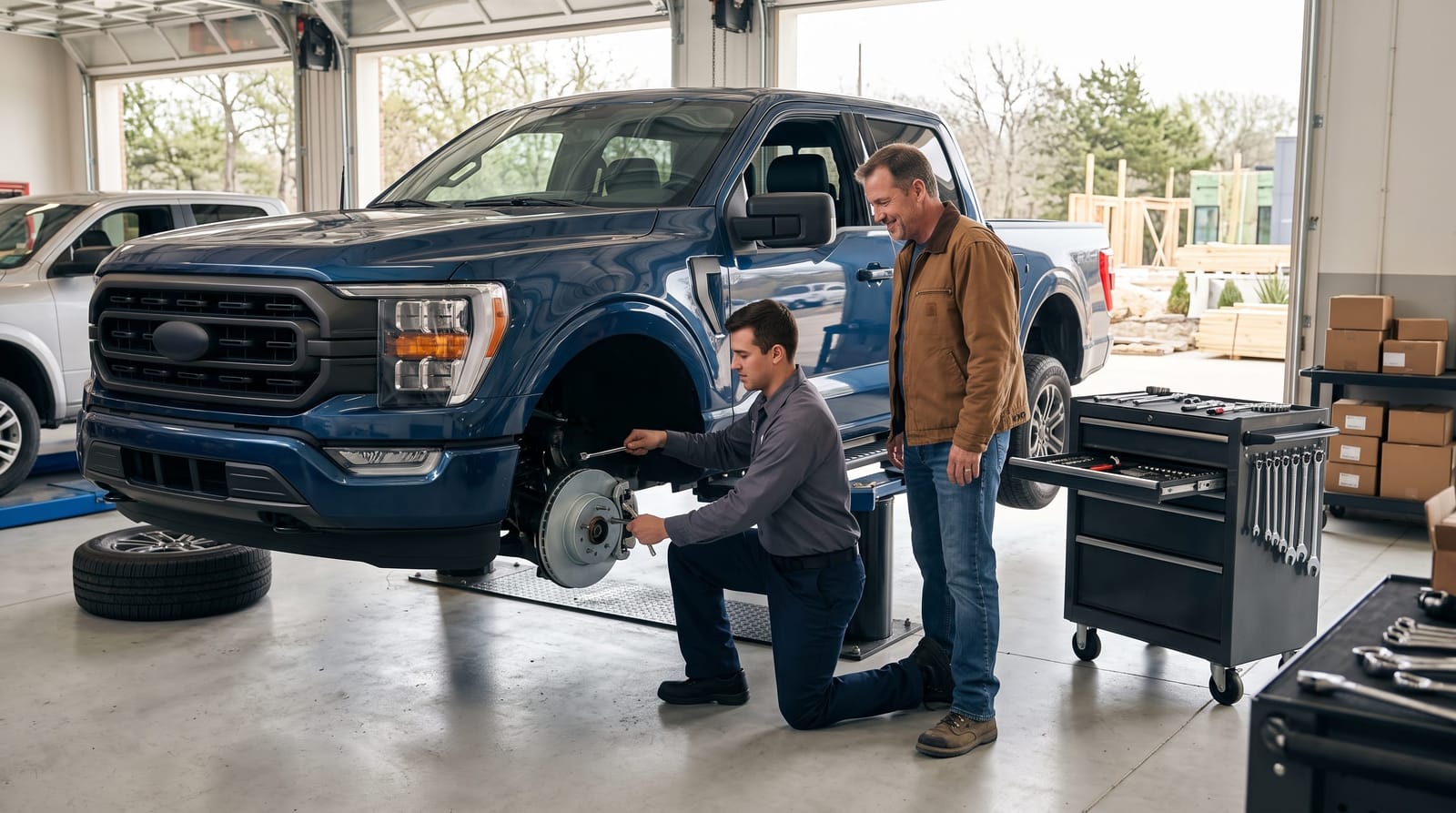
If you haul livestock, construction equipment, boats, or heavy trailers through Kaufman County, your truck's braking system works far harder than most drivers realize. Towing puts serious stress on brake components, and stock brakes are engineered for the average load, not the maximum one. For drivers searching for a dependable truck brake upgrade towing Forney TX solution, understanding what your braking system handles during a tow is the first step toward safer hauling. This guide breaks down the essential tips every Forney-area truck owner should know before hitching up a heavy load, from recognizing warning signs to knowing which upgrades actually make a difference on our local roads.
Tip 1: Understand How Towing Changes Your Braking Distance
Your truck's stock brakes are calibrated at the factory for a specific weight range. The moment you add a trailer, that calculation changes significantly.
Here's a straightforward example. A half-ton truck that normally stops from 60 mph in around 130 feet may need 40 to 60 percent more distance when hauling a fully loaded trailer. That extra stopping distance can be the difference between a safe stop and a rear-end collision on FM 548 or Highway 80.
Weight transfer is the core issue. When you brake, momentum shifts forward. On an unloaded truck, your four corners share that load relatively evenly. When you're towing 8,000 pounds of equipment, the trailer pushes against your hitch and amplifies that forward momentum. Your rear brakes, already the lighter-duty pair, absorb pressure they were never meant to handle consistently.
What the Numbers Tell Us
- Brake fade can begin in as few as 3 to 5 hard stops when components overheat under towing load.
- Brake fluid boiling point drops roughly 50°F after absorbing moisture: a real concern in East Texas humidity.
- Stock brake pads on many half-ton trucks are rated for vehicles up to 6,200 lbs: well below common towing configurations.
This isn't about alarming anyone. It's about knowing what your equipment is actually handling so you can maintain it properly.
Tip 2: Know the Difference Between Required and Optional Upgrades
Not every truck that tows needs an upgraded brake system right away. But every truck that tows regularly should be evaluated honestly.
When Upgrades Are Strongly Worth Considering
- You tow near or at your truck's rated towing capacity on a regular basis.
- Your routes include hills, extended highway pulls, or stop-and-go traffic while loaded.
- You've noticed increased stopping distances, a spongy pedal feel, or a burning smell after towing.
- Your truck has over 50,000 miles with original brake hardware still in place.
- You tow during summer months when road surface temperatures in Kaufman County can exceed 130°F.
When Stock Brakes May Still Be Sufficient
- You tow light loads, under 4,000 lbs, on flat terrain a few times per month.
- Your brakes were recently serviced and components measure within spec.
- Your trailer is equipped with its own electric brake system that carries much of the stopping responsibility.
The honest answer is that most working trucks in Forney and across Kaufman County fall somewhere in between. A professional inspection gives you a clear, specific picture rather than a guess. That's a much better starting point than either ignoring the issue or assuming you need the most expensive upgrade available.
Tip 3: Learn What Heavy-Duty Brake Upgrades Actually Include
When a shop talks about a brake upgrade for a towing truck, they're usually referring to one or more of the following components, and it helps to know what each one does.
Upgraded Brake Pads
Heavy-duty brake pads use different friction material compounds that resist heat better than standard pads. For towing applications, look for pads rated for high-heat or severe-duty use. These maintain consistent stopping power even after repeated heavy stops: the kind you make coming off an overpass or slowing for a school zone with a loaded trailer behind you.
Slotted or Drilled Rotors
Standard rotors can develop a thin layer of hot gas and dust between the pad and rotor surface during heavy use. Slotted rotors channel that material away, keeping contact cleaner. This is especially useful for trucks that tow frequently in summer heat. Drilled rotors serve a similar purpose and also reduce overall rotor weight, though they require a bit more attention to avoid cracking under extreme stress.
Stainless Steel Brake Lines
Factory rubber brake lines can swell slightly under high pressure, which softens pedal feel. Stainless-braided lines don't expand, giving you a firmer, more predictable pedal response. Many experienced towers consider this one of the most noticeable upgrades for the cost.
Brake Fluid Flush and Upgrade
This is often overlooked and is one of the most cost-effective steps you can take. High-temperature brake fluid: typically DOT 4 or DOT 5.1: has a higher boiling point than standard DOT 3. Flushing and replacing fluid every 2 years is a reasonable general guideline, though your specific truck and driving conditions may call for a different schedule. Ask your shop what they recommend based on what they find during inspection.
Tip 4: Pay Attention to These Warning Signs After Every Tow
Experienced truck owners develop a habit of quick post-tow checks. These don't take long and can catch developing problems before they become expensive ones.
What to Check After Towing
- Smell: A sharp, chemical burning smell near any wheel after a tow is worth investigating. It usually points to overheated pads or a caliper that isn't releasing fully.
- Pedal feel: A soft or spongy pedal after towing may indicate heat-affected fluid or air in the lines.
- Pulling to one side: If your truck drifts left or right when braking under load, a caliper may be sticking or brake wear is uneven.
- Vibration through the pedal: This often points to warped rotors: a common result of repeated heat cycling from towing without adequate cool-down time.
- Longer stopping distance: If stops feel less confident than usual, trust that instinct and get it looked at before your next haul.
Drivers wondering about other handling issues during towing, like shaking or instability, may also want to read about truck shakes when towing Kaufman County, as those symptoms sometimes overlap with brake system concerns.
Tip 5: Build a Regular Inspection Routine Around Your Towing Schedule
One of the best habits a working truck owner can develop is scheduling brake inspections around towing activity, not just around mileage alone.
Mileage-based intervals made sense when most trucks drove empty most of the time. If your truck regularly pulls 8,000 to 12,000 pounds, those miles are doing far more work than the same miles in a lightly loaded commuter pickup. The wear math simply doesn't apply the same way.
A Practical Inspection Framework
- Every season: Visual check of pad thickness and rotor surface condition. Ask your shop to measure rotor thickness against the minimum spec.
- Every 12,000 to 15,000 towing miles: Full brake system inspection including fluid condition, caliper function, and brake line integrity.
- Before any major haul: Quick pre-trip check, especially if you haven't towed in several months or if you're preparing for a load heavier than usual.
- After any hard braking event: If you've had to brake suddenly under a heavy load, have the system checked before your next trip.
For a broader look at how towing affects other maintenance intervals, not just brakes, the guide on truck towing service interval East Texas covers how our local climate and road conditions factor into service scheduling for working trucks.
Tip 6: Don't Overlook Your Trailer's Brake System
Many Kaufman County truck owners focus entirely on the tow vehicle's brakes and forget that trailers above a certain weight are equipped with, or should be equipped with, their own brake systems.
Electric trailer brakes work in conjunction with your truck's braking when properly calibrated. When they're working correctly, they reduce the load on your truck's rear brakes significantly. When they're out of adjustment, worn, or completely inactive, your truck is doing all the stopping for both vehicles.
Common Trailer Brake Issues to Watch For
- Brake controller showing an error or no signal: this usually means a wiring issue between truck and trailer.
- Trailer brakes activating too early or too aggressively: the gain setting on your brake controller may need adjustment.
- Brake magnets on the trailer axles worn past service limits: this is often missed during annual inspections.
- Corroded or broken wiring connections at the trailer plug, especially common on older trailers that spend time in wet pastures or muddy job sites.
When your trailer brakes aren't contributing their share, your truck's system absorbs 100 percent of the stopping force. Getting both systems inspected and calibrated together gives you a genuinely safer towing setup.
Related Details Worth Exploring
Brake upgrades are one important piece of truck towing safety, but they connect to a wider picture of mechanical health for working trucks. If your truck has been showing other signs of stress during or after towing, unusual vibrations, instability, or suspension concerns, those symptoms often point to related systems that deserve the same attention as your brakes.
Check out our deeper look at truck shakes when towing Kaufman County for specific causes behind instability under load, and explore the guidance on truck towing service interval East Texas to build a complete maintenance schedule that accounts for how hard your truck actually works in this climate.
Keeping Your Truck Ready for the Work It Does
Towing is hard on brakes. That's not a scare tactic: it's simply physics. The good news is that brake maintenance and targeted upgrades are straightforward, relatively affordable, and genuinely effective at keeping your truck performing safely under load. Whether you're pulling cattle trailers through Crandall, hauling equipment to a job site near Canton, or loading up for a weekend run from Forney, your brake system deserves the same attention you give your engine and tires.
At Gregg Automotive, we work with working truck owners across Kaufman County every day. If it's time to get your braking system inspected or you want an honest assessment of whether an upgrade makes sense for how you use your truck, give us a call or stop by. We'll give you a straight answer and a plan that fits your actual needs.