Transfer Case Fluid Change: How Often and Why It Matters in Forney TX
If you drive a 4WD truck or SUV in the Forney area, your transfer case is one of the hardest-working components on your vehicle, and one of the most overlooked when it comes to routine maintenance. Whether you're hauling equipment out to a job site, navigating muddy backroads, or towing a trailer on the weekend, your transfer case takes a beating. Changing its fluid at the right intervals is a straightforward way to protect that investment. This guide explains what a transfer case does, why its fluid wears out, and what signs to watch for before small issues become bigger problems.
What Does a Transfer Case Actually Do?
The transfer case is a gearbox located between your front and rear axles. On 4WD and AWD trucks and SUVs, it's the component responsible for splitting power from the transmission and sending it to both axles at the same time. When you shift into 4-High or 4-Low, or when your AWD system automatically engages, the transfer case is what makes that happen.
Inside the transfer case, gears, chains, and clutch packs are all working together under load. To keep those parts moving smoothly without grinding against each other, the transfer case is filled with a specialized fluid. That fluid lubricates the internal components, helps dissipate heat, and keeps everything operating within safe tolerances.
Think of it this way: the transfer case is constantly working whenever your truck is moving. Even in two-wheel drive, parts inside are spinning. When you add the stress of off-road terrain, heavy towing, or steep inclines, all common in and around Forney and the broader Kaufman County area, the transfer case is under even greater demand than under normal highway driving conditions.
Why Transfer Case Fluid Degrades Over Time
Like any fluid in your drivetrain, transfer case fluid doesn't last forever. Over time and miles, it breaks down for a few key reasons.
Heat exposure is one of the biggest culprits. Every time your truck works hard, whether that's towing a load, crawling through rough terrain, or sitting in stop-and-go traffic in the summer heat, the transfer case generates heat. That heat gradually breaks down the fluid's ability to lubricate and protect the internal components effectively.
Contamination is another factor. Over time, small metal particles shed from normal gear wear accumulate in the fluid. Water can also work its way in if seals begin to age or if the vehicle is regularly driven through standing water. Once the fluid is contaminated, it loses its protective qualities and can actually accelerate wear on the very parts it's supposed to protect.
Use patterns matter too. A Forney-area truck that regularly tows a boat to the lake, hauls feed or materials on dirt roads, or gets used for ranch work is going to wear out its transfer case fluid more quickly than a vehicle that only sees highway miles. The more demanding your truck's workload, the more attention the transfer case deserves.
How Often Should You Change Transfer Case Fluid?
There's no single answer that fits every vehicle, but a general rule of thumb is to have transfer case fluid inspected and changed somewhere in the range of every 30,000 to 60,000 miles. Your owner's manual is the best starting point: it will list the manufacturer's recommended service interval for your specific truck or SUV.
That said, the manufacturer's recommended interval is usually based on normal driving conditions. If your vehicle sees more demanding use: think frequent towing, unpaved roads, or regular off-road driving: it's reasonable to consider servicing it on the shorter end of that range, or having a shop check the fluid condition sooner.
Some newer trucks and SUVs have sealed transfer cases with fluid that's marketed as "lifetime fill." Even in those cases, it's worth having the fluid inspected periodically, especially if your vehicle is working hard on a regular basis. "Lifetime" fluid recommendations are typically based on average use, not heavy-duty applications.
If you're also keeping up with differential maintenance, those service intervals often go hand in hand. Differential service for trucks in Canton TX covers the related drivetrain fluids that work alongside your transfer case: keeping that whole system maintained together is a practical approach for trucks doing serious work.
Warning Signs That Your Transfer Case Needs Attention
Catching a transfer case issue early makes a big difference. Here are some of the more common signs that something isn't right:
- Difficulty shifting into 4WD: If your truck hesitates, grinds, or refuses to engage 4-High or 4-Low, that can point to fluid issues or internal wear in the transfer case.
- Unusual noises while driving: Grinding, humming, or clunking sounds, especially noticeable when accelerating or changing speeds, can indicate low or degraded fluid.
- Fluid leaks under the vehicle: Transfer case fluid is typically reddish or brownish in color. If you notice a puddle forming near the center of the undercarriage, it's worth having it checked out promptly.
- Vibrations felt through the drivetrain: A vibration or shudder while driving, particularly at highway speeds or during acceleration, can sometimes trace back to the transfer case.
- 4WD warning lights: Many newer trucks have dashboard indicators related to the four-wheel drive system. If one of those lights comes on, a transfer case inspection is a sensible first step.
None of these symptoms automatically mean the worst: sometimes it's simply time for a fluid change. But ignoring them and continuing to drive on degraded fluid can turn a simple maintenance item into a more costly repair down the road.
What to Expect from a Transfer Case Fluid Service
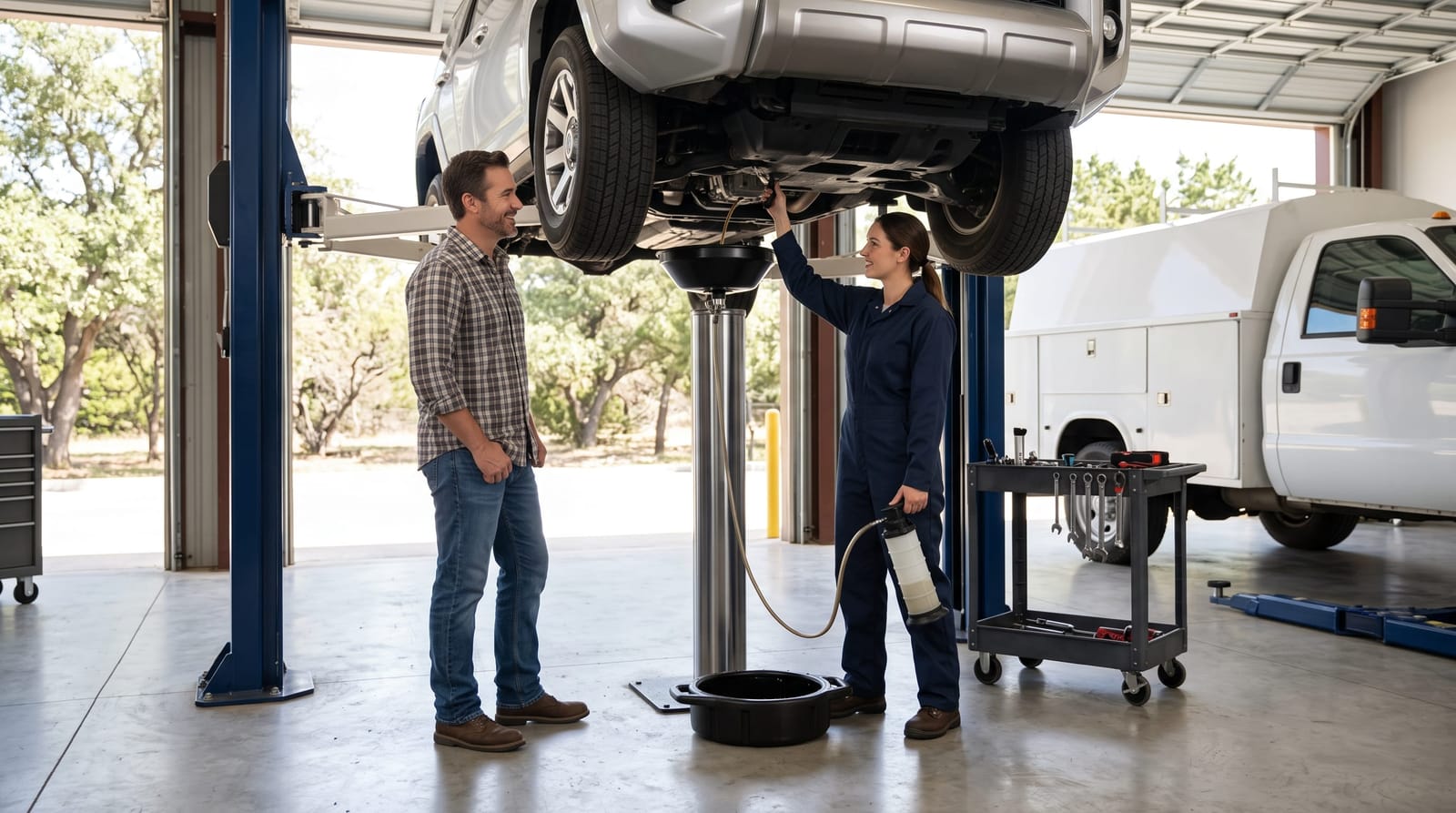
A transfer case fluid service is a straightforward procedure. A technician drains the old fluid from the transfer case, inspects what comes out for signs of contamination or excessive metal particles, and refills the unit with fresh fluid that meets your vehicle manufacturer's specifications. Depending on the vehicle and the shop, costs typically fall somewhere in the range of $150 to $290, though that can vary based on your specific truck model and fluid requirements.
It's a relatively quick service that's often easy to bundle with other drivetrain maintenance, like a differential fluid change, when your truck is already in the shop. Doing them together can save you time and keeps your entire 4WD system in good working order at once.
At Gregg Automotive, we work on trucks and SUVs regularly and understand the kind of use vehicles in Kaufman County see day to day. If you're not sure when your transfer case fluid was last changed, or if you've noticed any of the symptoms above, bringing it in for an inspection is a low-pressure way to get a clear picture of where things stand.
Frequently Asked Questions
Can I drive my truck if the transfer case fluid is low?
Driving with low transfer case fluid puts unnecessary stress on the internal gears and clutch components, which can accelerate wear. If you suspect the fluid is low or contaminated, it's a good idea to have it checked before using 4WD, especially before any demanding driving like towing or off-road use.
Is transfer case fluid the same as transmission fluid?
Not always. Some transfer cases use automatic transmission fluid (ATF), while others require a specific transfer case fluid. Using the wrong fluid can cause shifting problems or internal damage, so it's important to use the fluid type specified for your vehicle. A qualified technician will use the correct fluid for your make and model.
How do I know if my transfer case is leaking?
The clearest sign is a puddle of reddish or brownish fluid forming under the center of your vehicle, roughly between the front and rear axles. You might also notice a burning smell while driving if fluid is dripping onto a hot component. If you spot either of those, having the vehicle looked at sooner rather than later is the practical move.
Does a transfer case fluid change fix shifting problems?
Sometimes, yes. If shifting difficulties are related to degraded fluid, a fresh fluid change can restore smoother operation. However, if the internal components are already worn, a fluid change alone may not fully resolve the issue. A proper inspection helps determine what's actually going on before any work is done.
Keeping Your 4WD System Running Right
Your transfer case is one of those components that doesn't ask for much attention: right up until it does. For Forney-area truck owners who rely on their 4WD system for real work, staying ahead of transfer case fluid changes is one of the simplest ways to protect a system that takes a lot of daily wear. Combined with keeping up on related drivetrain services, routine fluid maintenance helps ensure your truck is ready when you actually need it. If you have questions about your vehicle's service schedule or want to get the fluid condition checked, Gregg Automotive is happy to take a look.