Used Car Brake Inspection Costs in Forney: What Your Quote Covers
The cost of a used car brake inspection depends on the work included. A quick visual check, an inspection with the wheels removed, and diagnostic testing for a braking problem are different services. For a newly purchased used vehicle in Forney, the most useful quote identifies the inspection fee, what gets checked, and whether symptom diagnosis costs extra.
At Gregg Automotive, we offer brake service and maintenance in Forney. Understanding the inspection scope and wear measurements can help you separate repairs that need attention now from maintenance you can plan for later.
Start With the Inspection Fee and Scope
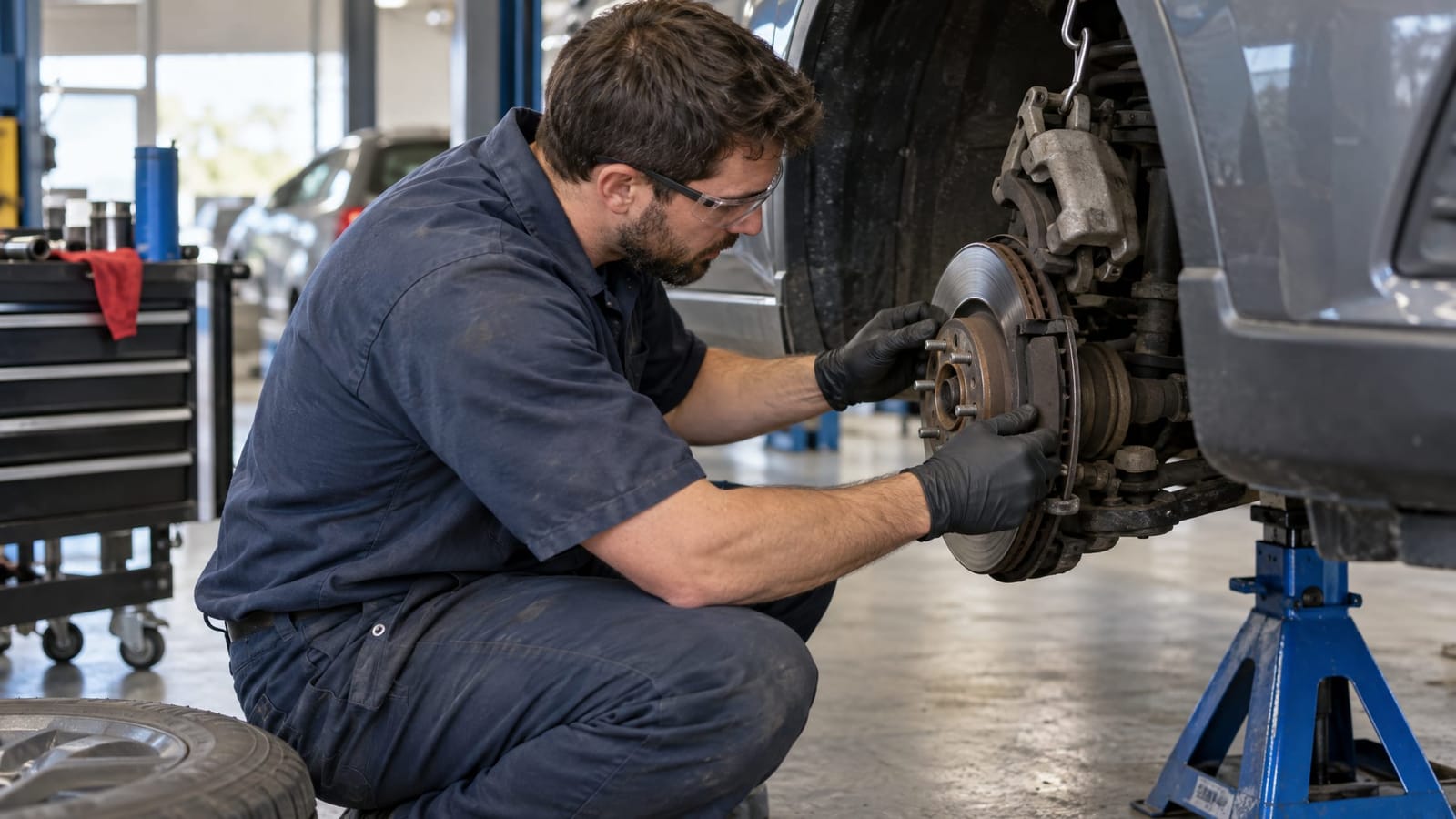
Before comparing prices, compare what each inspection includes. Looking through a wheel may reveal part of an outer brake pad, but removing the wheel gives better access to the brake assembly. Diagnosing a vibration, pulling, or warning light can require additional testing beyond a wear inspection.
These questions help make a brake inspection quote clearer:
- Is the inspection visual or wheel-off? The answer affects how much of the brake assembly can be examined.
- Does it cover the front and rear brakes? Different brake designs may require different access steps.
- Are measurements included? Pad thickness and rotor measurements provide more useful information than a general “looks good.”
- Is symptom diagnosis separate? Finding the cause of a noise or pedal concern may take more time than checking wear.
- Is the inspection fee separate from repairs? Ask whether any inspection charge is applied toward approved brake work.
Vehicle design, access to components, and the problem being evaluated can all affect labor time. Keeping the inspection charge separate from the repair estimate makes it easier to understand what you are paying to learn and what you are paying to fix.
What a Useful Used Car Brake Inspection Examines
A newly purchased vehicle may have uneven wear or a mix of newer and older brake components. A useful inspection looks beyond whether the pads appear thick.
Pads or Shoes
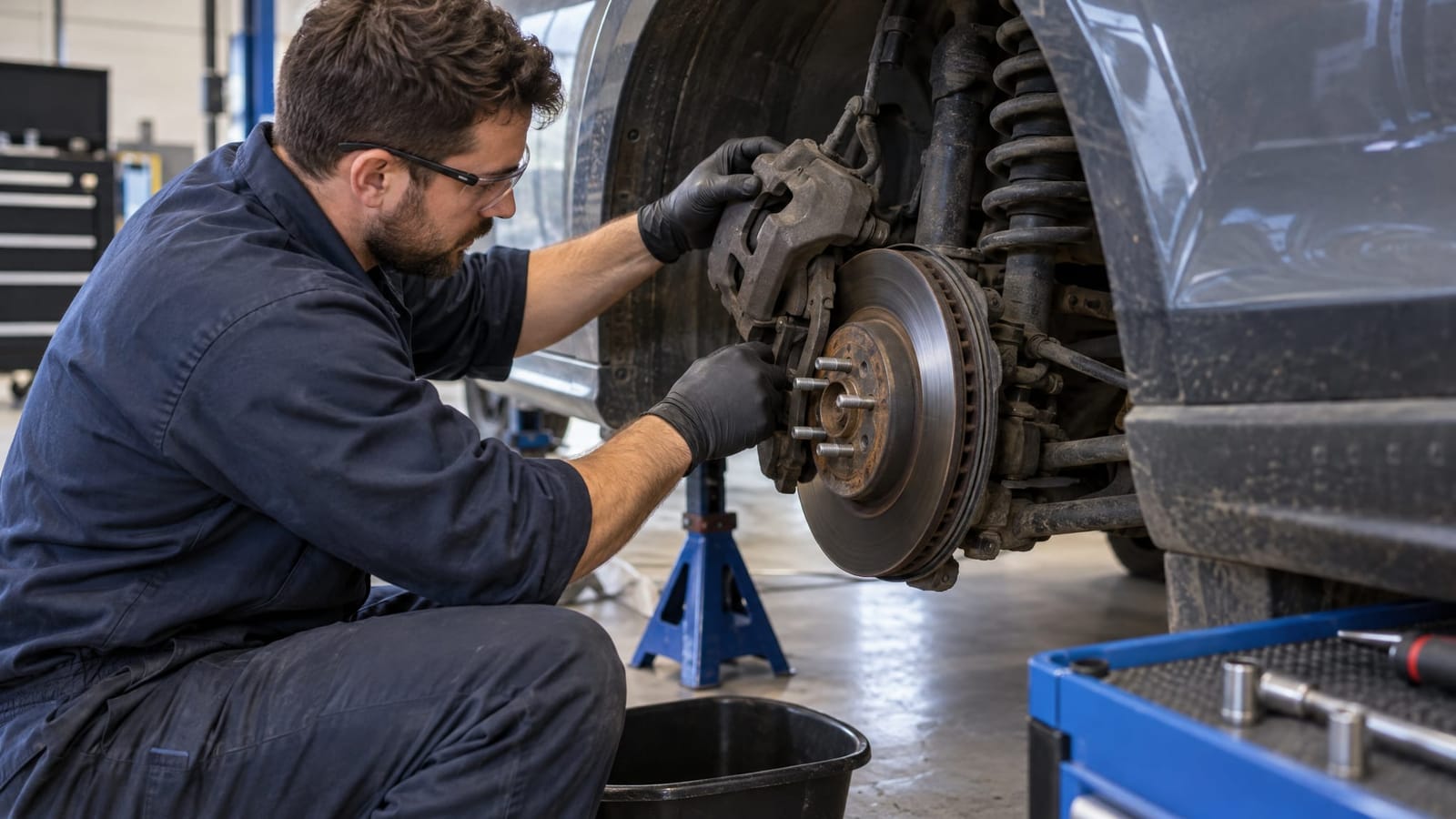
Disc brakes use pads that press against a rotor. Drum brakes use shoes that press against the inside of a drum. Inspection findings can include remaining friction material, uneven wear, cracks, or contamination. On disc brakes, the inner and outer pads matter because they can wear differently.
Rotors or Drums
These are the surfaces the pads or shoes press against. Their condition and measurements need to be compared with the vehicle or component specifications. Grooves, cracks, and uneven surfaces can matter even when the friction material has life left.
Calipers, Hardware, and Hydraulic Components
Calipers squeeze the pads against the rotors. Sticking calipers or slide mechanisms can contribute to uneven wear. Brake hoses, lines, and other accessible hydraulic components are checked for leaks or visible deterioration. Fluid level is also relevant, but topping off fluid does not explain why it is low.
Tell the technician about any noise, vibration, pulling, warning lights, or changes in pedal feel. Include when the symptom happens, such as during the first stop of the morning or after repeated braking. That detail helps focus diagnosis.
How to Read Brake Wear Measurements
Brake pad thickness is generally reported in millimeters. Ask for the measured friction material, not the metal backing plate, and how it compares with the applicable service limit. A percentage such as “half worn” is less useful without that context.
- Even wear with material remaining above the service limit: There may be room to monitor wear, provided the rest of the assembly is in good condition.
- Material approaching the service limit: Replacement becomes a planning item. A recheck interval helps avoid guessing about timing.
- Material at or below the service limit: Replacement is a current service concern rather than a distant maintenance expense.
- Uneven wear: The cause needs attention along with the worn parts. Replacing pads alone may leave the underlying problem unresolved.
Remaining thickness does not translate reliably into a fixed number of miles. Stop-and-go driving, loads, driving habits, and brake condition all influence wear. A thicker outer pad also does not cancel out a much thinner inner pad.
Rotor thickness is a separate measurement. A rotor can have enough thickness yet still require attention for damage or a braking complaint.
Turn the Findings Into a Service Plan
A useful repair estimate connects each proposed item to an inspection finding. It also separates work needed for a current problem from wear that can be monitored.
For example, if the front pads are approaching their service limit while the rear brakes have even wear and more material remaining, the estimate can separate front brake service from a future rear-brake recheck. That is more informative than treating all four wheels as one replacement decision.
For each proposed repair, look for:
- The axle or component involved.
- The measurement, defect, or symptom that explains the work.
- Parts and labor listed clearly.
- An explanation for additional items such as calipers, hardware, or fluid service.
- A recheck interval for components being monitored.
Brake pads are generally replaced as an axle set, meaning both front wheels or both rear wheels. Comparing estimates for the same axle, components, and work avoids mistaking a smaller scope for a lower price on equivalent service.
Reduced stopping ability, a sinking pedal, or an active brake fluid leak needs professional assessment rather than a wear-based estimate. Our team can evaluate those concerns. If braking feels unsafe, towing is the safer way to move the vehicle for evaluation.
Common Questions About Used Car Brake Inspections
Is a Texas emissions inspection the same as a brake inspection?
No. Emissions testing evaluates emissions-related performance, not brake wear or stopping condition. The Texas Department of Public Safety inspection fee page lists emissions inspection charges separately from commercial inspection charges. Those listed fees are not prices for a used car brake evaluation.
Do recently replaced brake pads make an inspection unnecessary?
New pads do not establish the condition of the rotors, calipers, hoses, or rear brakes. A receipt can help identify what was replaced, while an inspection evaluates the current condition of the system.
Can I judge brake condition by looking through the wheels?
You may see an outer pad or part of a rotor, but that view can miss inner-pad wear and concealed components. It is not a substitute for examining the complete assembly.
What Makes an Inspection Worthwhile
A useful brake inspection leaves you with more than a repair total. It explains the condition of the brakes, supports proposed repairs with measurements or findings, and gives monitored wear a clear follow-up plan. That information makes the next maintenance decision easier to understand.