Used Car Pre-Purchase Inspection in Forney TX: What Should Be Checked and Why
A thorough pre-purchase inspection checks the engine, transmission, brakes, tires, steering, suspension, body, electrical systems, and cabin equipment. It combines a diagnostic scan, an underbody examination, and a road test when the vehicle is safe to drive. The most useful result is a written report that separates safety concerns, problems needing further diagnosis, routine maintenance, and cosmetic wear.
For anyone buying a used car in Forney, the goal is straightforward: understand the vehicle’s condition before committing to ownership. A clean interior and a smooth trip around the block tell only part of the story. An inspection helps you distinguish ordinary wear from problems that could change your decision.
Before the Inspection: Gather Records and Agree on the Scope
Arrange the inspection before completing the purchase. An independent assessment gives you a view of the vehicle’s condition separate from the seller’s description. Inspection packages vary, so agree on what will be checked and how the findings will be documented.
Useful preparation includes:
- Gathering vehicle details: The vehicle identification number, mileage, engine type, and service records help the technician identify relevant maintenance requirements.
- Requesting a cold start: Some starting problems, noises, and smoke are easier to notice before the engine warms up. Coordinate this with the seller.
- Confirming access: Arrange permission to road-test the vehicle, scan its computers, and examine it on a lift.
- Sharing specific concerns: Mention a vibration, unusual smell, warning light, or anything the seller says needs attention.
- Clarifying the report: Ask whether the inspection includes photos, measurements, diagnostic findings, and a written summary. Also clarify which findings would require separate diagnostic work.
A vehicle history report and maintenance receipts provide useful background, but neither replaces an examination of the car’s current condition.
What a Thorough Pre-Purchase Inspection Covers
Engine, Fluids, and Cooling System
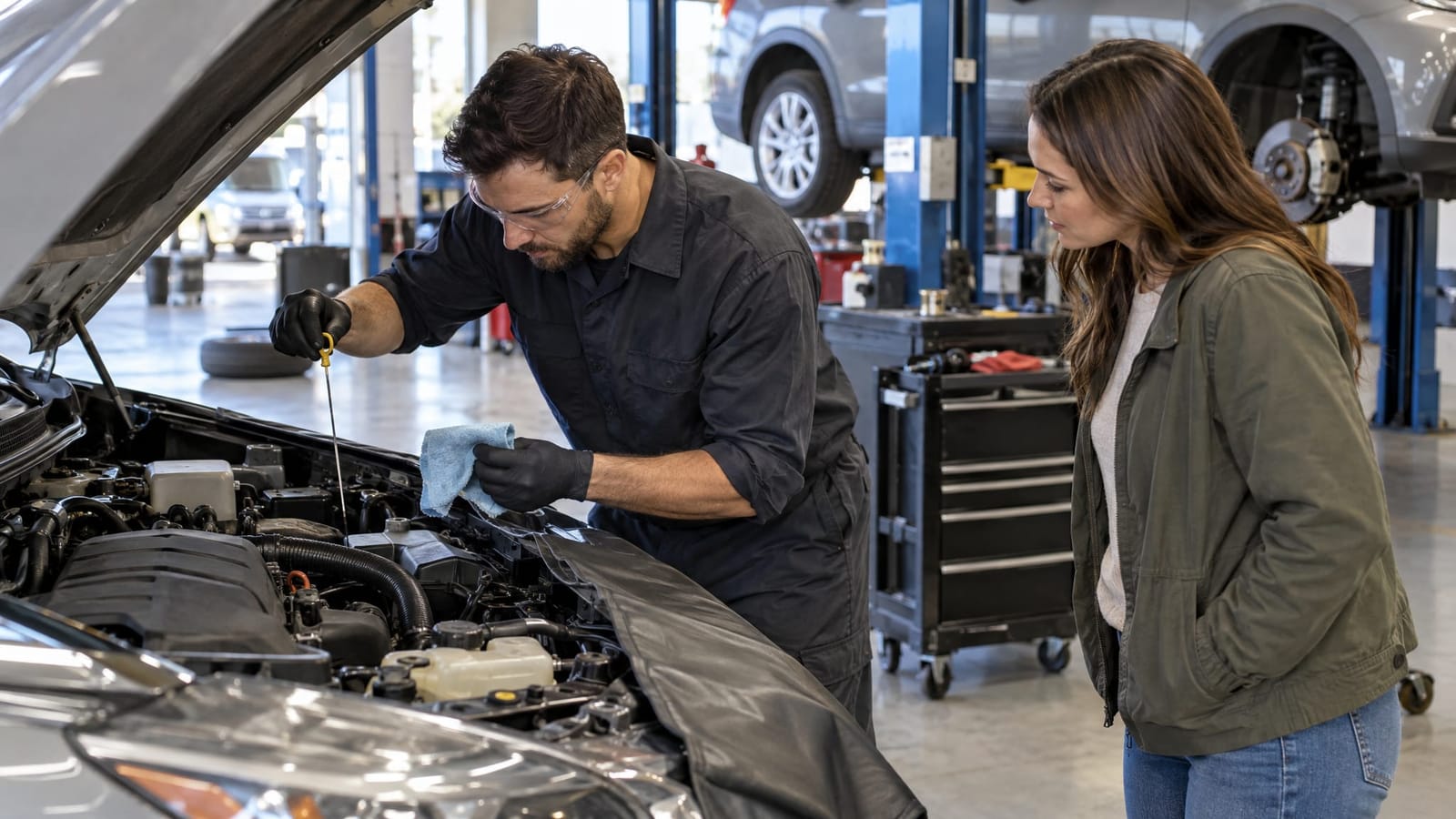
The engine evaluation starts with how the vehicle starts, idles, warms up, and responds to acceleration. The technician looks for unusual noises, persistent exhaust smoke, rough running, and visible leaks.
Under the hood, the inspection includes accessible belts, hoses, mounts, wiring, and fluid levels where they can be checked using the manufacturer’s procedure. Fluid condition can provide clues, but color alone cannot diagnose engine damage or show when maintenance was last performed.
The cooling-system check includes the radiator, hoses, reservoir, visible connections, and cooling-fan operation. An abnormal temperature reading or repeated coolant loss calls for further diagnosis rather than an assumption that a simple top-off will resolve it.
Transmission and Drivetrain
A road test helps reveal delayed engagement when shifting into gear, slipping, harsh shifts, shuddering, and unusual noises. For a manual transmission, clutch engagement and gear selection matter too.
The underbody inspection looks for leaks around the transmission, differential, and transfer case where equipped. These components transfer power to the wheels. Accessible axle boots, joints, and driveshaft components are checked for damage or excessive movement.
Not every transmission has a dipstick or a straightforward fluid-check procedure. The inspection follows the vehicle’s design, and some checks require additional equipment or disassembly. A shifting complaint may need separate diagnostic work to identify its cause and the repair involved.
Brakes, Tires, Steering, and Suspension
These systems affect both safety and everyday driving quality. The inspection looks at:
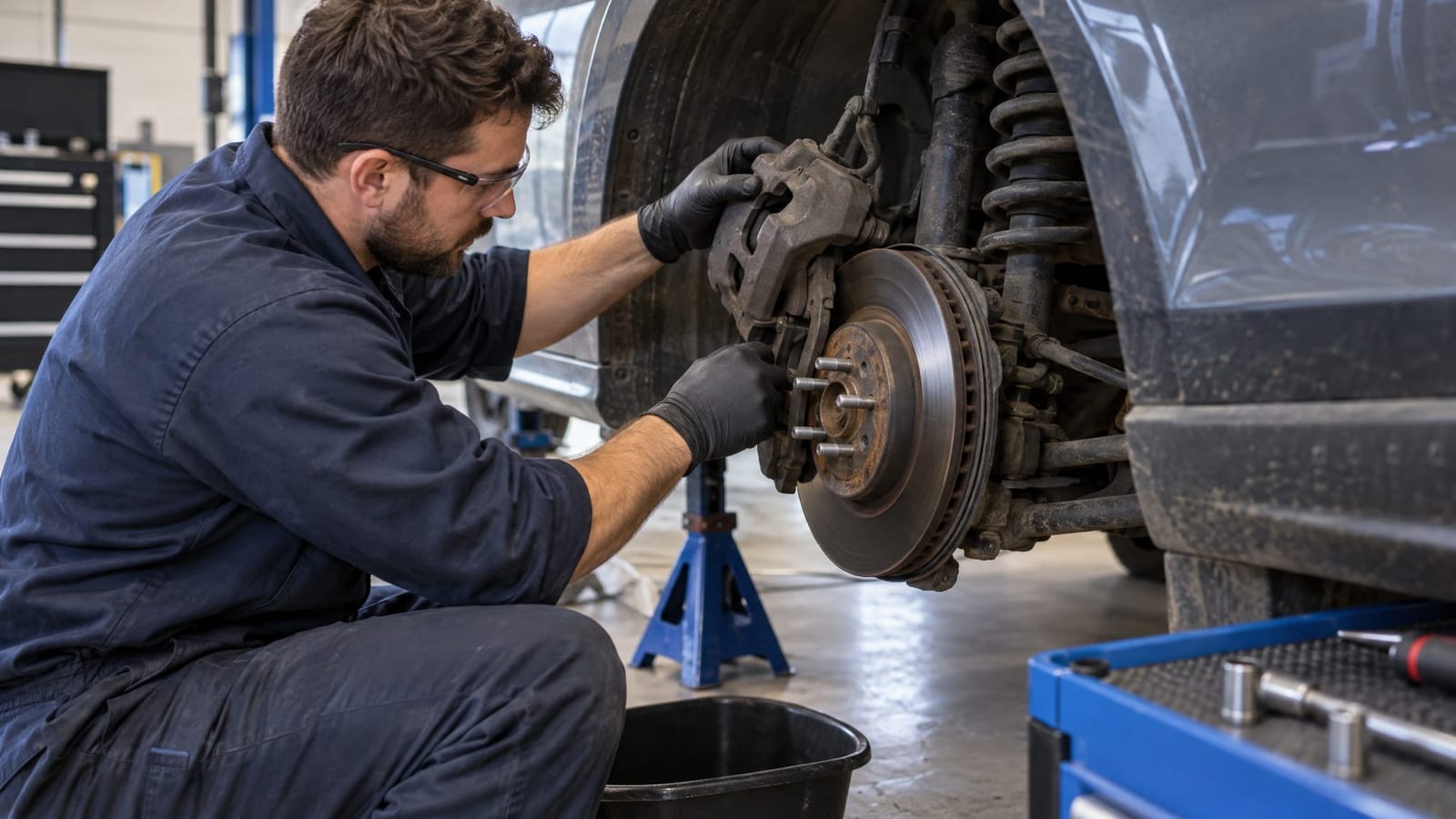
- Brakes: Accessible pad and rotor condition, hoses, lines, visible leaks, and braking behavior.
- Tires: Tread depth, uneven wear, sidewall damage, manufacturing date codes, and appropriate sizing.
- Steering: Excessive looseness, resistance to movement, unusual noises, and visible component damage.
- Suspension: Shocks, struts, springs, bushings, joints, and wheel bearings for wear or damage.
Uneven tire wear may point to alignment, inflation, or worn-component problems. Replacing the tires without addressing the cause can leave the underlying issue in place.
Safety-related findings need an in-person professional assessment before further driving. At Gregg Automotive in Forney, we handle brake and suspension repairs and can evaluate concerns in these systems.
Body, Structure, Underbody, and Water Damage
Paint scratches and small dents are different from structural damage. A condition inspection looks for uneven panel gaps, unusual welds, distorted mounting points, significant corrosion, and signs of poorly completed repairs.
Viewing the vehicle from underneath can expose damage, leaks, loose exhaust components, and corrosion that are difficult to see from above. Exhaust condition matters beyond noise because leaks can allow fumes to enter the cabin.
Water damage deserves a separate look. Musty odors, water stains, silt in protected areas, and corrosion around interior electrical connections can be warning signs. No single clue proves flooding, but several together justify closer investigation. Our guide to spotting flood damage in a used car in Forney or Terrell explains these patterns in more detail.
Computer Diagnostics and Electrical Systems
A diagnostic scan can reveal stored or pending trouble codes and information about the vehicle’s automatic system checks. Scanning accessible systems beyond the engine computer can also uncover brake, airbag, transmission, or body-electronics faults. The agreed inspection scope matters here because not every scan covers every system.
A code identifies a detected condition, not automatically the part that needs replacement. Likewise, a dashboard without warning lights is only one part of the condition assessment.
If the computer’s self-checks are incomplete, it may have been reset recently, including after a battery disconnect. That finding deserves follow-up, but it is not proof of deliberate concealment.
The electrical inspection also checks battery condition, starting and charging operation, exterior lights, and accessible wiring for damage or poorly completed repairs.
Air Conditioning, Cabin Equipment, and Safety Features
Include the air conditioning and heat, fan speeds, airflow direction, and defrost function. Weak cooling has several possible causes, so “it only needs refrigerant” is a diagnosis to investigate, not a repair plan to accept at face value.
Windows, locks, mirrors, wipers, seats, and frequently used controls deserve attention too. Some faults are convenience issues; others affect visibility or normal operation. Either way, they belong in the report.
Visible seat-belt condition, airbag warning-light behavior, and warning messages from driver-assistance systems also belong in the inspection. Basic functional checks cannot certify crash protection or confirm that cameras and sensors are correctly calibrated after a repair. Related repair and calibration records add important context.
Equipment That Needs Vehicle-Specific Checks
The inspection scope needs to match the vehicle. All-wheel-drive systems, turbochargers, diesel emissions equipment, and hybrid or electric drivetrains add components that a basic gasoline-car checklist may not cover.
For a hybrid or electric vehicle, traction-battery condition deserves particular attention. That is the large battery used for propulsion, not the smaller accessory battery. A routine code scan alone is not a complete battery-health assessment.
When the purchase decision depends on a specialized system, include an evaluation suited to that system rather than relying on a general inspection alone.
Red Flags That Can Make a Vehicle a Poor Choice
The same finding can lead to different decisions. A buyer seeking dependable daily transportation may reject a vehicle with extensive repair needs, while another may be comfortable taking on that work.
Strong reasons to pause or reconsider include:
- Significant structural damage or corrosion: Especially around suspension mounting points or other load-bearing areas.
- Multiple signs of flood damage: Particularly when electrical problems accompany interior water evidence.
- Major engine or transmission symptoms: Overheating, persistent abnormal noise, slipping, or fluid contamination requiring deeper investigation.
- Unresolved safety-system problems: Serious brake, steering, restraint-system, or tire defects without a defined repair plan.
- Refusal of an independent inspection: A seller who will not allow an evaluation prevents you from getting an independent assessment of the vehicle’s condition.
Some findings justify choosing a different vehicle; others call for additional tests. A rough idle, for example, can come from an ignition problem or a more involved mechanical fault. Identifying the cause matters before treating it as a minor repair.
Separate Routine Wear From Problems Needing Diagnosis
Used vehicles commonly need some combination of tires, brake wear components, filters, fluids, spark plugs, or aging rubber parts. These needs do not automatically make a vehicle a poor choice.
The useful distinction is between predictable upkeep and symptoms of an underlying fault. Tires nearing replacement are a planning item. Tires worn heavily on one edge, combined with steering looseness, call for investigation of the cause.
Maintenance timing depends on the manufacturer’s schedule, mileage, elapsed time, operating conditions, and documented service history. Timing-belt replacement, where applicable, deserves particular attention because its schedule is vehicle-specific.
Use maintenance receipts alongside the schedule and the vehicle’s condition. A gap in the paperwork is a reason to plan carefully, not an automatic sign that the vehicle was neglected or that the service was completed.
Routine does not always mean low priority. Worn-out brakes remain a safety concern even though brake replacement is ordinary vehicle maintenance.
Turn the Report Into a Clear Buying Decision
A useful report does more than say “good car” or list everything imperfect. It explains what was observed, why it matters, and what happens next.
Look for findings organized into practical categories:
- Safety-related repairs: Items requiring attention before normal driving.
- Further diagnosis: Symptoms that need additional testing before a repair can be defined.
- Near-term maintenance: Scheduled or wear-related work to plan after purchase.
- Cosmetic and convenience issues: Defects that affect comfort or appearance rather than basic operation.
Measurements and photos make the findings easier to understand. A recorded brake-pad measurement is more useful than “brakes look okay.” Photos can document a leak’s location, while the technician’s explanation helps distinguish active leakage from old residue.
For significant findings, itemized repair estimates help you compare vehicles on more than asking price. A less expensive car that needs tires, brakes, and cooling-system repairs may involve more immediate work than a similar vehicle with those items recently addressed and documented.
Consider the practical disruption too. A vehicle needing several repairs before regular use is a different choice from one needing only scheduled maintenance, especially if it will be your main transportation.
Understand the Inspection’s Limits and Keep the Report
A pre-purchase inspection is a snapshot of accessible conditions at the time of the visit. It generally does not include dismantling the engine or transmission. Intermittent faults may not appear, and a short road test may not reproduce every driving condition. The report needs to distinguish completed checks from items outside the inspection’s scope.
When a significant finding requires deeper testing, resolving it before purchase gives you a firmer basis for deciding.
After purchase, keep the report with the service records. It provides a starting point for organizing repairs and maintenance by urgency, condition, and the manufacturer’s schedule. The value of an inspection is not a promise of a trouble-free car. It is a clearer understanding of the vehicle you are choosing and the care it needs next.