What Is a Leveling Kit and Do You Need One for Your Truck?
If you've spent any time researching truck modifications, you've probably come across the term "leveling kit", and wondered whether it's the same thing as a lift kit or something else entirely. It's one of the most common questions we hear from truck owners in Forney, Terrell, and across Kaufman County who are just starting to explore their modification options. This post breaks down exactly what a leveling kit does, how it's different from a full lift, which trucks benefit most, and what you can expect to spend, so you can make a confident decision before committing to anything.
What Does a Leveling Kit Actually Do?
To understand a leveling kit, you first have to understand something about how most trucks are built from the factory. The majority of pickup trucks, including popular models like the Ford F-150, Chevy Silverado, and Ram 1500, are designed with a slight forward rake. That means the front of the truck sits one to two inches lower than the rear. This is intentional. Manufacturers build trucks this way to account for the weight of a payload in the truck bed. When you load up the rear with gear, equipment, or a heavy haul, the truck sits more level.
The problem is that when your truck isn't loaded, which is most of the time for everyday drivers, it looks like the nose is drooping. A leveling kit corrects that. It raises the front of the truck to match the height of the rear, creating a balanced, level stance from front to back.
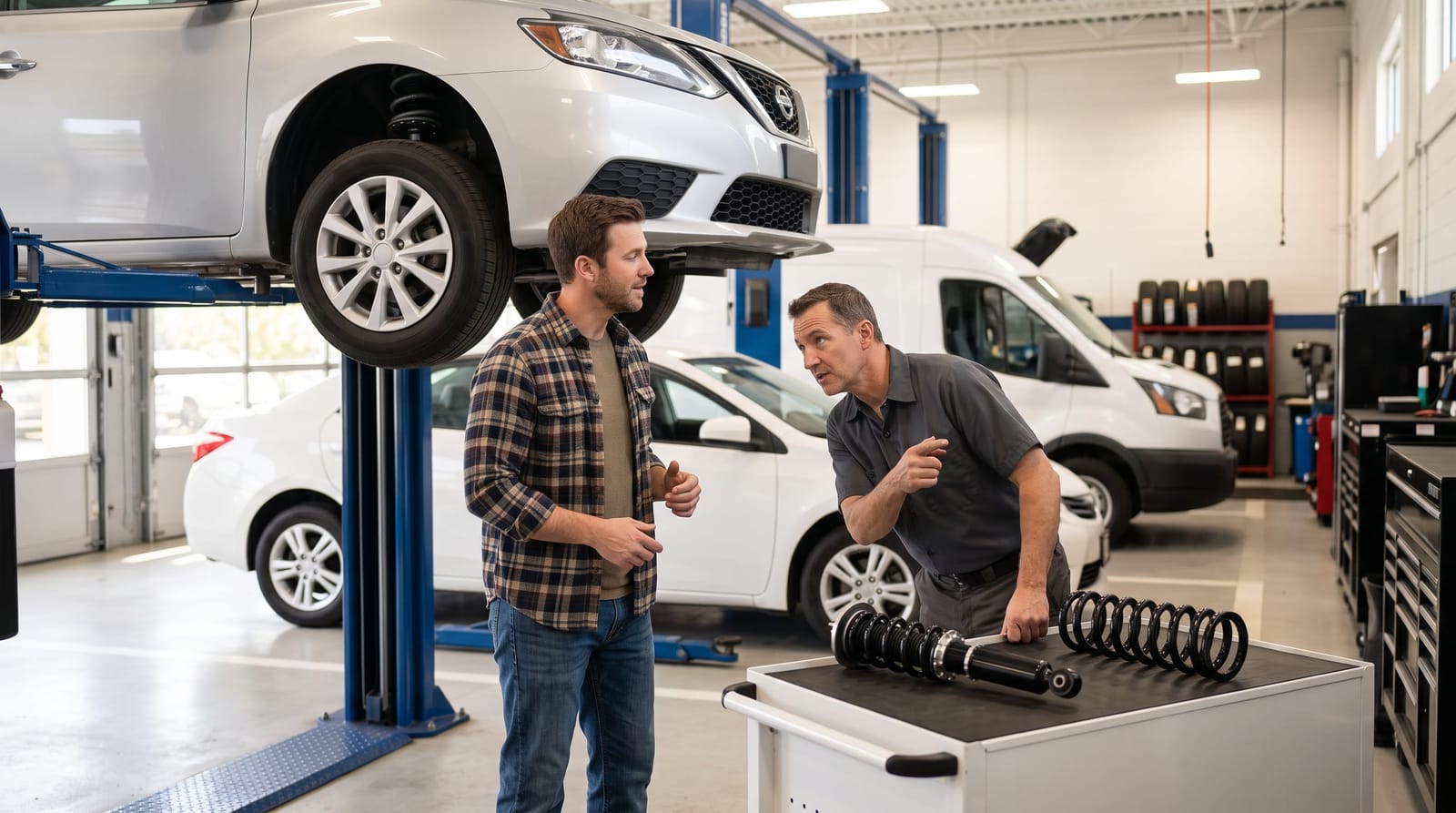
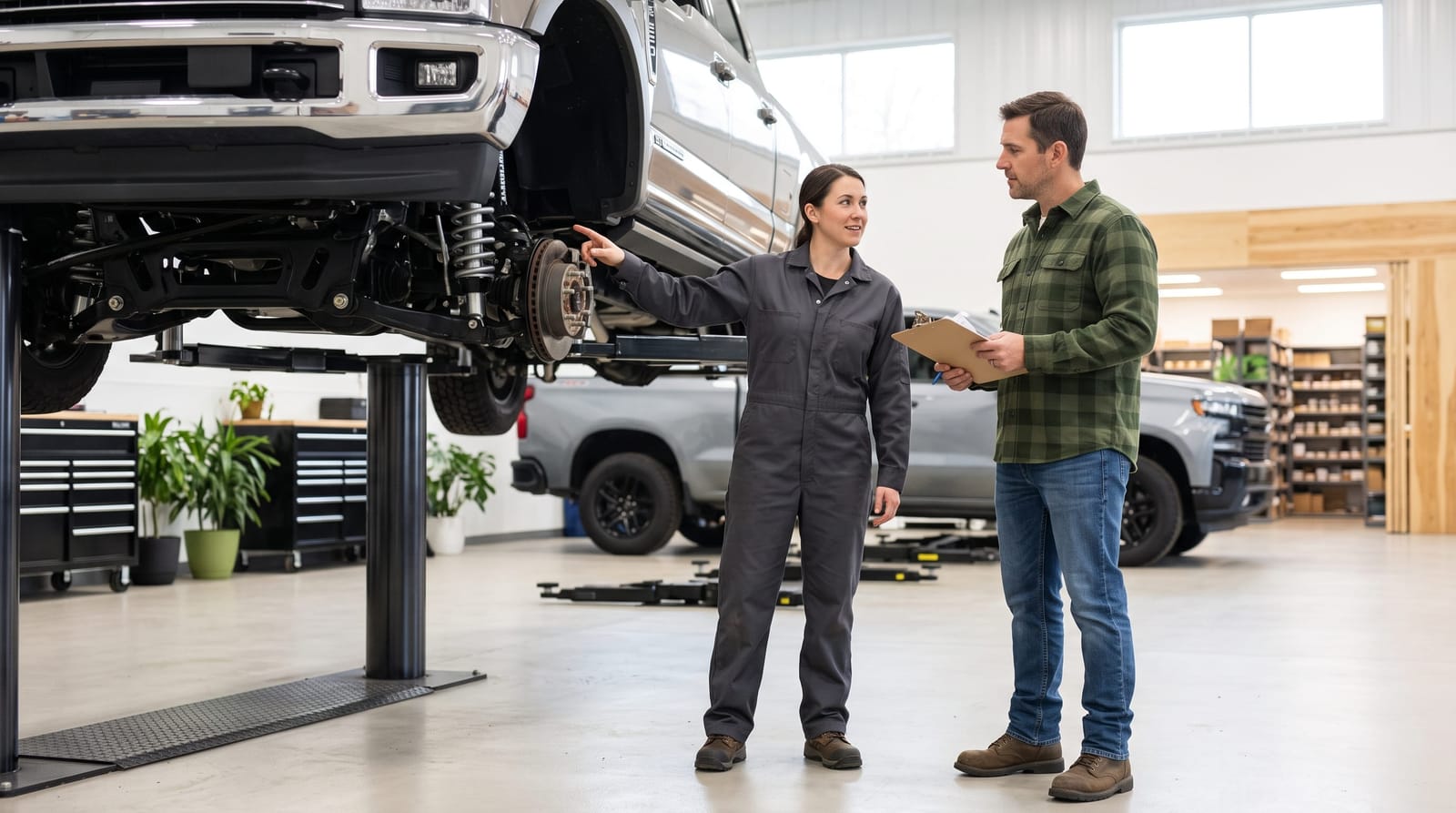
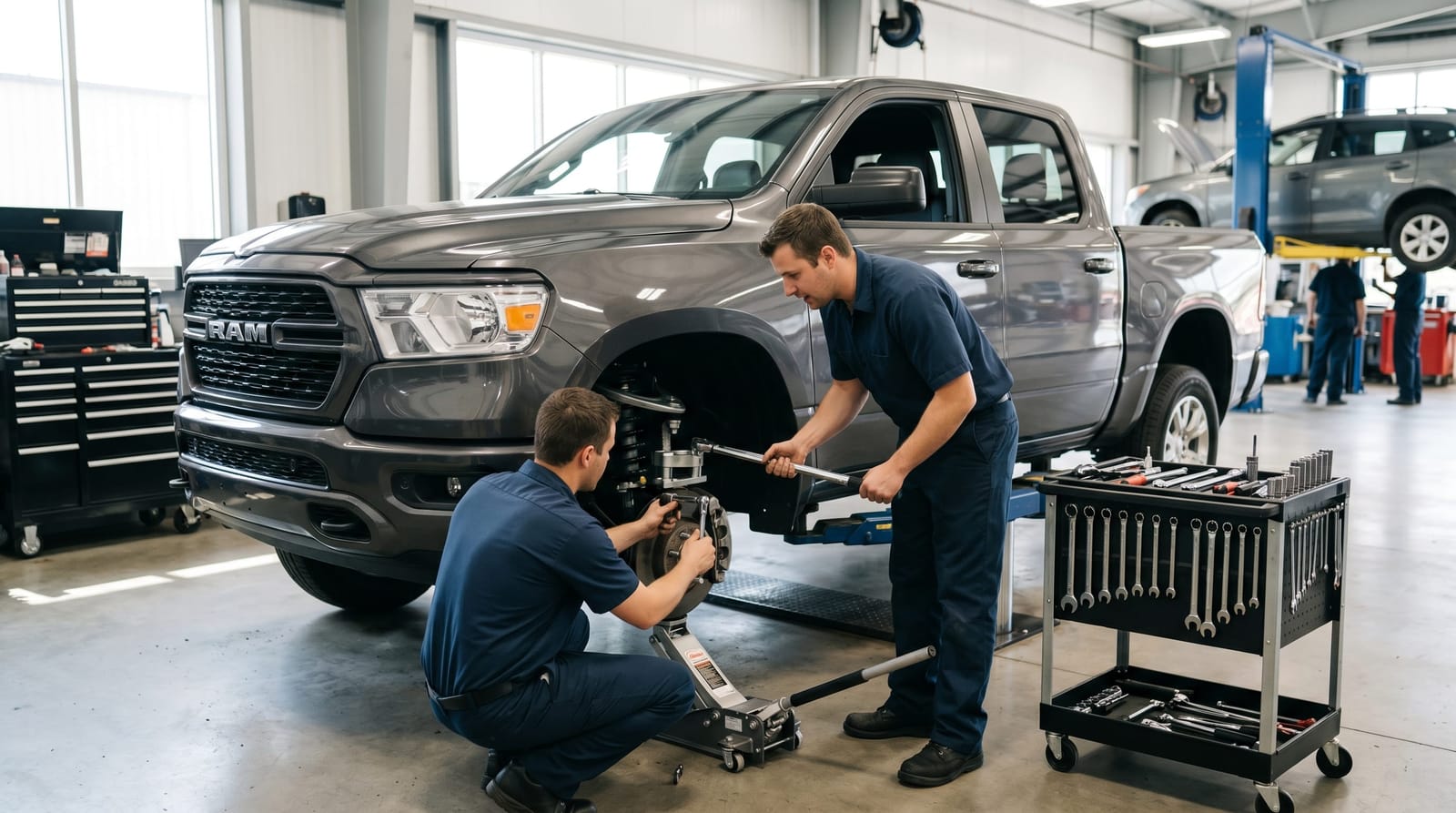
Leveling kits typically use small spacers that are installed over the front struts or coil springs. They don't involve replacing major suspension components, and they don't dramatically change how your truck drives. The result is a cleaner, more aggressive stance without the complexity or cost of a full suspension overhaul.
How Is a Leveling Kit Different from a Full Lift Kit?
This is where a lot of truck owners get confused, and it's worth being clear about the distinction. A leveling kit is not a lift kit, even though both raise part of the truck.
A leveling kit only raises the front of the truck, typically by one to two inches, to bring it flush with the rear. It's a targeted adjustment, not an overall height increase. Your truck's rear suspension stays exactly where it is.
A full lift kit, on the other hand, raises the entire vehicle, front and rear, by a more significant amount, often ranging from two inches all the way up to six inches or more. Full lift kits involve more components, more labor, and more money. They're designed for truck owners who want a significant height increase, maximum ground clearance, and the ability to run much larger tires. If you're curious about what that looks like in practice, understanding what size tires you can run after a larger lift is a natural next step in that conversation.
For many everyday truck owners who simply want a better-looking stance and a modest improvement in clearance, a leveling kit hits the sweet spot without going overboard.
Which Trucks Benefit Most from a Leveling Kit?
Almost any modern half-ton or three-quarter-ton pickup truck can benefit from a leveling kit, but some situations make it a particularly good fit:
- Trucks used primarily as daily drivers, If you rarely haul heavy loads and mostly drive your truck on paved roads around Kaufman County, you don't need the rear compensation built into the factory rake. A level stance just makes more sense for your real-world use.
- Trucks with a noticeably low front end: Some model years of popular trucks have a more pronounced rake than others. If your front wheel wells look noticeably lower than the rear, a leveling kit can make the truck look far more proportional.
- Owners who want slightly larger tires: Leveling the front creates a bit more clearance in the front wheel wells, which can allow for a modest tire upgrade without rubbing issues.
- Truck owners on a budget who want visual results: A leveling kit delivers a meaningful aesthetic improvement at a fraction of the cost of a full lift kit.
Trucks used heavily for towing and hauling, however, should be evaluated more carefully. If you regularly carry significant weight in the bed or tow a trailer, the factory rake is actually working in your favor. It's worth understanding how lifted or leveled trucks perform under load before making a change: something worth exploring when you're weighing all your options.
What Does a Leveling Kit Cost?
One of the biggest advantages of a leveling kit is the price. Compared to a full lift kit, the cost is quite reasonable for most truck owners.
The parts themselves, typically a set of strut spacers or torsion key adjustments, generally range from around $50 to $300 depending on the brand, material, and your specific truck make and model. Higher-quality billet aluminum spacers sit toward the upper end of that range and tend to be more durable over time.
Labor adds to that cost. A professional installation at a shop typically takes two to three hours, and total installed pricing for most trucks in the Forney and Kaufman County area falls somewhere in the range of $200 to $500. That's a broad window because it depends on your specific vehicle, the kit you choose, and whether any alignment work is needed afterward.
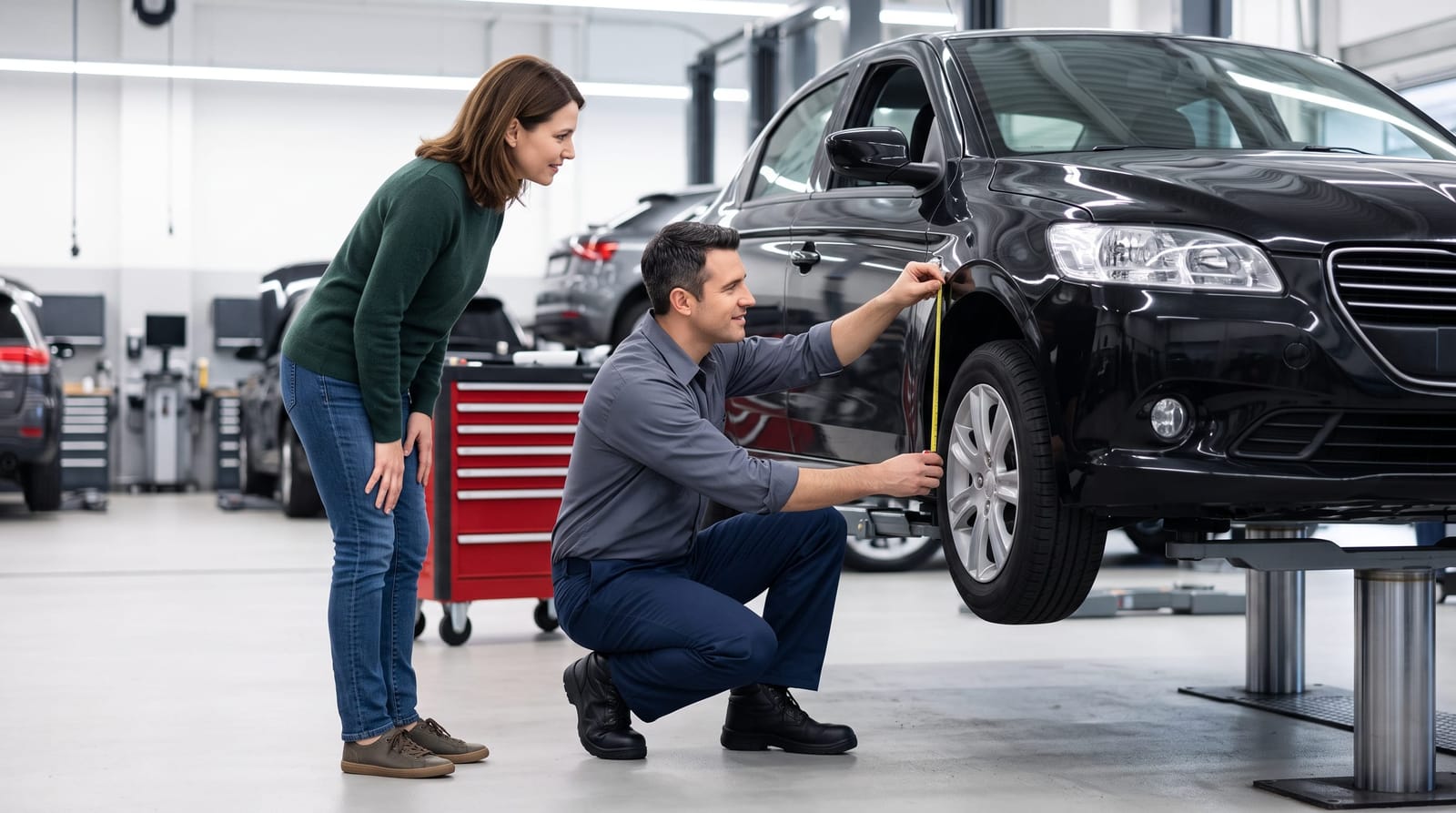
Speaking of alignment: yes, you should plan on a front-end alignment after a leveling kit installation. Raising the front suspension changes the geometry enough that your factory alignment settings will be off. Skipping this step can cause uneven tire wear and steering that pulls to one side. It's a necessary part of the job, not an optional add-on.
Is a Truck Leveling Kit Worth It?
For the right driver, absolutely. If you own a modern pickup truck and you've always felt like the front end looks a little low, a leveling kit is one of the simplest, most affordable modifications available. It improves the visual stance of your truck, can open the door to modest tire upgrades, and doesn't require tearing into your suspension system.
It's also a great starting point if you're new to truck modifications. Because a leveling kit is less invasive than a full lift, it gives you a taste of what a modification feels and looks like without a major financial commitment. Many truck owners start with a level kit and later decide to take things further, or find that the leveled stance is exactly what they wanted all along.
What a leveling kit won't do is dramatically increase your ground clearance or allow you to run significantly larger tires the way a full lift kit can. If those are your goals, it's worth exploring the broader world of lift kit options as part of a more comprehensive truck modification plan.
Frequently Asked Questions About Truck Leveling Kits
Will a leveling kit void my truck's warranty?
It depends on your manufacturer and dealer. Under the Magnuson-Moss Warranty Act, a dealer generally can't void your warranty simply because you added an aftermarket part: they would need to show that the modification caused the specific issue being claimed. That said, some dealerships are more conservative than others. It's a good idea to check your warranty documentation and talk through the specifics with your shop before installing any modification.
Does a leveling kit affect ride quality?
A properly installed leveling kit typically has minimal impact on ride quality. Because you're using spacers rather than replacing suspension components, the overall feel of the truck stays close to factory. Some drivers notice a very slight change, but most find the ride remains comfortable for daily driving. Using quality components and having the alignment corrected after installation makes a significant difference.
Can I install a leveling kit myself?
Technically, yes, but it's not recommended for most truck owners without mechanical experience. The job involves compressing front suspension components, which can be dangerous without the right tools and know-how. Having it installed by a qualified shop ensures the job is done safely and that your alignment is properly adjusted afterward.
How long does a leveling kit installation take?
For most trucks, a leveling kit installation takes approximately two to three hours at a shop. If you include a front-end alignment at the same appointment, which we strongly recommend, plan for a half-day visit. It's a relatively quick turnaround compared to more extensive suspension work.
Ready to Level Out Your Truck?
A truck leveling kit explained simply comes down to this: it's a straightforward, cost-effective way to balance your truck's stance, improve its appearance, and create a little more clearance up front, without the complexity of a full lift. For everyday drivers in Forney, Kaufman, Terrell, and the surrounding area, it's often the right first step into truck modifications. If you're weighing your options and want honest guidance on what makes sense for your specific truck and how you use it, the team at Gregg Automotive is happy to walk you through it: no pressure, just straight answers.