Suspension Lift vs Body Lift: Which One Is Better for a Daily Driver?
If you're researching lift options for your truck, you've probably come across two main choices: a suspension lift and a body lift. Both raise your vehicle's profile, but they work in completely different ways, and the right choice depends heavily on how you actually use your truck day to day. This suspension lift vs body lift comparison breaks down the key differences in cost, ride quality, off-road performance, and appearance so you can walk into any shop with a clear picture of what you want.
How Each Lift Type Works
Before comparing them side by side, it helps to understand what each lift actually does to your truck.
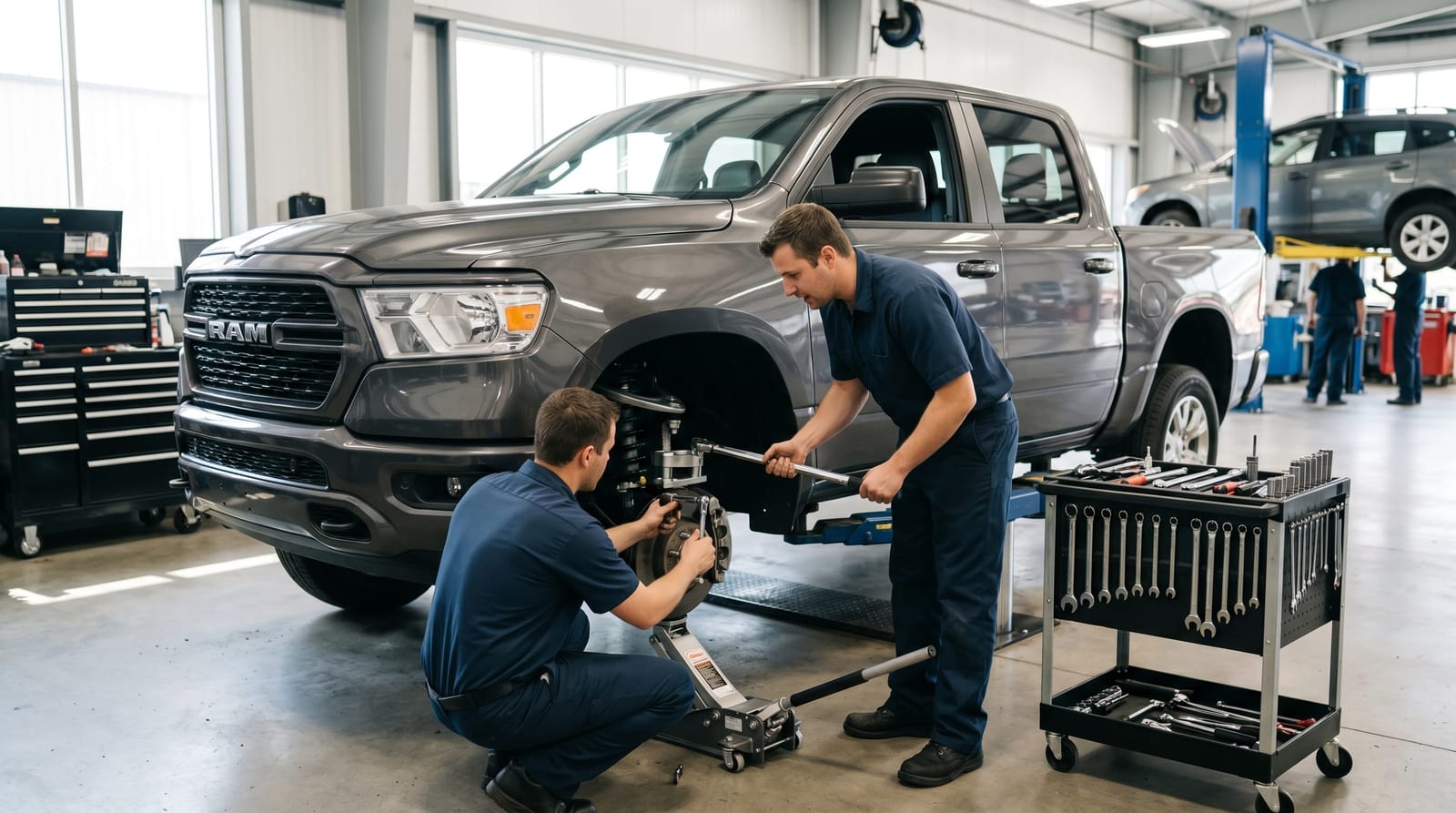
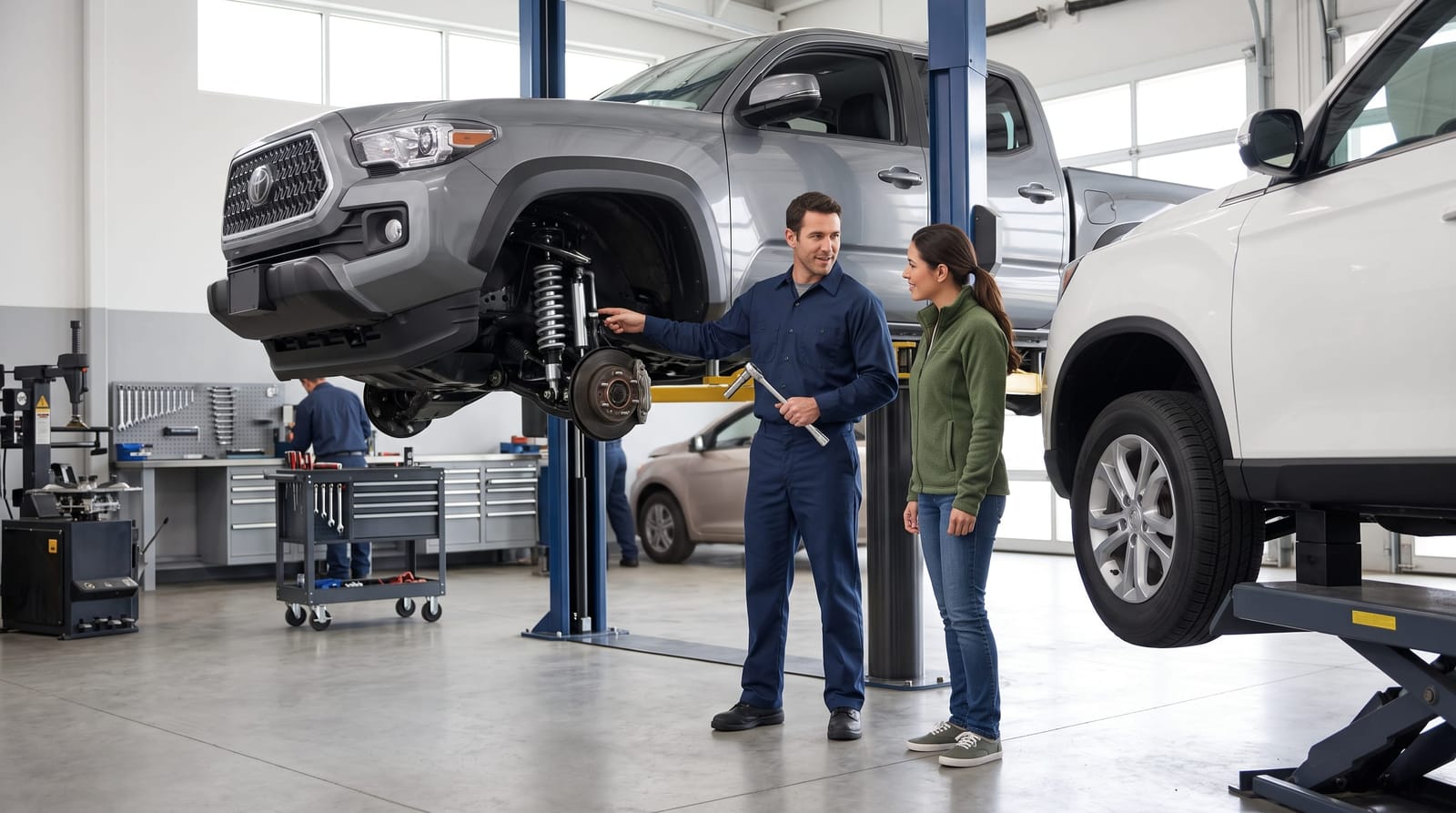
A suspension lift modifies the components that connect your truck's wheels to its frame: things like springs, shocks, control arms, and related hardware. By altering these components, the entire frame and body rise together, increasing both ride height and the distance between the frame and the ground (known as ground clearance). Suspension lifts typically range from 2 inches up to 6 inches or more, depending on your truck and the kit you choose.
A body lift works differently. It uses spacer blocks, usually made from polyurethane or aluminum, to raise the vehicle's body up from the frame. The frame itself stays at its original height, and so does all the suspension underneath. Body lifts typically range from 1 to 3 inches, with 3 inches being the maximum most kits offer.
That fundamental difference in how they work drives almost every other comparison between the two.
Cost Comparison: What You'll Spend on Each Option
Cost is often the first thing truck owners ask about, and the difference here is significant.
Body lift kits are generally the more affordable option. Basic kits can start as low as $150 to $400 for the parts alone, and because the installation is less complex, no suspension components need to be modified or replaced, labor time is reduced as well. For drivers on a budget who want a taller look, a body lift can be an appealing starting point.
Suspension lift kits cost considerably more, both in parts and installation time. Entry-level suspension lift kits may start around $400 to $800, but higher-quality kits with better components can run $1,500 to $5,000 or more. Installation also requires more labor hours because multiple suspension components are being adjusted or replaced. Additional costs may follow, including:
- Wheel alignment (required after installation)
- Upgraded driveshafts on some trucks
- Extended brake lines on larger lifts
- New tires sized to fit the additional clearance (see our guide on tire size after 4 inch lift for more on that)
If budget is your primary concern, a body lift is the lower-cost entry point. But it's worth understanding what you're getting, and what you're giving up, for that lower price.
Ride Quality and Daily Driving Feel
For a daily driver, how your truck feels on regular roads matters just as much as how it looks on a trail.
Because a body lift doesn't touch your suspension, your ride quality should remain very close to stock. The truck drives the same way it did before: the spacer blocks simply push the body upward while the suspension continues doing its job normally. That makes body lifts a reasonable option for drivers who want a lifted appearance without changing how the truck handles on the highway or around town.
Suspension lifts, on the other hand, change the geometry of your suspension system. A well-engineered kit from a reputable manufacturer, properly installed, should maintain predictable, comfortable handling, but it won't feel identical to stock. On larger lifts (4 inches and above), some drivers notice changes in steering feel, turning radius, or ride firmness. Quality matters a lot here: a well-built suspension lift with quality shocks and proper alignment will ride significantly better than a budget kit that wasn't engineered carefully.
For everyday commuting in Kaufman County, whether you're on smooth pavement in Forney or heading out on rougher county roads, a modest suspension lift in the 2- to 3-inch range typically offers a balance of improved capability with an acceptable daily driving experience.
Off-Road Performance: Where the Two Types Diverge
This is where the suspension lift vs body lift comparison becomes most clear-cut. If off-road performance matters to you at all, even occasionally, the suspension lift is the stronger option, and here's why.
Ground clearance is one of the most important factors in off-road capability. Because a body lift doesn't raise the frame, your differentials, skid plates, and exhaust components stay at the same height they were at from the factory. You might fit larger tires, but the frame is still just as close to the ground as it was before. On rocky terrain or deep ruts, that low frame can become a problem.
A suspension lift raises the entire vehicle, frame and body together, so you gain genuine clearance underneath. That extra space means:
- More room to clear rocks, logs, and uneven terrain
- Better suspension articulation (the ability of your wheels to move independently over uneven ground)
- The ability to run significantly larger tires
- More approach and departure angle for climbing and descending steep grades
If your truck ever leaves pavement, even just on dirt roads or gravel paths, a suspension lift gives you meaningful capability that a body lift simply can't match.
Appearance: How Each Option Looks
Both lift types will give your truck a taller stance, but they produce slightly different visual results.
A body lift creates a visible gap between the body and the frame: something many owners cover with body gap fillers or trim panels, which are often included in body lift kits. The truck sits higher, but the wheel wells may not fill out as dramatically since the suspension (and therefore the axles and wheels) hasn't moved. You can often run slightly larger tires with a body lift, but the options are more limited than with a suspension lift.
A suspension lift produces a more proportional, integrated look. Because the whole truck rises, the body and frame gap doesn't appear, and there's typically more room for larger tires that fill out the wheel wells properly. Most truck owners who are lifting primarily for appearance prefer the look of a suspension lift for this reason.
If you're still exploring baseline options, it's also worth reading about truck leveling kit explained: a leveling kit is a third option that corrects a truck's nose-down factory stance without the cost or complexity of a full lift.
Frequently Asked Questions
Is a body lift safe for everyday driving?
Yes, when installed correctly, a body lift is generally safe for regular street driving. Because it doesn't change the suspension geometry, the truck's handling characteristics stay close to factory settings. However, larger body lifts can affect steering shaft angles and require additional modifications to maintain safe steering function. Always have lift work done by a qualified shop.
Does a suspension lift affect fuel economy?
A suspension lift can affect fuel economy, primarily because it raises the vehicle's center of gravity and may lead owners to install larger, heavier tires that create more rolling resistance. The extent of that change varies based on lift size, tire choice, and driving habits. It's realistic to expect some reduction in fuel efficiency, though the exact amount depends on your specific setup.
Can you combine a body lift and a suspension lift?
Some truck owners do combine both types of lift to reach a higher total ride height than either could achieve alone. This approach requires careful planning to ensure all components, steering, driveshafts, brake lines, and body panels, remain properly aligned and functional. If you're considering this, discuss it thoroughly with a shop experienced in vehicle lifts before moving forward.
How much do suspension lifts affect truck warranty coverage?
Lift modifications can potentially affect your vehicle's factory warranty coverage, particularly for components directly related to the modification. Policies vary by manufacturer. For general guidance on how modifications interact with warranty terms, speaking with your dealership or a knowledgeable shop before installation is a good starting point. This post is educational only, for specifics about your warranty coverage, consult your vehicle documentation or a qualified professional.
Making the Right Call for Your Truck
The suspension lift vs body lift comparison comes down to this: if you want a lifted look on a budget and keep your truck almost entirely on pavement, a body lift is a practical, lower-cost option. But if you want real off-road capability, the ability to run larger tires, and a proportional lifted appearance, a suspension lift is worth the additional investment. For most Kaufman County truck owners who want a versatile daily driver that can handle both highways and occasional rough roads, a quality suspension lift in the 2- to 4-inch range tends to be the better long-term choice. As part of your broader lift kit planning, our complete modification guide for Kaufman County drivers covers all the key decisions you'll want to think through before choosing a kit.