
The Complete Engine Tune-Up Guide for Forney and Kaufman County Drivers
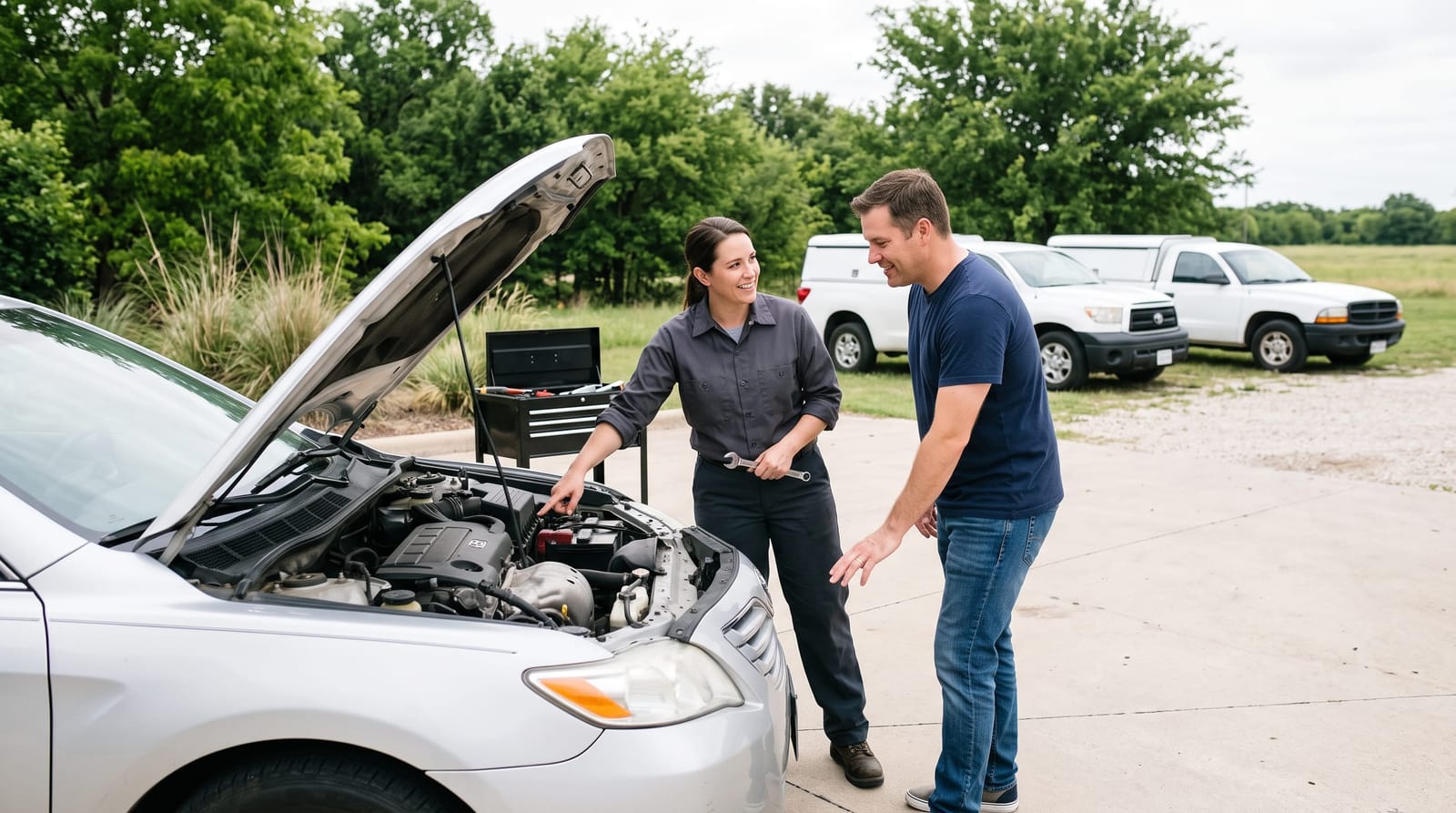
You're driving down US-80 on your way into Forney when you notice it: a slight hesitation when you accelerate, a little roughness at idle, or maybe your fuel gauge seems to drop faster than it used to. Nothing dramatic. Nothing that makes you panic. But something feels just a little off, and you find yourself wondering when the last time was that your car had a proper tune-up.
That question trips up a lot of drivers in Kaufman County. Tune-ups have changed significantly over the past two decades, and many vehicle owners are working from outdated information about what a tune-up is, what it actually includes, and how often their specific car needs one. Some people think a tune-up is just spark plugs. Others assume newer cars don't need them at all. Neither of those ideas is quite right.
This guide is built to clear all of that up. Whether you drive a 2005 pickup with 180,000 miles or a 2019 SUV you recently paid off, this is a practical, straightforward look at what a modern engine tune-up includes, how to recognize when your vehicle is telling you it's time for one, and what you can realistically expect to pay for that service here in the Forney and Kaufman County area. By the time you finish reading, you'll have the confidence to make an informed decision about your vehicle, without pressure, without confusion, and without being talked into something you don't need.
What Is a Modern Engine Tune-Up, Really?
The term "tune-up" has been around since the early days of the automobile, and that history can make it a little confusing. Decades ago, a tune-up meant adjusting the mechanical ignition timing, replacing points and condensers, and doing a fairly hands-on recalibration of the engine's systems. Today's vehicles don't have those components anymore, so the word means something different, though the goal is exactly the same: keeping your engine running cleanly, efficiently, and reliably.
A modern engine tune-up is best understood as a focused maintenance service that addresses the components most responsible for clean combustion and consistent engine performance. It's not a single repair. It's a collection of inspections and part replacements that work together to ensure your engine is firing properly, breathing freely, getting clean fuel, and operating within its designed parameters.
Core Components of a Standard Tune-Up
While the exact scope of a tune-up can vary depending on your vehicle's make, model, mileage, and what it actually needs, here's what a thorough service typically involves:
- Spark Plugs: These are the heart of the tune-up. Spark plugs ignite the air-fuel mixture inside each cylinder. When they wear out, combustion becomes inconsistent: leading to rough idling, sluggish acceleration, and reduced fuel efficiency. Modern iridium or platinum plugs last longer than the old copper plugs, but they still wear and still need replacement on a schedule.
- Air Filter: Your engine needs a precise ratio of air to fuel for combustion. A clogged air filter restricts that airflow, forcing the engine to work harder than it should. Replacing an air filter is a small, inexpensive step that has a real impact on performance and efficiency.
- Fuel Filter: Dirty fuel can carry small particles and contaminants that, over time, affect injector performance and fuel delivery. Depending on your vehicle, the fuel filter may be part of the tune-up or a separate recommended service.
- Ignition Wires and Coil Boots: On vehicles equipped with spark plug wires, these can crack and degrade over time, causing misfires. Even in vehicles with coil-on-plug systems, the rubber boots that connect to the plugs should be inspected for wear and deterioration.
- Fuel System Cleaning: Fuel injectors and the throttle body can accumulate carbon deposits over time, especially in vehicles with direct injection. A fuel system cleaning, whether through a professional service or quality additives, helps restore clean, consistent fuel delivery.
- PCV Valve: The Positive Crankcase Ventilation valve routes combustion gases back into the engine for reprocessing. When it sticks or fails, it can cause rough idling, increased oil consumption, and pressure buildup in the crankcase.
- Throttle Body Inspection and Cleaning: Carbon buildup on the throttle body can cause hesitation at startup, rough idle, and a general lack of responsiveness. Cleaning this component is often part of a comprehensive tune-up inspection.
Not every vehicle needs every item on this list at every service interval. A quality tune-up starts with an honest inspection and only replaces what's actually worn or due, which is exactly the approach we take at Gregg Automotive.
How Tune-Up Needs Have Changed for Newer Vehicles
One of the most common misconceptions we hear from drivers in Forney and across Kaufman County is this: "My car is newer, so it doesn't need a tune-up." That idea comes from a kernel of truth but misses the bigger picture.
It's true that modern vehicles are far more sophisticated than their predecessors. Electronic fuel injection replaced carburetors. Distributors gave way to computer-controlled ignition systems. Long-life spark plugs (iridium and platinum-tipped) now last 60,000 to 100,000 miles in many applications, compared to the 30,000-mile intervals of older copper plugs. These advances mean tune-up intervals are longer, but they don't mean tune-ups are unnecessary.
What "Low Maintenance" Really Means
When automakers say a newer vehicle is "low maintenance," they mean fewer scheduled service stops, not zero maintenance. Every engine still burns fuel, still requires clean airflow, still relies on spark plugs to ignite combustion, and still accumulates wear over time. The intervals are longer, but the needs are the same.
In fact, there's an argument to be made that neglecting maintenance on a modern engine can be more costly than neglecting it on an older one. Newer vehicles have tighter tolerances and more complex systems. A misfiring cylinder on a modern engine can trigger a cascade of issues involving oxygen sensors, catalytic converters, and the engine control module: problems that are far more expensive to diagnose and repair than a simple set of spark plugs would have been.
Direct Injection and Carbon Buildup
One specific challenge that's emerged with modern engines, particularly those with gasoline direct injection (GDI), is accelerated carbon buildup on intake valves. In older port-injected engines, fuel sprays directly onto the intake valves, which naturally helps wash away deposits. In direct injection engines, fuel bypasses the valves entirely. Over time, this allows carbon deposits to accumulate on the valves, reducing airflow and affecting performance. Addressing this is increasingly becoming part of comprehensive tune-up services for GDI-equipped vehicles.
The bottom line: newer cars need tune-ups too. The schedule is just different. Knowing your vehicle's specific service intervals, and staying on top of them, is how you keep a modern engine performing the way it was designed to.
Warning Signs That a Tune-Up Is Overdue
Your vehicle is surprisingly good at communicating when something isn't right. The challenge is knowing how to interpret those signals. Here are the most common signs that your engine may be overdue for a tune-up, and what they typically mean.
Rough Idle or Engine Vibration
If your engine shakes, stumbles, or feels uneven when you're sitting still at a red light, that's often a sign of inconsistent combustion. Worn spark plugs or fouled fuel injectors are common culprits. The engine is supposed to fire smoothly and evenly in each cylinder, when it doesn't, you feel it.
Sluggish Acceleration or Hesitation
Does your car feel like it takes a moment to respond when you press the gas pedal? Or does it seem less responsive than it used to be on the highway on-ramp? That hesitation can indicate that the engine isn't getting the clean spark or fuel delivery it needs. It's easy to write off as "just how my car drives now," but it's worth having inspected, especially if it's developed gradually over time.
Decreased Fuel Economy
If you're filling up more often without any change in your driving habits, your engine may be working harder than it needs to. Worn spark plugs, a clogged air filter, or dirty fuel injectors can all contribute to an engine that burns more fuel to produce the same amount of power. Tracking your fuel economy over time is one of the simplest ways to catch this early.
Check Engine Light
The check engine light can mean many things, but it's frequently triggered by issues that fall squarely within tune-up territory: misfire codes, oxygen sensor readings out of range, and fuel trim issues among them. If your check engine light is on, getting a diagnostic scan is the right first step. From there, you'll know whether a tune-up addresses the problem or whether something else is going on.
Hard Starting
If your engine cranks longer than usual before starting, especially on cold mornings, it may be struggling to achieve proper combustion. This is another classic sign of spark plug or fuel system wear.
Unusual Engine Smells
A smell of raw fuel from the exhaust can sometimes indicate that the engine isn't burning fuel completely, often tied to ignition or injector issues. If you're noticing unfamiliar smells from your engine or exhaust, it's worth a professional look.
The important thing to remember is that most of these symptoms develop gradually. Drivers often adapt to them so slowly that they forget what "normal" felt like. A tune-up can often restore that feeling, and that's a meaningful difference in day-to-day driving.
How Often Does Your Vehicle Actually Need a Tune-Up?
This is the question we get asked most often, and the honest answer is: it depends on your vehicle. There's no universal tune-up interval that applies to every car on the road, and anyone who tells you otherwise isn't giving you the full picture.
Here are the general benchmarks that guide most modern tune-up scheduling:
- Older vehicles with conventional spark plugs: Typically every 30,000 miles or 2-3 years. These vehicles generally require more frequent attention across all tune-up components.
- Vehicles with platinum spark plugs: Often 60,000 miles between plug replacements, though other tune-up components may need attention sooner.
- Vehicles with iridium spark plugs: Many manufacturers specify 60,000 to 100,000 miles for spark plug replacement. However, just because the plugs are rated for high mileage doesn't mean the rest of the engine's maintenance needs are on the same schedule.
The best source of information for your specific vehicle is your owner's manual. It lists the manufacturer's recommended service intervals for every major maintenance item, including spark plugs, filters, and fuel system service. If your manual isn't in the glove box, your vehicle identification number (VIN) can help a shop pull up the correct specifications.
Beyond mileage, driving conditions also matter. Vehicles driven primarily in stop-and-go traffic, in dusty environments, or in extreme heat, all of which are relevant to drivers in Kaufman County, may need more frequent attention than vehicles driven mostly on open highways under gentle conditions. Texas summers put real demands on engine components, and it's reasonable to factor that into your maintenance schedule.
If you're unsure where your vehicle stands, a quick inspection at a trusted local shop is the clearest answer. A technician can look at the actual condition of your spark plugs, filters, and fuel system and tell you exactly what needs attention now versus what can wait.
What a Tune-Up Costs in the Forney and Kaufman County Area
Cost is one of the most common concerns drivers have about tune-up services, and it's a fair concern. The range can be surprisingly wide depending on where you go and what your vehicle actually needs. Understanding how pricing works helps you evaluate quotes with confidence and avoid either overpaying or cutting corners on service quality.
Factors That Affect Tune-Up Pricing
- Vehicle type and engine: A four-cylinder sedan with conventional plug access costs less to tune up than a V8 truck where the rear plugs require significant disassembly to reach. Labor time drives a big portion of tune-up cost.
- Spark plug type: Iridium and platinum spark plugs cost more per plug than conventional copper plugs. On a six- or eight-cylinder engine, that cost adds up. Quality parts are worth it: cheap spark plugs often don't perform as well or last as long.
- Scope of service: A basic plug-and-filter service costs less than a comprehensive tune-up that includes fuel system cleaning, PCV replacement, and throttle body service. What your vehicle actually needs determines the final scope.
- Where you have the work done: This is where the biggest pricing differences emerge.
Local Independent Shops vs. Dealerships
Dealerships typically charge higher labor rates than independent repair shops: sometimes significantly higher. For a tune-up service, this can translate to a meaningful cost difference without a corresponding difference in the quality of the work or the parts used. Independent shops like Gregg Automotive use quality OEM-equivalent and OEM parts, employ experienced technicians, and have access to the same diagnostic tools and service information as dealerships.
In the Forney and Kaufman County area, there are a handful of shops offering tune-up services, including Christian Brothers Automotive, Stewarts Automotive (which serves Forney, Terrell, and Crandall), and Diaz Automotive. Each has its own pricing structure and service approach. It's worth calling ahead to understand what's included in a quoted price, because "tune-up" can mean different things at different shops.
At Gregg Automotive, we believe in transparent, upfront pricing. Before we do anything, we explain what we found during inspection, what we recommend, and what it will cost. You decide what you want done: no pressure, no surprises on the invoice.
A Realistic Price Range
For a standard tune-up in the Forney area, you might expect to pay anywhere from around $150 to $400 or more depending on the vehicle and the scope of work. Vehicles that require premium spark plugs, have more cylinders, or need additional services (fuel system cleaning, throttle body service) will fall toward the higher end of that range. Dealership pricing for comparable services is often $100-$200 more than a comparable independent shop. We're happy to provide a specific estimate for your vehicle, just give us a call or stop by.
The Real-World Benefits of Keeping Up with Tune-Up Services
A tune-up isn't just a box to check on a maintenance list. When done properly, it has tangible, real-world effects on how your vehicle drives and how much it costs you to own over time.
Improved Engine Smoothness and Responsiveness
Fresh spark plugs and clean fuel delivery mean more consistent combustion. For most drivers, this translates to an engine that feels smoother, more responsive, and more enjoyable to drive, especially noticeable after years of gradual wear. Many customers tell us their car "feels like new" after a proper tune-up, and while that's a slight exaggeration, the sentiment reflects a real improvement in how the vehicle behaves.
Better Fuel Efficiency
An engine that's burning fuel cleanly and completely is an engine that's getting better mileage. Worn spark plugs, restricted airflow from a clogged filter, and dirty fuel injectors all contribute to incomplete combustion: meaning some of the fuel you're paying for isn't being turned into power. Restoring clean combustion can improve fuel economy, though the exact improvement depends on how far the components had degraded before service.
Reduced Risk of Unexpected Breakdowns
A tune-up isn't just about today's performance: it's about catching wear before it becomes a failure. A spark plug that's misfiring isn't just an inconvenience; over time, unburned fuel can damage the catalytic converter, a repair that costs several times more than a set of spark plugs. Staying current on tune-up services is one of the best ways to avoid expensive, unexpected repair bills.
Longer Engine Life
Engines that run clean and within their design parameters simply last longer. Regular tune-up services, alongside oil changes and other scheduled maintenance, are how vehicles reach 150,000, 200,000, and beyond without major engine work. For drivers in Forney and Kaufman County who depend on their vehicles for daily commutes, work, and family life, that reliability is worth protecting.
Tune-Up Services at Gregg Automotive: What to Expect
At Gregg Automotive, we serve drivers throughout Forney and the broader Kaufman County area, including families and commuters in Terrell, Crandall, Kaufman, Heath, Rockwall, and surrounding communities. We're a local, independently owned shop, and that means our reputation is built one customer at a time. Every interaction matters to us in a way that's simply different from a corporate chain or franchise location.
When you bring your vehicle to us for a tune-up, here's what you can expect:
- An honest inspection first. We look at your vehicle's actual condition before recommending anything. We don't work from a standard list of "things to sell": we work from what we actually find.
- Clear communication in plain language. We'll explain what we found, why it matters, and what we recommend, without automotive jargon that leaves you more confused than when you arrived.
- Transparent pricing before any work begins. You'll know what you're approving before we touch anything. No surprises.
- Quality parts and workmanship. We use quality replacement components and back our work. We're not cutting corners to offer a rock-bottom price that requires a follow-up visit two months later.
- Respect for your time and budget. We'll tell you what your vehicle needs now and what can reasonably wait, because we'd rather earn your trust over many years than squeeze every dollar out of a single visit.
We're proud to be an honest, affordable alternative for tune-up services across Kaufman County: the kind of shop where you can drop off your car and trust that it will be taken care of the right way.
Explore These Related Topics in Depth
This guide gives you a solid foundation for understanding engine tune-up services, but there's more to explore. The posts below go deeper on specific questions that come up frequently for drivers in the Forney and Kaufman County area. Each one is written to give you clear, practical information without filler or pressure.
What's Actually Included in a 30,000-Mile Service?
The 30,000-mile mark is one of the most significant scheduled maintenance milestones for many vehicles. It typically involves a broader set of services than a standard tune-up, including transmission fluid, coolant, brakes, and more. If you want to understand exactly what this service includes and what it might cost in Kaufman County, our 30000 mile service checklist breaks it all down clearly.
What Does a Tune-Up Actually Do for Your Car?
It's one thing to know that a tune-up is recommended: it's another to understand specifically what changes when the work is done. If you've ever wondered exactly how replacing spark plugs or cleaning the fuel system translates into real driving performance, our post on what does a tune up do walks through the mechanics in practical, easy-to-follow terms.
How Often Does Your Car Actually Need a Tune-Up?
The right tune-up interval varies by vehicle, driving habits, and the type of spark plugs your car uses. Instead of guessing, use our engine tune up frequency schedule as a straightforward reference guide, organized by vehicle type and mileage, to find the interval that fits your specific situation.
The Performance Benefits of a Proper Tune-Up
Beyond preventing problems, tune-ups deliver noticeable improvements in how your vehicle performs day to day. Our overview of engine performance upgrade benefits explains the specific performance gains most drivers experience after a professional tune-up, from smoother acceleration to better throttle response.
Getting More from Your Engine Without Spending a Fortune
For drivers looking to maximize their vehicle's performance on a reasonable budget, maintenance is always the best starting point. Our guide to budget engine performance upgrades covers the most cost-effective steps you can take: starting with the fundamentals and building from there.
Ready to Schedule Your Tune-Up in Forney or Kaufman County?
A well-maintained engine is a reliable engine. Whether you're noticing subtle signs that your car isn't quite running the way it used to, or you simply want to stay ahead of scheduled maintenance before the Texas summer heat takes its toll, a tune-up is one of the most straightforward investments you can make in your vehicle's long-term health.
Here are the key takeaways from this guide:
- Modern tune-ups focus on spark plugs, filters, fuel system components, and ignition systems: the core elements of clean, efficient combustion.
- Newer vehicles still need tune-ups; the intervals are just longer than older vehicles required.
- Rough idle, sluggish acceleration, decreased fuel economy, and a check engine light are all common signals that a tune-up may be overdue.
- Your owner's manual is the most reliable guide to your vehicle's specific maintenance intervals.
- Local independent shops like Gregg Automotive offer comparable, and often better, service at more accessible prices than dealerships.
If you have questions about what your vehicle specifically needs, or you're ready to schedule a tune-up inspection, we're here and happy to help. Gregg Automotive proudly serves drivers throughout Forney, Terrell, Crandall, Kaufman, Rockwall, Heath, and across Kaufman County. Give us a call or stop by: we'll take an honest look at your vehicle and tell you exactly where things stand.