Truck Lift Kit Size Selection: 2-Inch vs 4-Inch vs 6-Inch: Which Is Right for You?
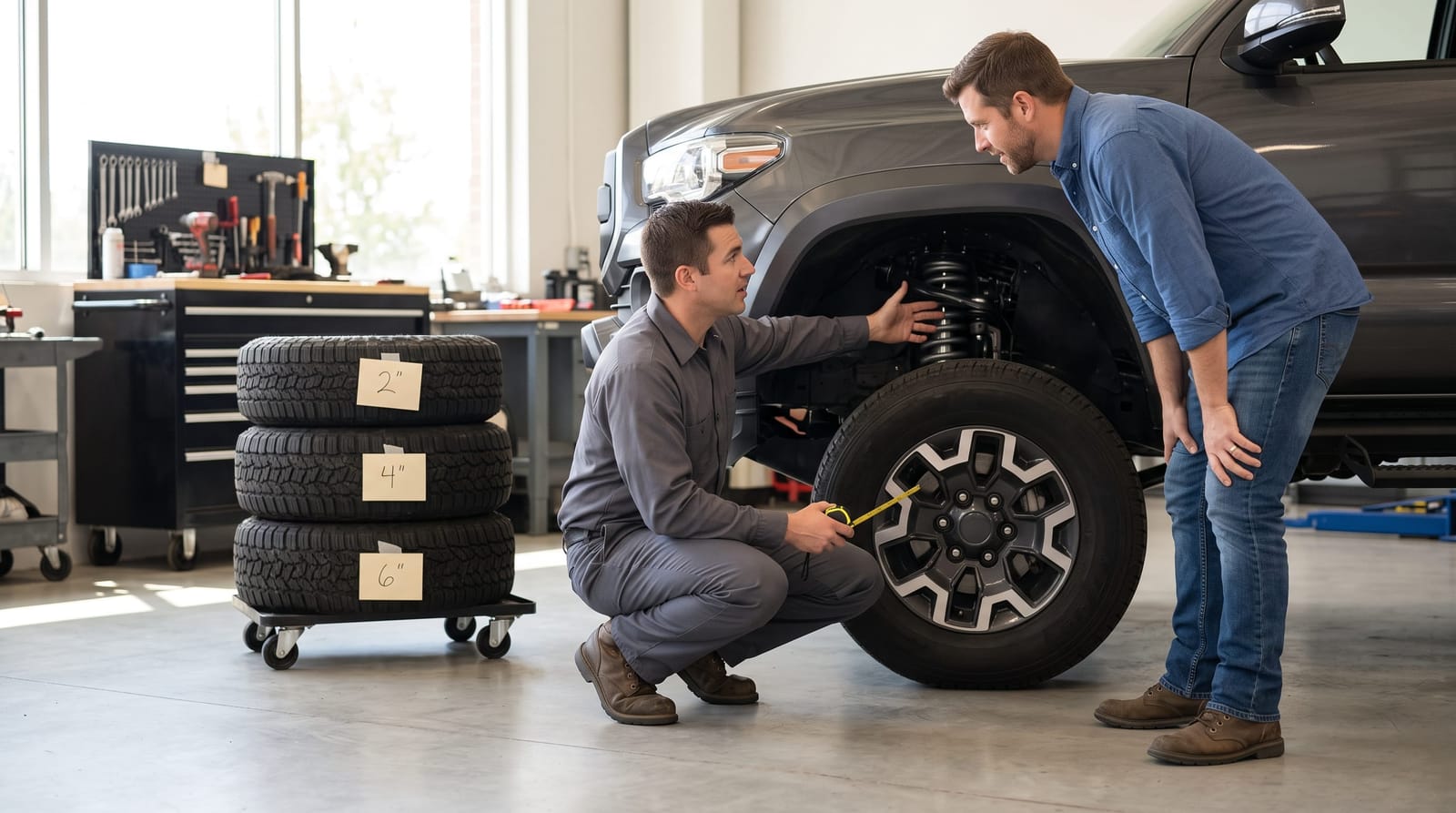
Choosing a lift kit for your truck is one of the most significant modifications you can make, and it's also one of the most personal. The right lift size depends on how you use your truck every day, what kind of terrain you drive in Kaufman County, and how much you're willing to adjust your setup over time. Our complete guide, Truck Lift Kits and Vehicle Lowering: The Complete Modification Guide for Kaufman County Drivers, covers the full picture of vehicle modification, but this post focuses specifically on truck lift kit size selection and how to compare the three most popular options: 2-inch, 4-inch, and 6-inch lifts. By the end, you'll have a clear picture of what each size actually delivers, what trade-offs come with it, and how to match the right lift to your real-world needs.
Why Lift Kit Size Matters More Than You Might Think
A lot of truck owners approach lift kit size selection thinking it's mostly about appearance. And yes, a taller stance does change how your truck looks on the road. But the size of your lift also determines ground clearance, approach angles, tire compatibility, suspension stress, and how your truck handles on the highway every single day.
According to industry data, the majority of truck lift kit purchases fall into three categories: mild lifts (1-2 inches), mid-range lifts (3-4 inches), and larger lifts (6 inches and above). Each tier comes with a completely different set of requirements and outcomes. Roughly 60% of everyday truck drivers who want improved clearance and a better look choose lifts in the 2-4 inch range because those sizes balance aesthetics with practical drivability.
Understanding truck lift kit size selection before you commit to anything means fewer surprises down the road: both in how your truck performs and what it costs to maintain. If you're not sure whether a lift kit or a simpler leveling kit is the right starting point, take a look at this breakdown of truck leveling kit explained to understand the difference before making a final call.
The 2-Inch Lift: Subtle, Practical, and Low-Commitment
A 2-inch lift is the entry point of truck lift kit size selection, and it's genuinely useful rather than just symbolic. At this level, you're adding enough clearance to notice a real difference without significantly altering how your truck rides, handles, or tows.
What a 2-Inch Lift Actually Does
- Adds approximately 2 inches of ground clearance beneath the frame and axles
- Corrects the factory rake (front-low stance) on many trucks
- Allows for tire sizes up to approximately 33 inches on most half-ton trucks without rubbing
- Maintains nearly factory-level ride comfort and steering feel
Who Benefits Most from a 2-Inch Lift
If you use your truck primarily as a daily driver around Kaufman County, commuting, hauling occasional loads, running errands, and you want a cleaner look with modest off-road improvement, a 2-inch lift makes a lot of sense. It's also the most installation-friendly option, often requiring no changes to your driveshaft, minimal alignment adjustments, and no modifications to your brake lines.
Additional modifications at this level are minimal. Most 2-inch lifts involve simple leveling spacers or small suspension lift components that don't require replacing major suspension parts. Alignment should still be checked and adjusted after any lift installation, even at 2 inches, but the adjustments are typically within standard specifications.
The 4-Inch Lift: The Most Popular Choice for Good Reason
When most people picture a lifted truck in Kaufman County, they're picturing something in the 4-inch range. A 4-inch lift is widely considered the sweet spot of truck lift kit size selection because it delivers meaningful capability and appearance upgrades while remaining manageable for everyday use.
What a 4-Inch Lift Delivers
- Significant ground clearance improvement: enough for light to moderate off-road use
- Compatibility with tire sizes typically ranging from 33 to 35 inches, depending on the truck
- Improved approach, departure, and break-over angles for uneven terrain
- A noticeable stance change that most truck owners consider the target aesthetic
Additional Modifications Often Required at 4 Inches
A 4-inch lift is where truck lift kit size selection starts requiring more planning. At this height, you'll likely need a professional alignment with adjusted caster and camber settings. Some trucks at this lift level also require extended brake line brackets, track bar relocation, or upper control arm upgrades to maintain proper suspension geometry.
Tire selection becomes especially important here. The right tire size can make or break how a 4-inch lift performs and looks. For a detailed breakdown of what tire options actually work at this height, check out this guide to tire size after 4 inch lift: it covers clearance, rubbing risks, and what most trucks can realistically fit.
For truck owners who tow trailers, haul equipment, or use their trucks for work around Kaufman County, it's also worth understanding how a lift at this level affects load capacity and tongue weight. You can find a practical overview on lifted truck towing capability that breaks down what changes and what to watch for.
The 6-Inch Lift: Maximum Presence, Maximum Commitment
A 6-inch lift is a serious modification. It changes nearly every aspect of your truck's dynamics and requires the most comprehensive list of supporting modifications to be safe and functional. That said, for the right driver with the right use case, a 6-inch lift delivers a level of off-road capability and visual impact that nothing smaller can match.
What a 6-Inch Lift Accomplishes
- Substantial ground clearance: typically enough for serious off-road terrain, rock crawling, and deep water crossings
- Compatibility with tire sizes from 35 to 37 inches or larger on most full-size trucks
- Dramatically improved approach angles and obstacle clearance
- Immediate, unmistakable visual presence on the road
What You Need to Plan for at 6 Inches
This is where truck lift kit size selection gets complex. A 6-inch lift almost always requires a comprehensive suspension lift kit, not just spacers, along with new shocks, extended brake lines, differential drops or CV axle spacers, and driveshaft modifications to prevent vibration and premature wear at extreme angles.
Alignment at this height must be performed by a shop experienced with lifted vehicles, as standard alignment specs no longer apply. Expect to invest in aftermarket upper control arms, a track bar relocation bracket if applicable, and potentially sway bar end link extensions.
Ride quality will change. Highway driving at 6 inches feels noticeably different from stock, and fuel economy typically decreases due to the added tire rolling resistance and aerodynamic changes. If you're considering whether a full suspension lift or a body lift might serve you better, this comparison of suspension lift vs body lift comparison explains how each approach affects daily driveability differently.
Side-by-Side Comparison: 2-Inch vs 4-Inch vs 6-Inch
Here's a practical overview of how these three lift sizes compare across the factors that matter most to Kaufman County truck owners:
Ground Clearance and Terrain Capability
- 2-Inch: Mild improvement; ideal for improved clearance on rough county roads and light trails
- 4-Inch: Moderate off-road capability; handles gravel roads, mild trails, and occasional muddy conditions
- 6-Inch: Serious off-road performance; suited for rough terrain, deeper mud, and obstacle-heavy environments
Ride Quality on Daily Roads
- 2-Inch: Near-factory feel; most drivers notice little change in highway comfort
- 4-Inch: Slightly firmer ride; noticeable but manageable for most daily drivers
- 6-Inch: Significantly stiffer and more sensitive to road imperfections; takes time to adjust
Cost of Supporting Modifications
- 2-Inch: Minimal add-ons; alignment adjustment and possibly new tires
- 4-Inch: Moderate investment; alignment, extended components, potentially new control arms or brake line brackets
- 6-Inch: Significant investment; full suspension components, driveshaft work, extended brake lines, custom alignment
Best Fit for Kaufman County Use Cases
- 2-Inch: Daily commuters, light haulers, drivers wanting aesthetic improvement with minimal maintenance changes
- 4-Inch: Versatile drivers who split time between paved roads, work sites, and occasional off-road routes
- 6-Inch: Off-road enthusiasts, weekend trail runners, and those who prioritize maximum clearance over daily practicality
Important Factors to Discuss Before Installation
No truck lift kit size selection guide would be complete without mentioning a few things that go beyond the numbers. Here are key points to review before committing to any lift size:
Warranty Implications
Modifying your truck's suspension can affect manufacturer warranties on related components. This varies by vehicle manufacturer and specific warranty terms. Before installing any lift, it's worth reviewing your owner's manual and speaking with your dealership to understand how aftermarket modifications may affect coverage. This post is general and educational in nature, for questions specific to your situation, consulting with your dealership directly is the right move.
Annual Inspection Requirements in Texas
Texas requires annual vehicle safety inspections, and modified trucks must still meet the state's lighting, tire, and equipment standards to pass. A well-installed lift by an experienced shop should keep your truck in compliance, but it's something to be aware of during the planning phase.
Working with a Shop That Knows Lifted Trucks
Proper installation and post-lift alignment aren't optional: they're what keep your truck driving safely after modification. Choosing a shop familiar with lift kit installations, alignment specifications for lifted vehicles, and the follow-up maintenance these trucks need is just as important as choosing the right lift size.
Related Topics Worth Exploring
If you're still in the research phase of your truck lift kit size selection journey, these related articles from our modification education series can help you build a complete picture before making any decisions:
- Understanding the difference between a leveling kit and a full lift kit: covered in our truck leveling kit explained guide
- How to choose the right tires for your specific lift height: detailed in our tire size after 4 inch lift breakdown
- Whether your lifted truck can still handle towing and hauling responsibilities: answered in our lifted truck towing capability article
- The key differences between a suspension lift and a body lift: explored in our suspension lift vs body lift comparison
Making the Right Call for Your Truck
Truck lift kit size selection isn't a one-size-fits-all decision. A 2-inch lift works beautifully for someone who wants a cleaner stance and modest clearance without complicating their maintenance routine. A 4-inch lift suits the Kaufman County driver who wants real versatility: capable on the trails, comfortable on the highway, and strong enough for work. A 6-inch lift is built for those who want maximum capability and presence and are willing to invest in everything that comes with it.
The best lift for your truck is the one that matches how you actually use it, not the one that looks most impressive in photos. If you're ready to talk through the options for your specific truck, the team at Gregg Automotive is here to help you think it through honestly, answer your questions, and get the installation done right. Give us a call or stop by: we're familiar with what Kaufman County roads, work sites, and terrain demand from a lifted truck.