Will a Lift Kit Affect My Truck's Warranty?
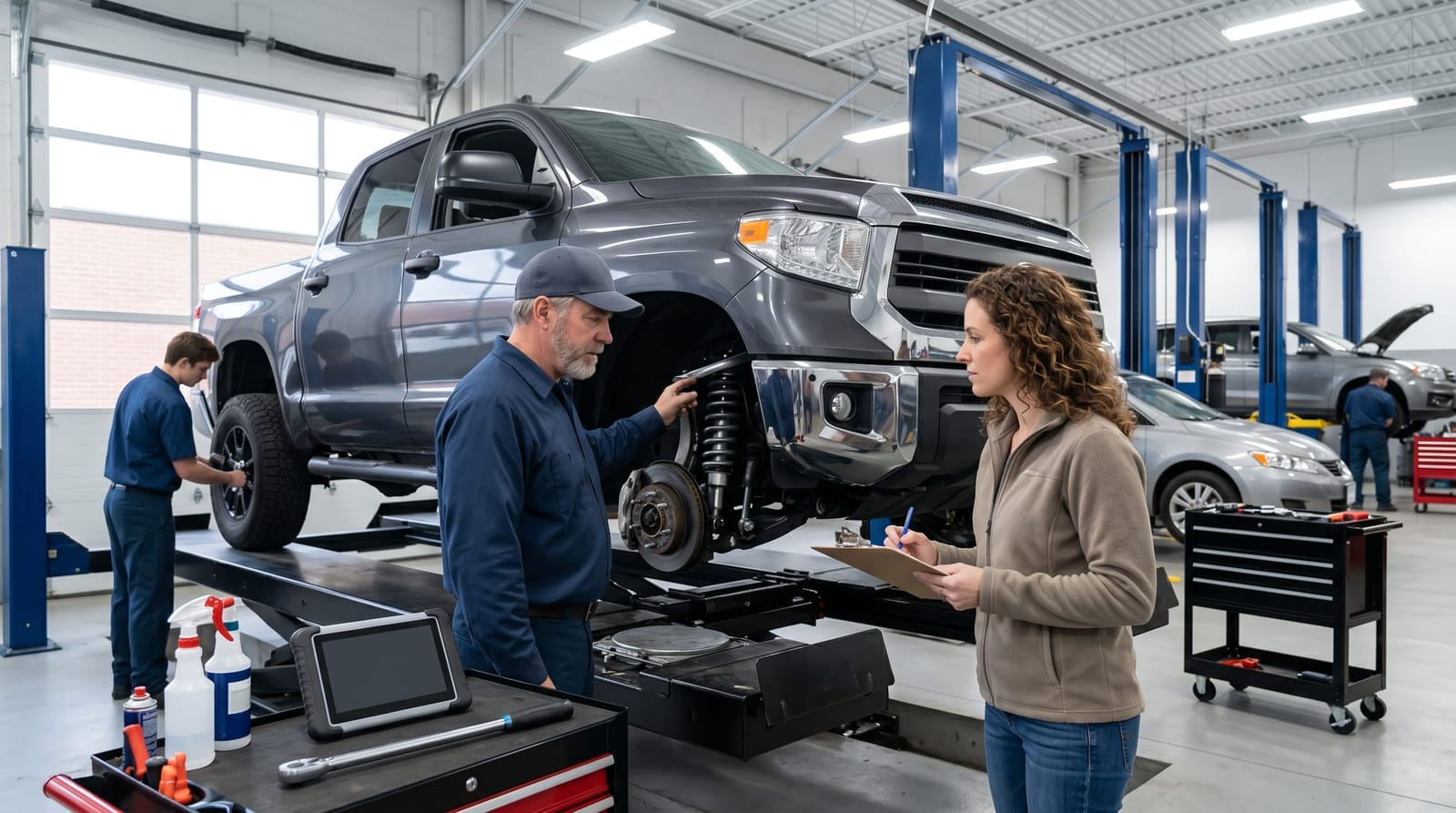
It's one of the most common questions we hear from truck owners thinking about raising their ride: "Will a lift kit void my warranty?" The short answer is, not automatically, and not entirely. But the full answer is a little more nuanced than a simple yes or no. If you're exploring your options for vehicle customization, understanding how lift kit warranty implications work before you make any decisions can save you a lot of confusion down the road. Here's a clear, practical breakdown of what you actually need to know.
The Law Is Actually on Your Side
Most people don't realize there's a federal law that protects consumers in exactly this situation. The Magnuson-Moss Warranty Act, passed in 1975, makes it illegal for a manufacturer to void your entire factory warranty simply because you installed an aftermarket part. That applies to lift kits, leveling kits, and most other vehicle modifications.
What this means in practical terms: if you install a lift kit and later visit a dealership for, say, an engine concern or an electrical issue, the manufacturer cannot deny that warranty claim solely because your truck has been lifted. They would have to prove that the lift kit directly caused the specific problem you're having. That's a meaningful legal distinction and one that works in your favor.
For example, if a RAM truck owner installs a 3-inch lift kit and later experiences a transmission issue, RAM can only deny that warranty claim if they can demonstrate the lift kit caused the transmission problem, not simply because a modification exists. That's a much higher burden than most truck owners expect.
That said, understanding the lift kit warranty implications for your specific truck make and model is still important, because individual components can still be affected depending on how the installation is handled.
What Parts of Your Warranty Could Be Affected
While your overall factory warranty stays intact, certain components can be at risk if a lift kit is installed incorrectly or if it places unusual stress on specific systems. Here are the areas where dealers most commonly raise warranty questions:
- Drivetrain components: CV axles, driveshafts, and U-joints can experience increased wear angles with aggressive lift heights, particularly on lifts above 4 inches
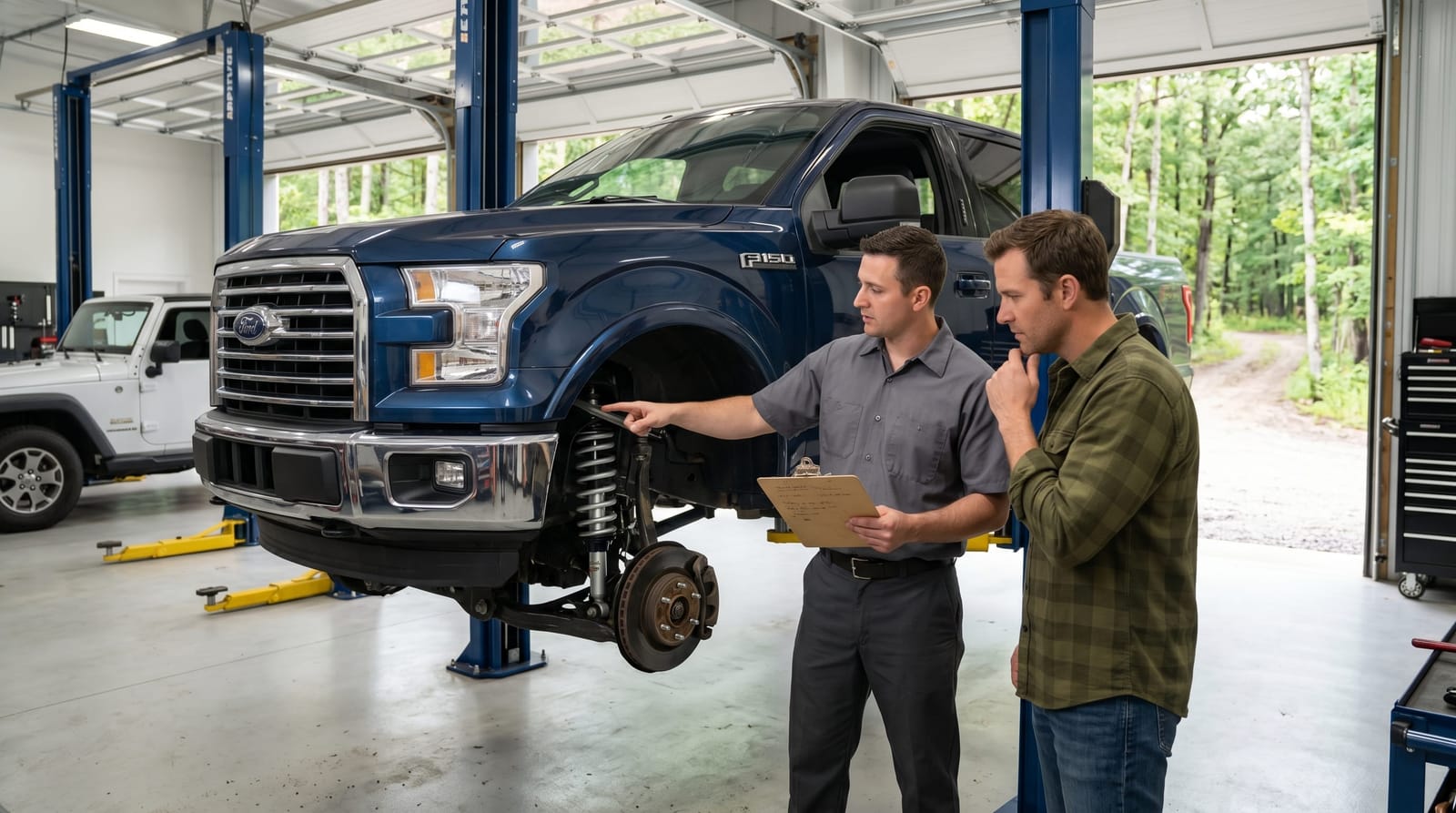
- Steering and suspension: Tie rods, ball joints, and wheel bearings can be affected depending on the alignment and installation quality
- Tires and wheels: Oversized tires installed alongside a lift can affect wheel bearing load and brake performance
- TPMS and ABS sensors, If wheel or tire size changes significantly, these systems may be impacted
The key takeaway here is that a properly installed, properly sized lift kit from a reputable brand is unlikely to cause problems with these components. Poor installation or a kit that's mismatched to your truck's specifications is where real risk enters the picture. This is exactly why professional installation matters, not just for performance, but for protecting your investment.
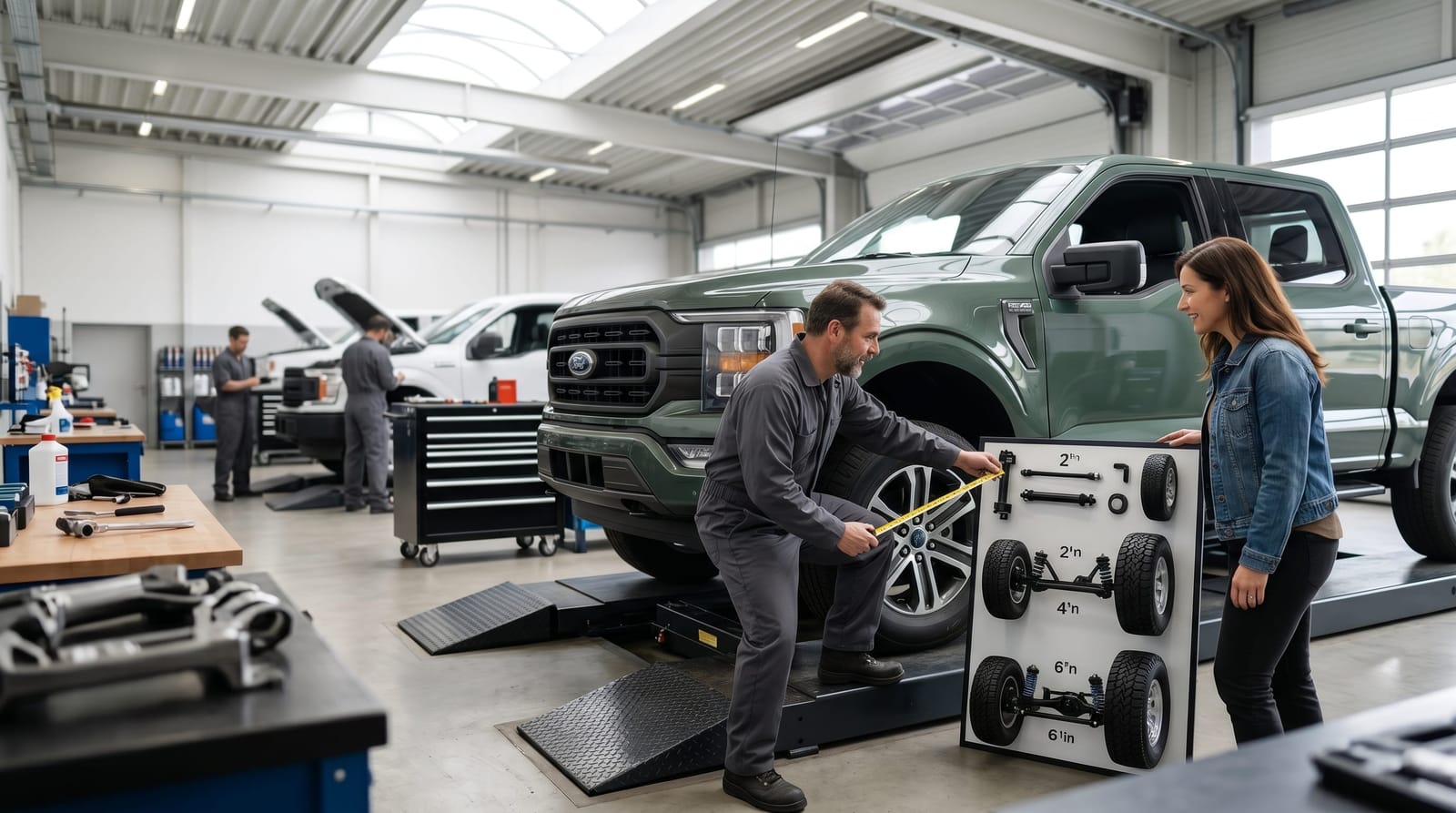
If you're still determining the right lift height for your truck, reviewing your truck lift kit size selection options ahead of time can help you avoid choosing a lift that creates unnecessary strain on factory components.
What Lift Kit Manufacturers Say About Their Own Warranties
It's also worth understanding that the lift kit itself carries its own warranty, separate from your truck's factory coverage. Many premium lift kit brands offer substantial product warranties, and some even offer lifetime warranties on their hardware.
ReadyLIFT, one of the more widely recognized lift kit brands, provides warranty coverage on its leveling kits, block kits, and lift kits. However, their warranty specifically excludes damage resulting from off-road abuse. That's a standard condition you'll find across most lift kit manufacturers: the product is warrantied against defects in materials and workmanship, not against misuse or damage from extreme off-road conditions.
This matters because it means you have warranty protection layered across two sources: your truck's factory warranty (protected under federal law) and the lift kit manufacturer's warranty (covering the product itself). Understanding both layers gives you a clearer picture of your actual coverage after a lift is installed.
How to Protect Yourself Before and After Installation
Being proactive about documentation is the single most effective way to protect yourself when it comes to lift kit warranty implications. Here's what we recommend to every customer before and after their installation:
- Keep all purchase records: Save receipts for the lift kit, any related hardware, and installation labor
- Document the installation professionally: Having your lift installed by a reputable shop creates a paper trail showing the work was done correctly
- Record the vehicle's condition before installation: Note any existing issues so they can't later be attributed to the lift
- Get a post-installation alignment report: Proper alignment documentation shows the vehicle was set up correctly after the lift
- Keep your service records current: Staying on top of routine maintenance reinforces that you're a responsible vehicle owner
If a dealer ever attempts to deny a warranty claim and connects it to your lift kit, your documentation gives you something concrete to work with. In most cases, dealers and manufacturers understand the legal framework, but being prepared never hurts.
It's also worth noting that installation cost plays into this conversation. Choosing the cheapest installation option available can lead to improper fitment that genuinely does cause component issues over time. Understanding your lift kit installation cost estimate helps you budget for quality work that won't give dealers any ammunition to challenge your coverage.
Should You Talk to Your Dealer Before Getting a Lift?
This step is optional, but it can be worthwhile if your truck is relatively new or if you're still within a bumper-to-bumper warranty period. Some dealerships are more lift-friendly than others, and a quick conversation can clarify their position before you proceed.
A few things to keep in mind when approaching that conversation:
- Know your rights under the Magnuson-Moss Warranty Act before you go in
- Ask specifically which components they consider at risk based on the lift height you're considering
- Get any guidance they provide in writing if possible
- Understand that their opinion is not the final word: the law sets the standard, not dealership policy
Most dealers won't discourage a reasonable lift from a quality brand installed by a qualified shop. Where concerns typically arise is with very aggressive lift heights, anything above 6 inches, or with installations that weren't done professionally.
Frequently Asked Questions
Does a lift kit automatically void my factory truck warranty?
No. Under the Magnuson-Moss Warranty Act, a manufacturer cannot void your entire factory warranty simply because a lift kit was installed. They can only deny coverage for specific warranty claims if they can prove the lift kit directly caused the issue in question. A properly installed lift from a reputable brand is unlikely to affect most factory warranty claims.
What lift kit height is considered safe for warranty purposes?
Most automotive professionals consider lifts in the 2-inch to 4-inch range to be the lowest-risk range for factory warranty concerns. Lifts above 4 to 6 inches begin to place more significant changes on drivetrain angles and suspension geometry, which can make warranty conversations more complicated. The quality of the installation matters just as much as the height itself.
Does the lift kit itself have a warranty?
Yes, most reputable lift kit brands provide their own product warranty. Some premium brands offer lifetime warranties on their hardware. These warranties typically cover defects in materials and workmanship but exclude damage from off-road abuse or improper installation. Always review the manufacturer's warranty terms before purchasing.
What documentation should I keep after a lift kit installation?
Keep your lift kit purchase receipt, a record of the installation (including the shop that performed the work), a post-installation alignment report, and any product warranty documentation from the lift kit manufacturer. These records establish a clear picture of what was installed, how it was installed, and when, which is valuable if any warranty questions arise later.
The Bottom Line on Lift Kits and Warranty Coverage
Lift kit warranty implications are genuinely manageable when you go into the process informed. Federal law protects your factory warranty from being voided outright, lift kit manufacturers provide their own product coverage, and proper documentation gives you a solid foundation if questions ever come up. The most important steps you can take are choosing a quality kit that's appropriately sized for your truck and having it installed by a shop that knows what they're doing. At Gregg Automotive, we're happy to walk you through every part of that process, from kit selection to installation to understanding what your coverage looks like after we're done.