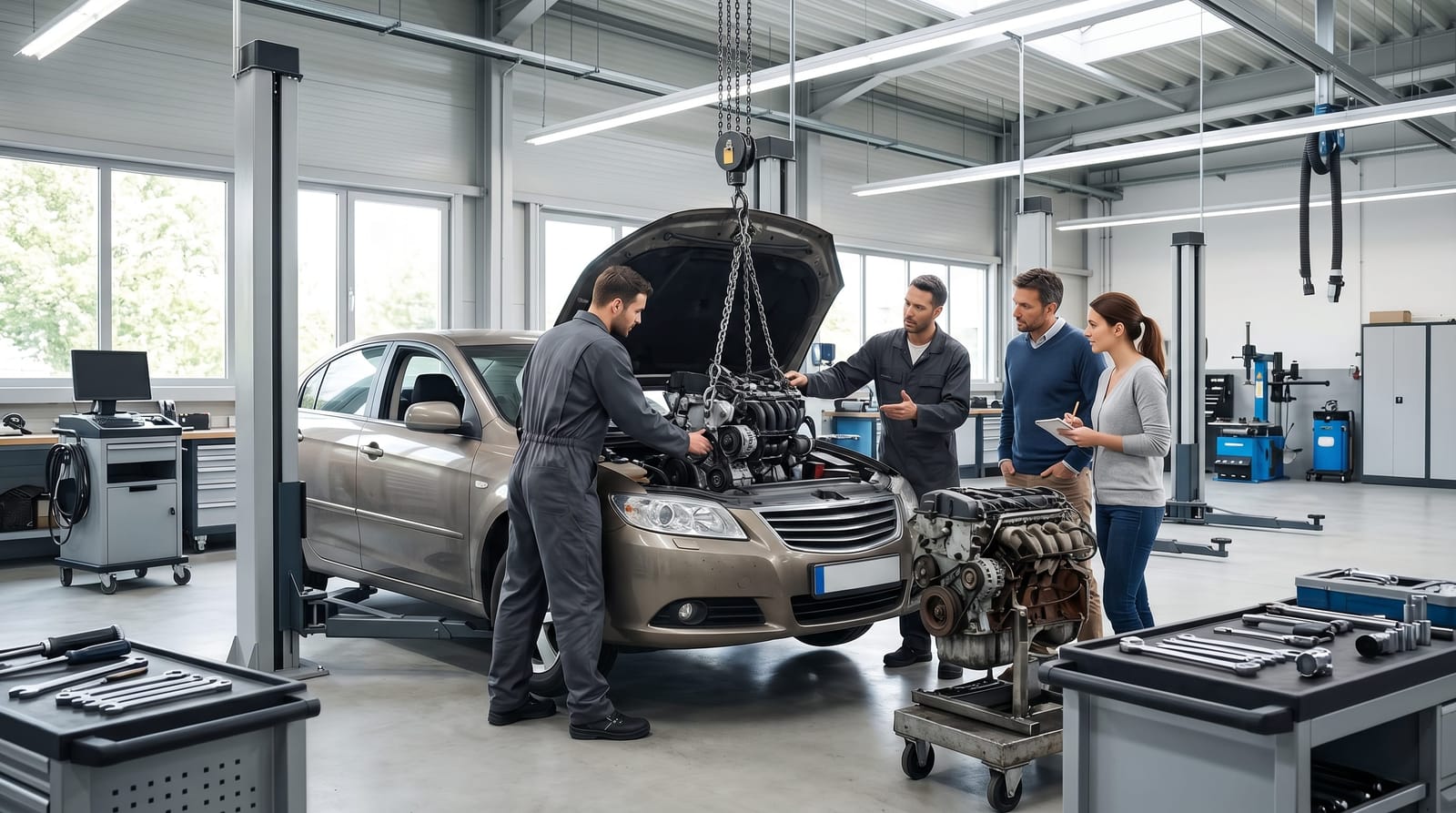
Should I Replace or Rebuild My High-Mileage Engine?

If your vehicle has a lot of miles on it and you're facing a major engine problem, you've probably asked yourself this exact question: is it worth putting money into this engine, or should I just move on? It's one of the most common, and most important, decisions a vehicle owner can face. The good news is that this doesn't have to be a guesswork situation. There are clear, practical factors that can help you make a confident, well-informed choice about your high mileage engine replacement decision.
Why Mileage Alone Doesn't Tell the Whole Story
There's a common assumption that a high-mileage vehicle simply isn't worth repairing. But that thinking has become outdated as vehicle quality and maintenance practices have improved significantly over the years. Today, many properly maintained vehicles regularly exceed 150,000, 200,000, or even 250,000 miles, and continue running reliably. Mileage is just one piece of the picture.
What matters far more is the overall condition of your vehicle and how well it has been maintained. A 180,000-mile truck that has had consistent oil changes, regular tune-ups, and proper fluid maintenance may be in significantly better shape than a 100,000-mile car that has been neglected. When evaluating whether engine replacement makes sense, mechanics look at the whole vehicle, not just the odometer.
Think of it this way: if your engine needs attention but your transmission, suspension, frame, and electrical systems are all in solid shape, putting money into the engine can give that vehicle many more reliable years of service. On the other hand, if the engine is just one of several failing systems, a replacement may not deliver the value you're hoping for.
Replace vs. Rebuild: Understanding Your Options
When your engine reaches a point where it needs significant work, you generally have three paths forward: repair the existing engine, rebuild it, or replace it entirely. Each option has its place depending on the situation.
Engine Repair
Minor engine repairs, like fixing a head gasket, replacing seals, or addressing a specific component, are often the most cost-effective solution when the problem is isolated. If the rest of your engine is in decent shape, a targeted repair can resolve the issue without the expense of a full replacement.
Engine Rebuild
A rebuild involves disassembling your current engine, inspecting each component, replacing worn or damaged parts, and reassembling it to factory specifications. A quality rebuild can restore your engine close to its original performance. The advantage here is that you're working with the engine that was already matched to your vehicle. However, rebuilds are labor-intensive, which means costs can add up: typically ranging from $2,500 to $4,500 or more depending on the engine and condition of internal components.
Engine Replacement
A replacement means swapping your current engine for a remanufactured or used engine. A professionally remanufactured engine is often a strong option: it's been rebuilt to meet or exceed original factory specifications, and it typically comes with a warranty. Used engines carry more uncertainty, since their history may be unknown. Replacement costs vary widely, generally falling between $3,000 and $7,000+ depending on the vehicle and engine type. Understanding these differences is a key part of any high mileage engine replacement decision.
How to Weigh the Cost Against the Vehicle's Value
One of the most practical ways to evaluate your options is to compare the cost of the repair or replacement against what your vehicle is currently worth, and what it would cost to replace it with something comparable.
Here's a helpful way to think about it: if your vehicle is worth $8,000 in good running condition and an engine replacement costs $4,500, you'd still come out with roughly $3,500 in equity, and a vehicle that runs reliably again. Compare that to a car payment of $400 to $600 per month for a newer vehicle, and the math often favors the repair.
Industry guidance generally suggests that if the repair cost is less than 50% of the vehicle's market value and the rest of the vehicle is in good condition, the repair is usually worth considering. That's not a hard rule, but it's a useful starting point for the conversation.
It's also worth factoring in what you know about the vehicle. A truck or SUV you've owned for years and maintained carefully is a known quantity. A replacement vehicle comes with unknowns of its own, including its maintenance history.
Questions to Ask Before Making Your Decision
Before committing to any path, it helps to work through a few key questions with your mechanic:
- What is the vehicle's overall condition? Are the transmission, suspension, brakes, and other major systems in reasonable shape? If the engine is the primary issue and everything else is solid, replacement or rebuild is more likely to pay off.
- What is the vehicle's maintenance history? Regular oil changes and scheduled maintenance extend engine life and give your mechanic useful insight into how the engine was cared for.
- What are your long-term plans for the vehicle? If you need this vehicle for another 3 to 5 years, investing in a quality engine solution makes more sense than if you're planning to sell it in 12 months.
- Is a warranty available on the replacement engine? A professionally remanufactured engine that comes with a warranty is a meaningful reliability assurance, and worth asking about specifically.
- What are the signs that led to this point? Understanding whether you're dealing with a sudden failure versus gradual wear can help determine which solution fits best. If you're unsure whether you've reached that point yet, reviewing the signs your engine may need replacement can help clarify where things stand.
When Replacement Tends to Be the Right Call
There are situations where engine replacement is clearly the more practical route:
- The internal engine damage is extensive, cracked block, spun bearings, severe oil starvation damage, and a rebuild would cost nearly as much as a remanufactured replacement
- The engine has a known reliability issue specific to that model, and a newer remanufactured unit would actually be more dependable than the original
- You need a faster turnaround, since a replacement can sometimes be completed more quickly than a full rebuild
- The vehicle has strong sentimental or practical value and you want a reliable, warrantied engine backing it up
A good shop will walk you through these considerations honestly: laying out the options, the costs, and the realistic outcomes without pressure. That's the kind of conversation that leads to decisions you'll feel good about.
Frequently Asked Questions
Is it worth replacing the engine in a vehicle with over 200,000 miles?
It can absolutely be worth it, depending on the vehicle's overall condition. If the transmission, body, and other major systems are in good shape, a quality engine replacement can extend the vehicle's useful life by 100,000 miles or more. The decision should be based on the whole vehicle, not just the mileage number.
What's the difference between a rebuilt engine and a remanufactured engine?
A rebuilt engine is typically your existing engine that has been repaired or partially restored. A remanufactured engine has been completely disassembled, cleaned, inspected, and rebuilt to original factory specifications using new or reconditioned components. Remanufactured engines often come with a warranty, which makes them a reliable option for high-mileage vehicles.
How long does an engine replacement typically take?
Most engine replacements take between 3 and 7 business days, depending on the vehicle, the availability of the replacement engine, and the complexity of the installation. A reputable shop will give you a clear timeline before work begins.
Will a new engine reset my vehicle's mileage or reliability?
A quality engine replacement gives your vehicle's powertrain a fresh start, but the rest of the vehicle, transmission, suspension, electrical systems, reflects its actual age and use. Think of it as significantly extending the vehicle's reliable life, not erasing its history. Regular maintenance after the replacement is still important.
Making the Right Call for Your Vehicle
There's no single right answer to the replace-or-rebuild question: it depends on your specific vehicle, its condition, your budget, and your plans. But with the right information and an honest assessment from a shop you trust, the high mileage engine replacement decision becomes much clearer. The goal is always to help you get the most reliable, cost-effective outcome, whether that's a targeted repair, a full rebuild, or a quality engine replacement that keeps your vehicle on the road for years to come.